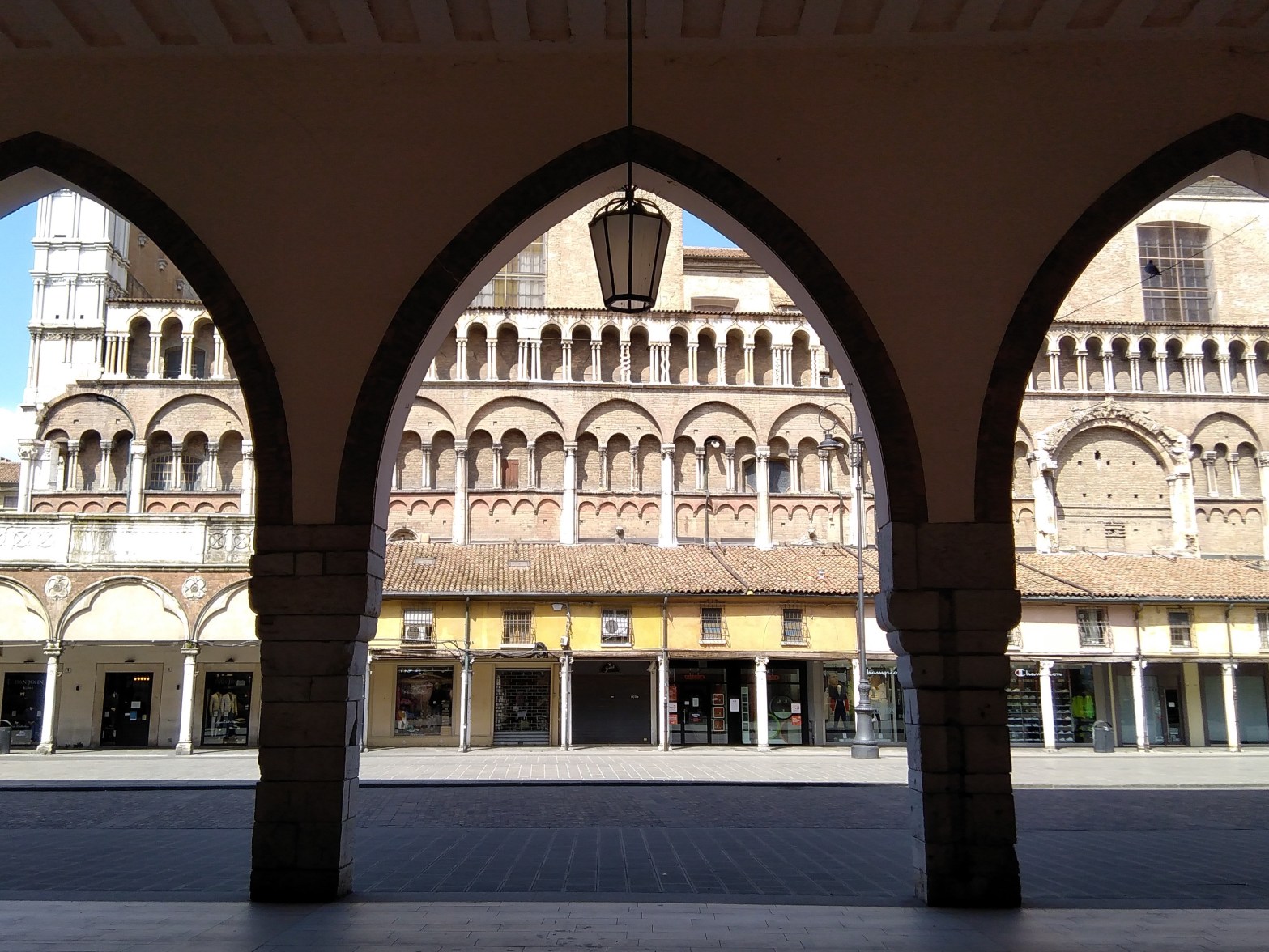
As our time here in Ferrara draws to an end I decided it was about time I put fingers to keys and wrote about this wonderful medieval city. We’ve been lucky enough to call Ferrara home for the last fourteen weeks; whilst it isn’t as long as we originally planned, and it hasn’t gone as we’d imagined we’ve really enjoyed our time here.
The whole city is a UNESCO World Heritage Site, something you begin to take for granted when you’re popping out for the milk of a morning. That is until you glance up at the awe-inspiring Castello Estense as you whizz past on your bike and you have to pinch yourself. It beats driving to Sainsburys that’s for sure!
Ferrara is the quiet, unassuming relation to the other Northern Italian Cities. Whilst places like Florence, Venice and to some degree Bologna attract the hoards of tourists each year, Ferrara is content in it’s location off the tourist trail, still offering just as much as the other cities to those that do find themselves amongst it’s beauty.
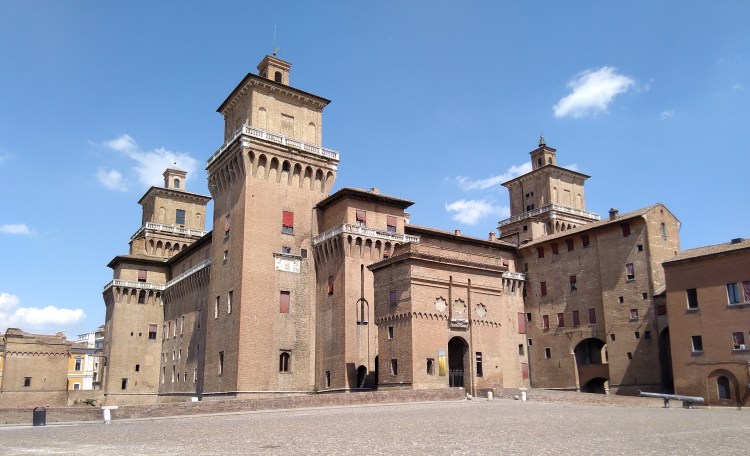
The centre of the city is crammed full of medieval, renaissance architecture, making every turn of a corner a delightful exploration punctuated with gasps of wonder. The most striking building is the Castello Estense. A huge, imposing fortification that seems to rise out of it’s surrounding moat to keep a protective eye on the Ferraresi people. It dates back to 1385 when it was commissioned by Nicolo II d’Este to demonstrate his authority. The subsequent ruling dukes made their own changes to the castle resulting in it’s use as both a palazzo and a fortress. The effects of fire and several earthquakes throughout the 1500’s resulted in some costly restoration work and by the end of the 16th century the Este rule came to an end with the lack of a male heir, resulting in Pope Clement VIII taking control of the city and installing his cardinals in the castle as the city’s administrative centre. Work on maintaining the castle diminished until 2002, when the state began the big job of restoring the historic building.
On May 20th, 2012 a strong earthquake hit the city causing widespread damage. Of which some is still very evident today with many places still being restored. One of the Castle’s towers, the Torre dei Leoni partially collapsed.
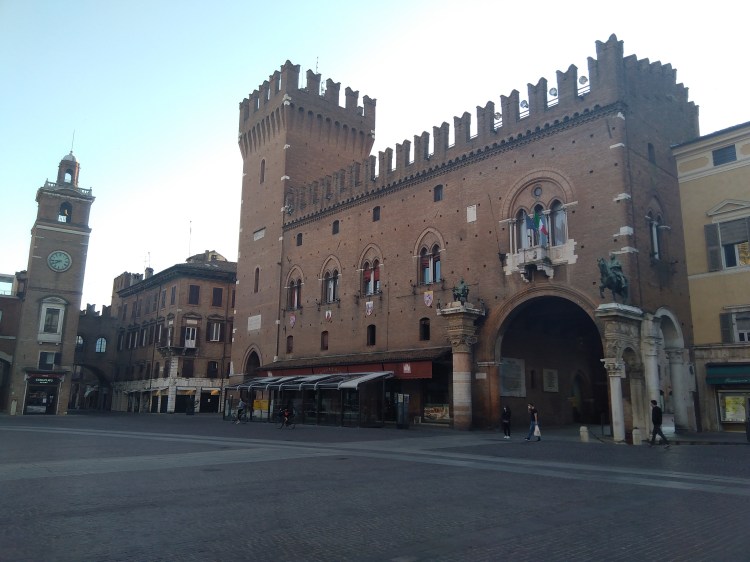
Castello d’Este is connected to the old Este Palace (now the Palazzo Municipale, the most picturesque town hall I’ve ever seen!) by Via Coperta, a protected passageway which gave the Dukes a chance to escape the castle in times of unrest. It is thought to have inspired the Vasari Corridor in Florence which allowed the Medici to do the same between the Palazzo Vecchio and the Palazzo Pitti.
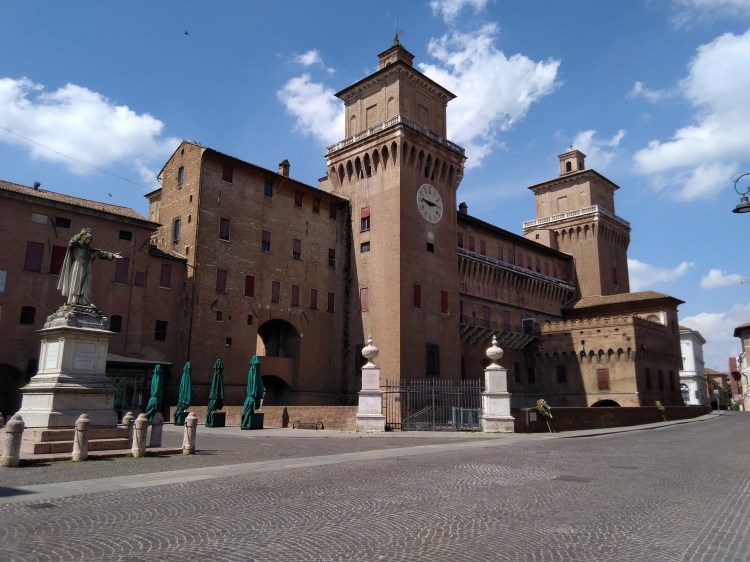
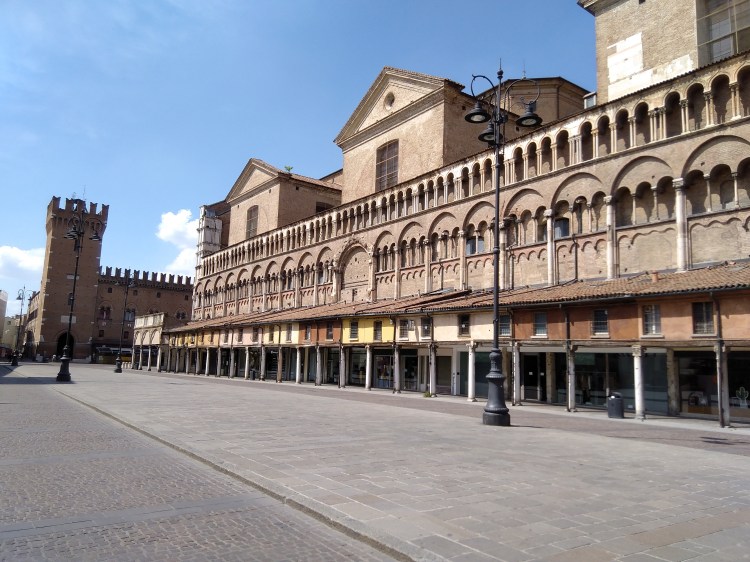
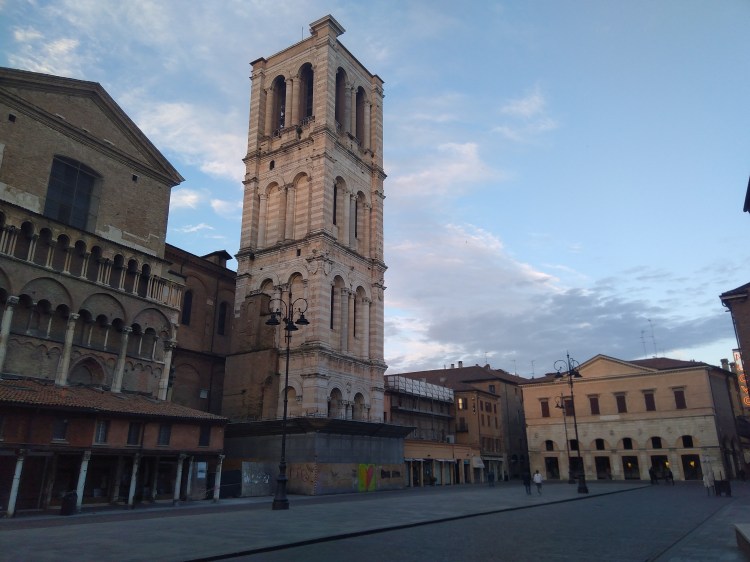
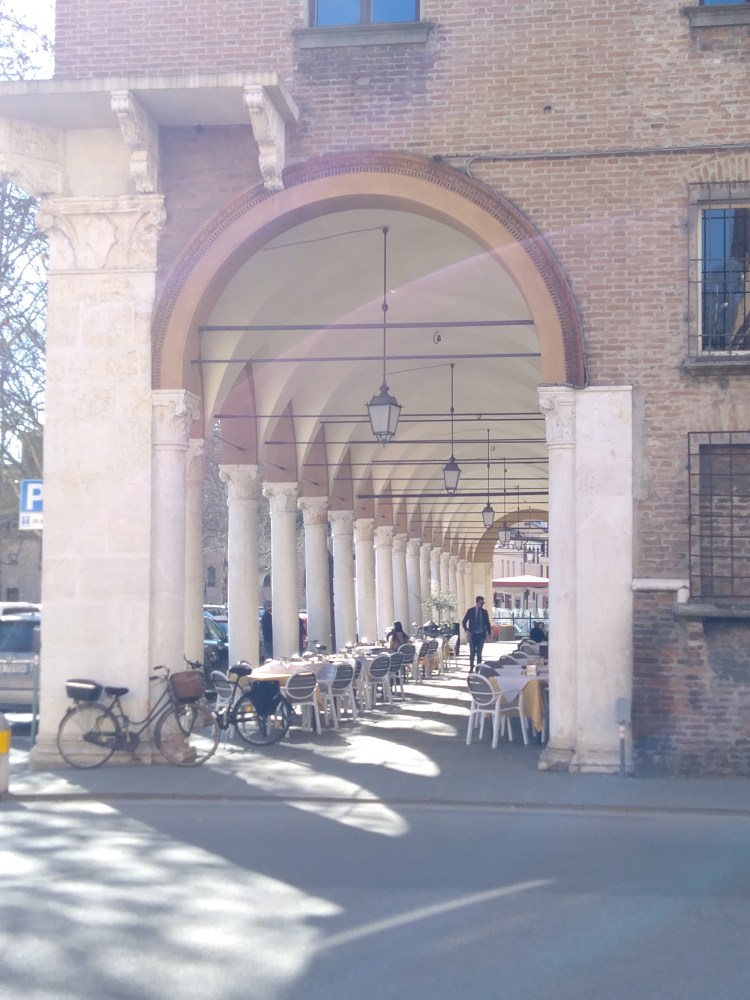
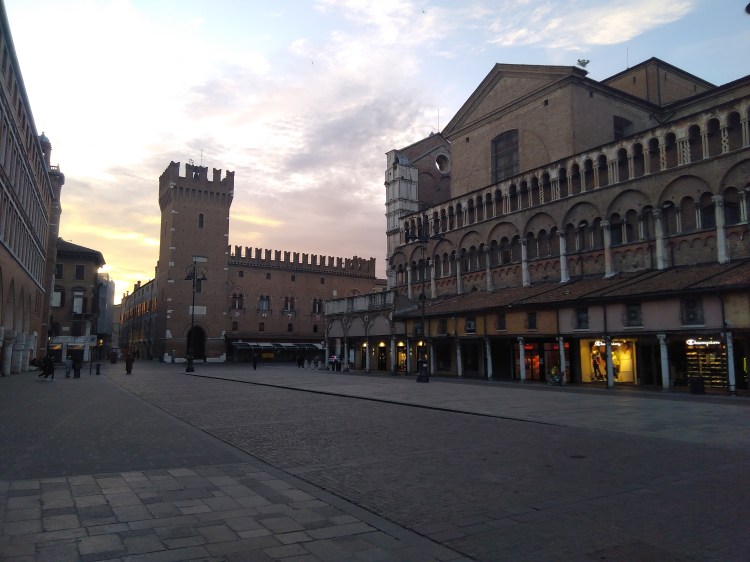
Almost overshadowed by it’s surrounding neighbours is the Cattedrale di San Giorgio. Never before have I seen a cathedral like this one. It looks like someone has come along and just added bits to it over the centuries, resulting in a mismatch of architectural features that remind me of those stone piles that are created by visitors at the top of mountains over time. The cathedral was begun in 1135 and was worked on in the early days by the same designer as Modena’s cathedral. Of particular interest is the Upper Loggia on the south side which can clearly be seen from Piazza Trento e Trieste, the big piazza next to the building. The Romanesque columns are a wonderful mix of spirals, zigzags and knots which according to legend the Devil twisted himself around the night before the cathedral was consecrated and had to skulk away when the people of the city cheered. As you cast your eye down from this fascinating row of columns you’ll see the Loggia dei Merciai, a market portico running the length of the piazza which was added in 1473. Then as you glance right from here you see the beautiful, unfinished pink and white marble campanile, standing like a straight, striped candy cane towering over the piazza. Restoration work on the front of the cathedral has been a long, ongoing process since the 2012 earthquake so most of the marble portico on the West side is hidden from view and the interior is off limits for the time being.
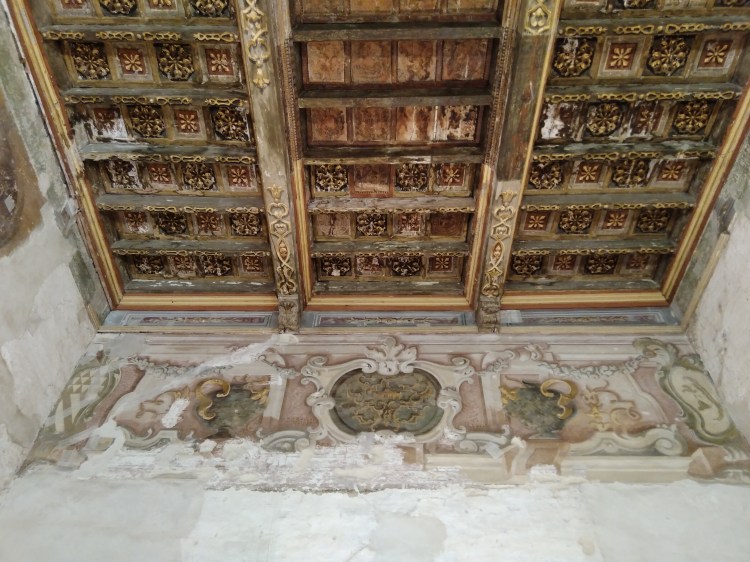
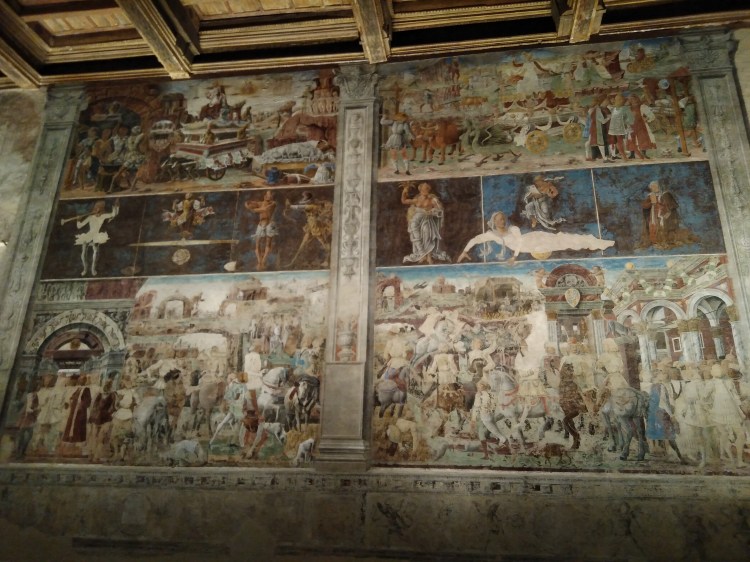
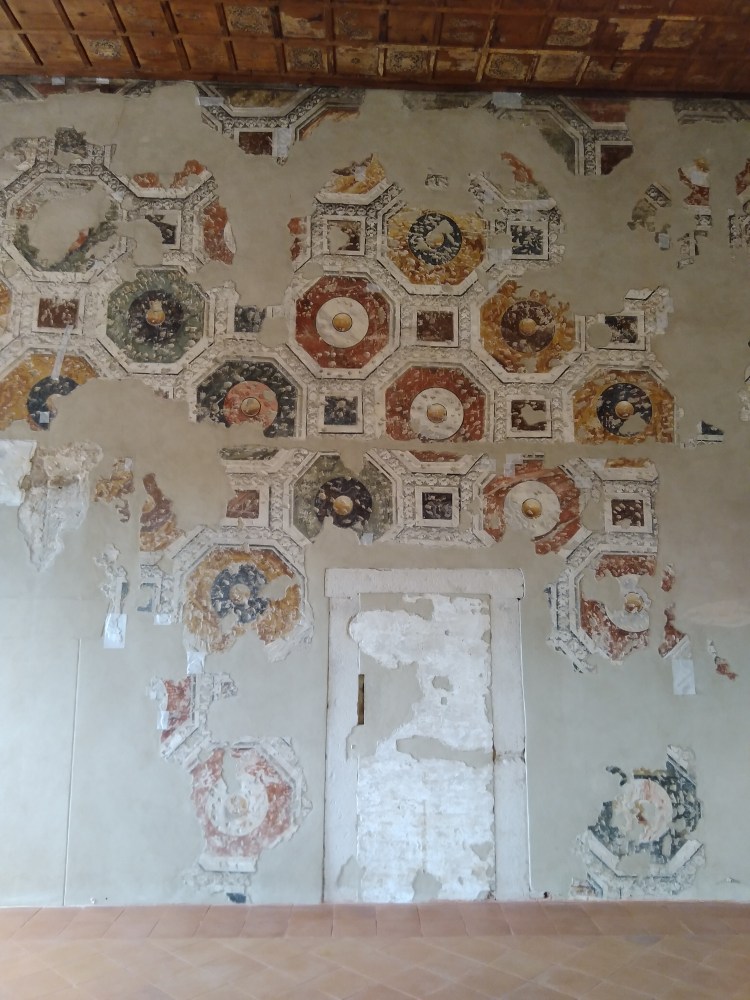
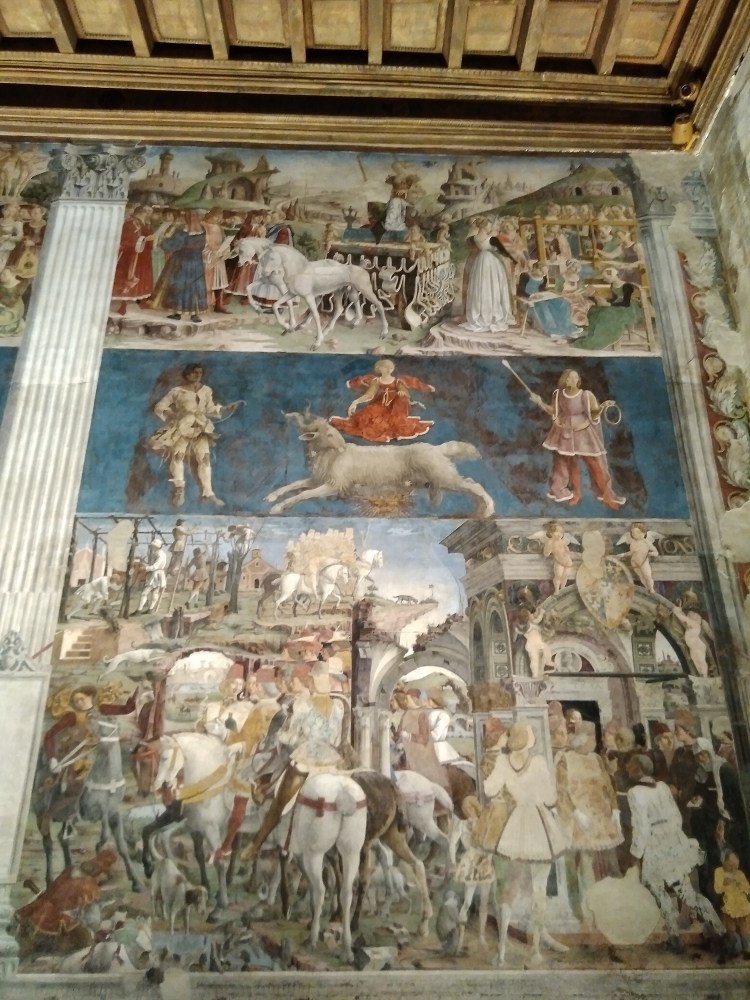
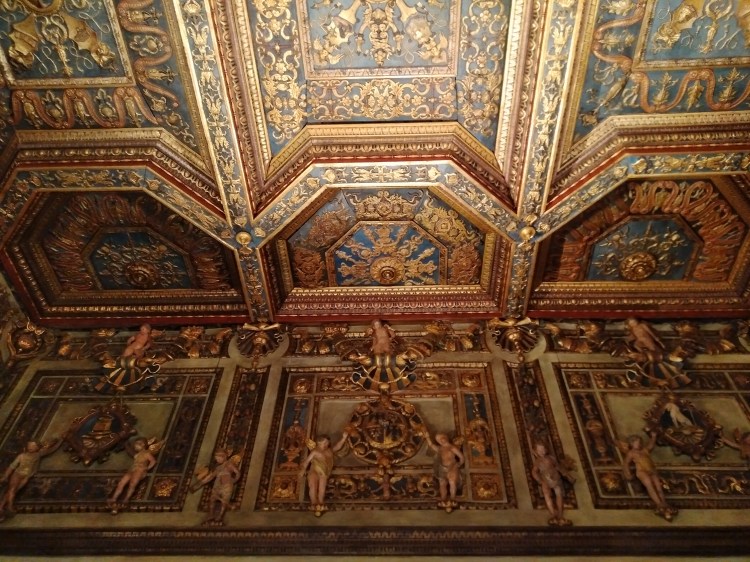
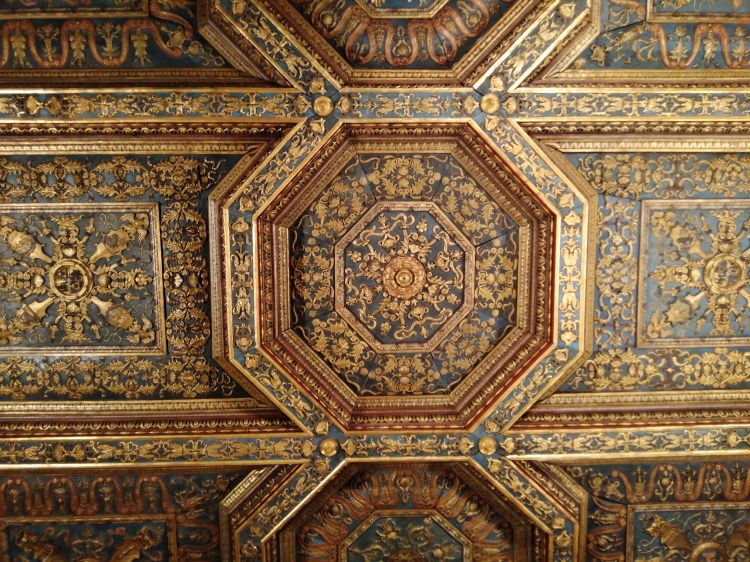
A short walk from the main piazza is Palazzo Schifanoia, which when built was in open countryside and means ‘escape from boredom,’ a place for Alberto V d’Este to escape the tedium of political life. It was built in 1385 but it’s main attraction, the Salone dei Mesi, was created under the orders of Borso d’Este and is regarded as one of the most astonishing masterpieces of Italian Renaissance art. The room is adorned with the most breathtaking frescoes depicting the twelve months of the year, of which seven have survived. These masterpieces were covered in white wash when the palace was used as a tobacco factory and Napoleonic barracks in 1801. It’s a miracle any of it survived at all. The following rooms diminish in grandeur as the visit progresses which provides a striking contrast between the elaborate stuccos of the Sala dei Stucchi and the shabby, bare walls of the remaining rooms.
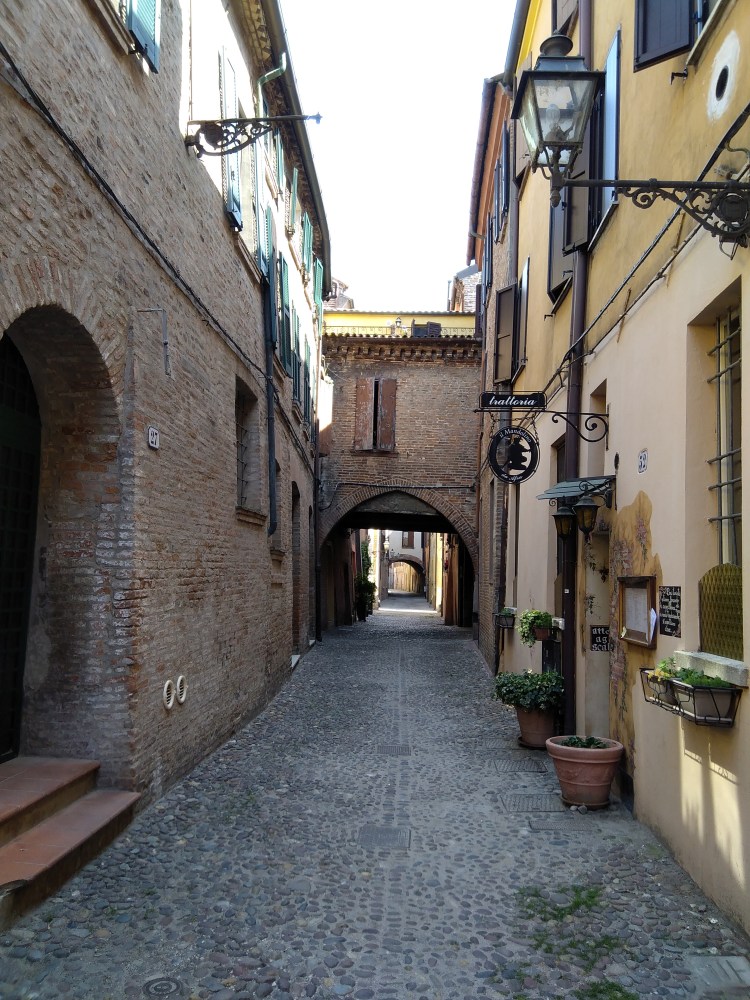
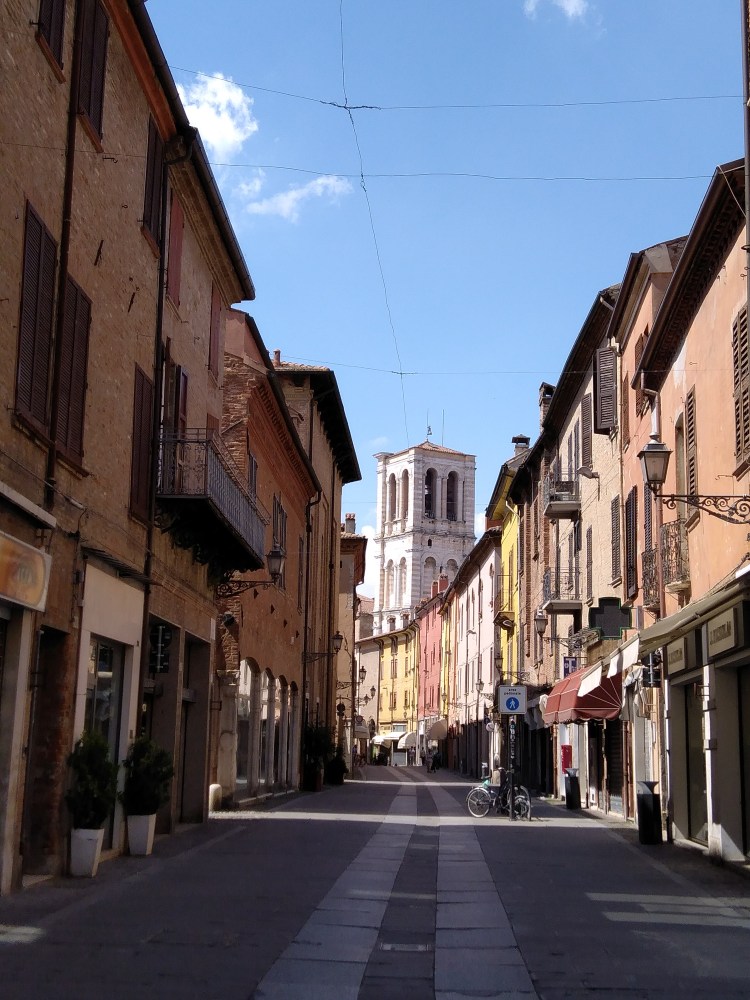
The streets to the South of the palazzo make up the old part of the city and make for a wonderful wander round, particularly on a sunny afternoon when the streets empty and the lanes return to how they must have been centuries ago. The oldest of which is Via delle Volte, named after the vaulted passageways which connect houses on both sides.
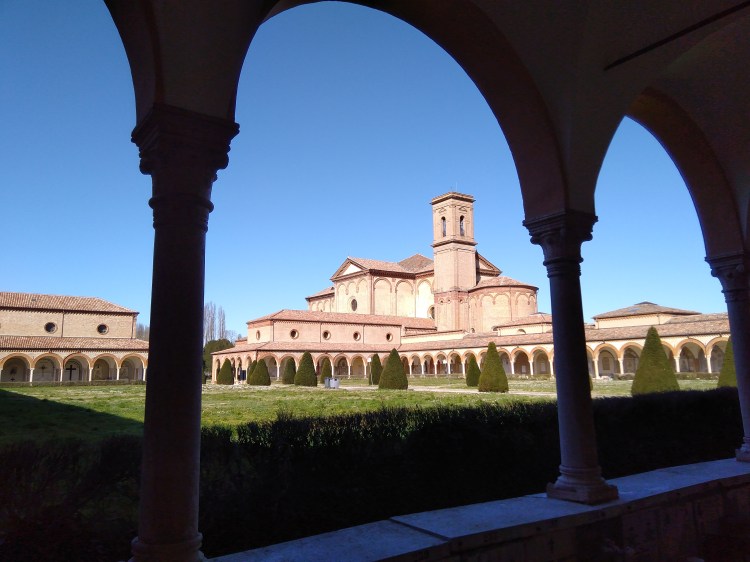
On the North side of the city the streets widen out and the houses get bigger as the city expanded over the years. There’s a beautiful corner known as the Countryside within the walls, where there’s open fields and orchards and it was whilst exploring this area that I stumbled on to the large church of San Christoforo and the Cimitero Monumentale. Duke Borso began a monastery here in 1452 and over the following centuries it became the vast cemetry it is today which is the resting place of many famous Ferraresi.
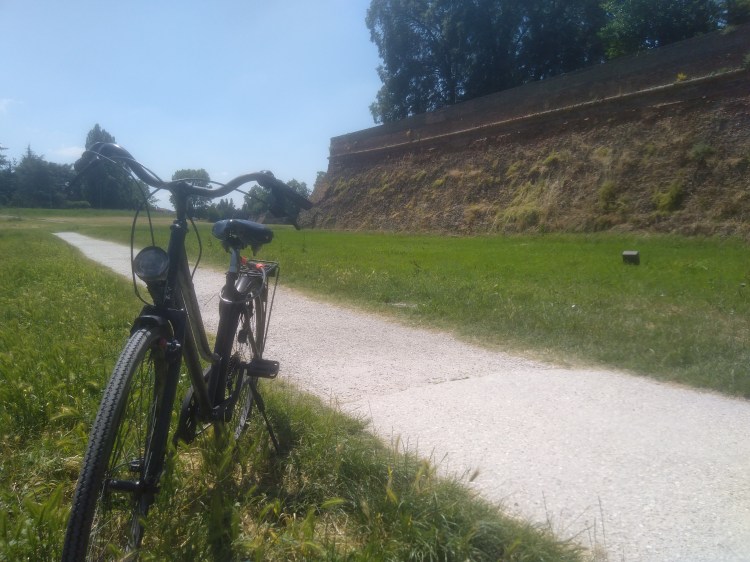
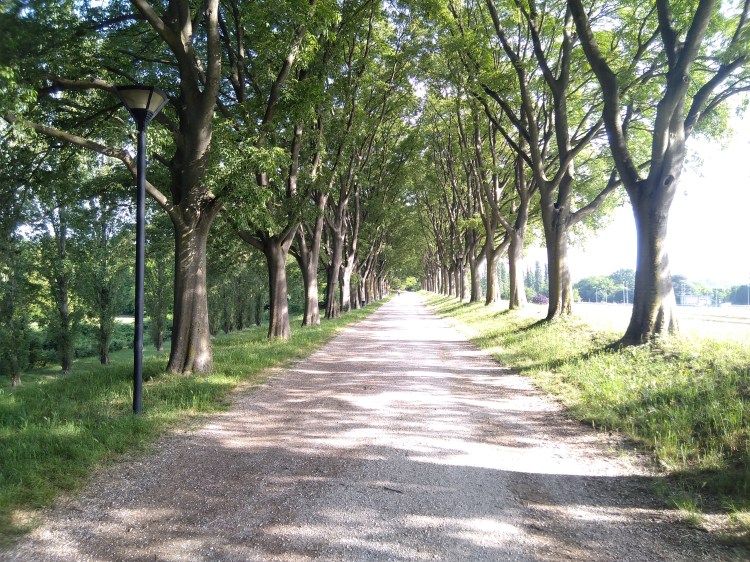
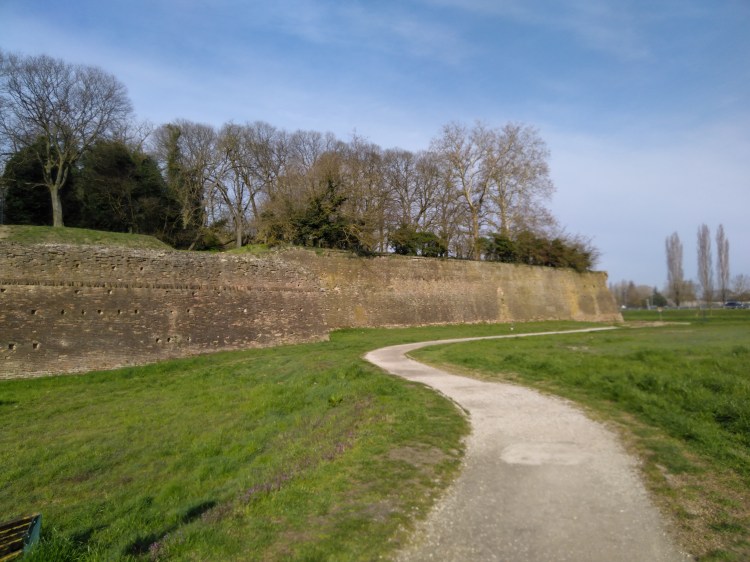
A stone’s throw from here is the city walls, an impressive 9 km circuit of reinforced red brick built to withstand artillery fire. You can while away many pleasant hours walking or cycling the walls and on a Sunday afternoon it’s definitely the place to be with what appears to be most of the city out for a stroll.
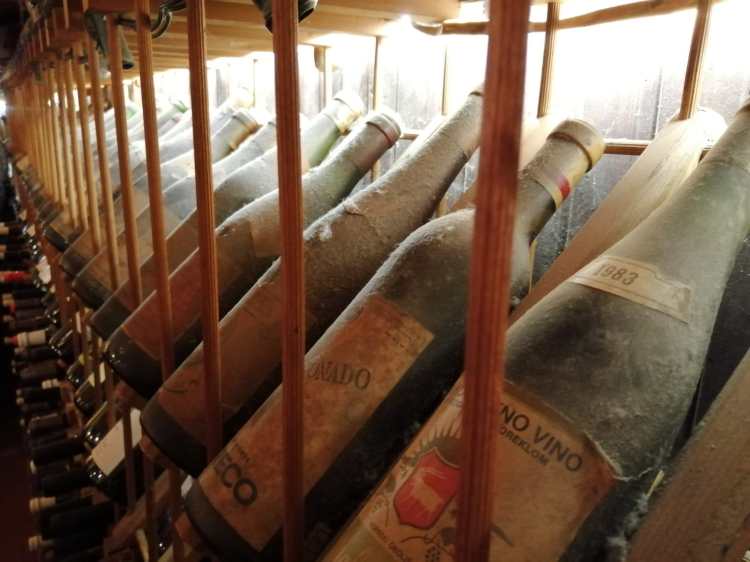
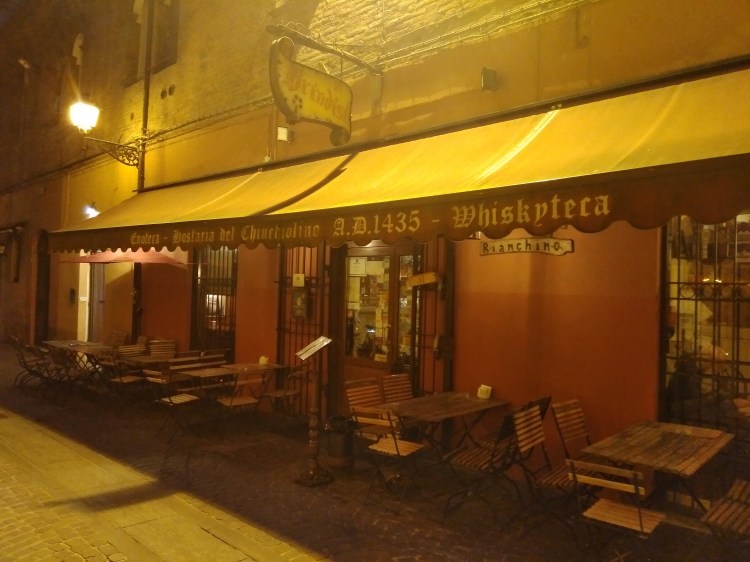
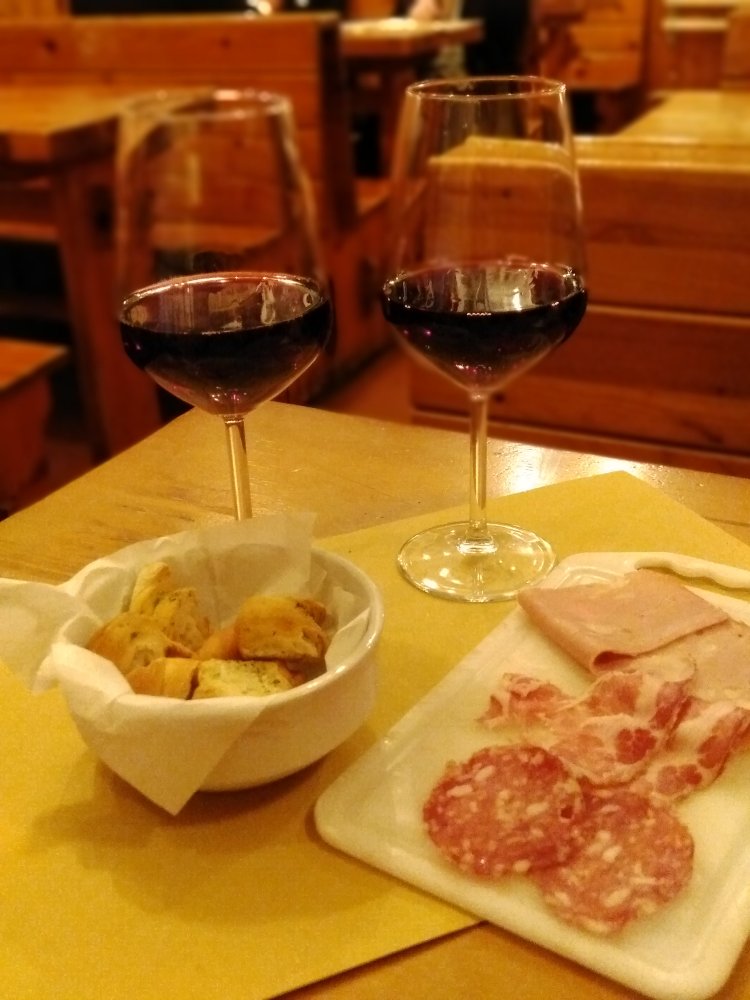
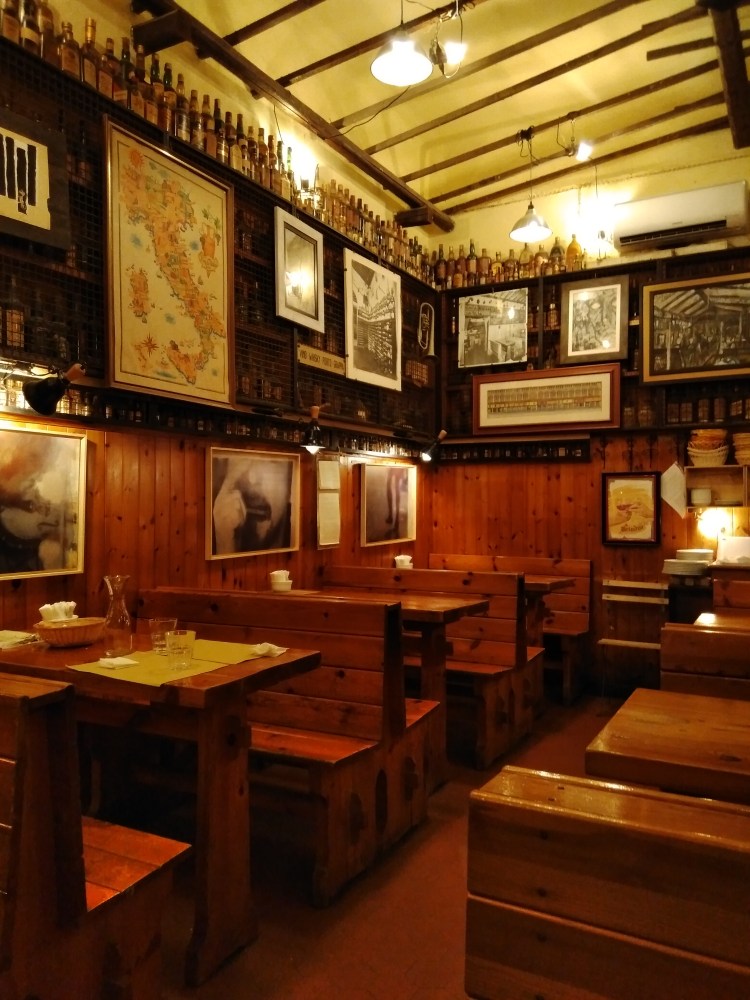
Of course a stroll around town wouldn’t be the same without a rehydration stop. Ferrara has bars a plenty to choose from, with too many to list them all. We love Bar Jolly, at the end of our street Via Palestro overlooking Piazza Ariostea. It’s a welcoming little place run by Damiano who serve fab lunches and delicious aperitivo. Also, Al Brindisi is an absolute must. It’s tucked down an alley called Via Adelardi behind the cathedral and is the oldest tavern in the world dating back to 1435! With a great wine selection, traditional food and a shady location it’s a great way to end a walk around Ferrara.
This is only a snippet of what Ferrara has to offer, there’s so many other historical buildings, fascinating museums and wonderful bars and restaurants that I could go on and on. It’s bittersweet to be leaving this amazing place. We’ve met some wonderful people who have welcomed us so warmly but all good things must come to an end. Naples is calling and the next chapter is just around the corner.
 Brand New Day
Hey Becca, thank you so much for sharing your impressions and photos about Ferrara, in Italy 🙂 unfortunately I haven’t been there but it looks so interesting, would love to visit it 🙂 all the best and greetings from Portugal, PedroL
LikeLike
It looks fantastic – those photos of empty streets will be viewed in the future as quite incredible! It all looks so quaint, the architecture and décor of those buildings – WOW! Safe travels to Napoli. x
LikeLike