Our exploration of Emilia-Romagna continued with a trip to the South East corner of the region, which was originally known as Romagna before the two regions merged. There were so many places we wanted to visit before leaving but we narrowed it down to three…and we’re very pleased with our choices!
San Marino
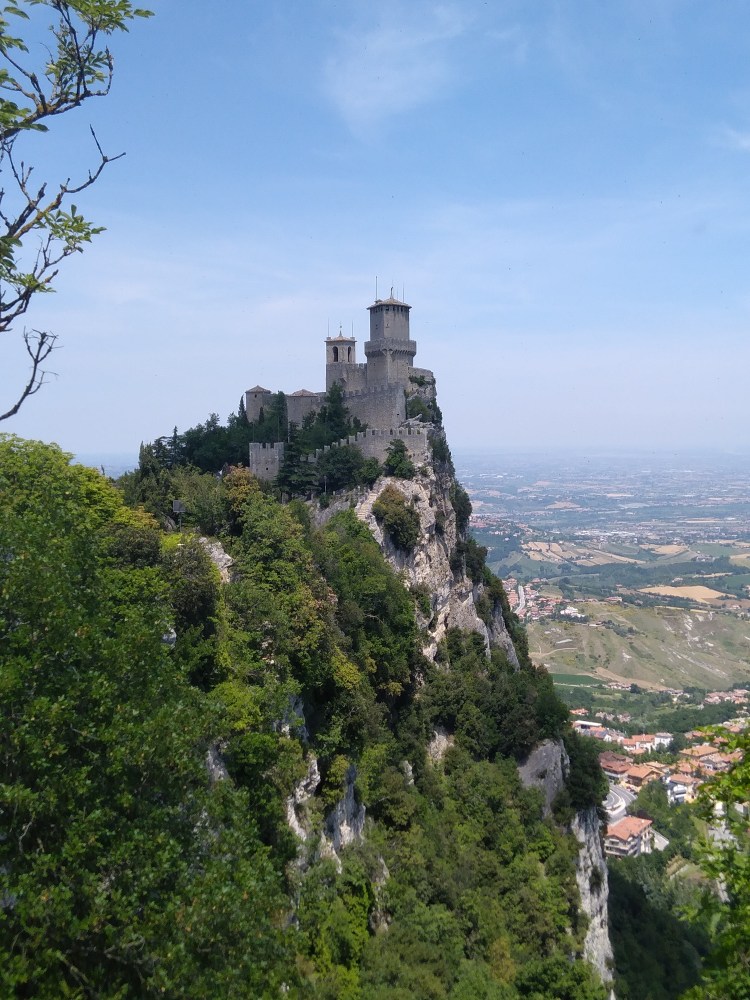
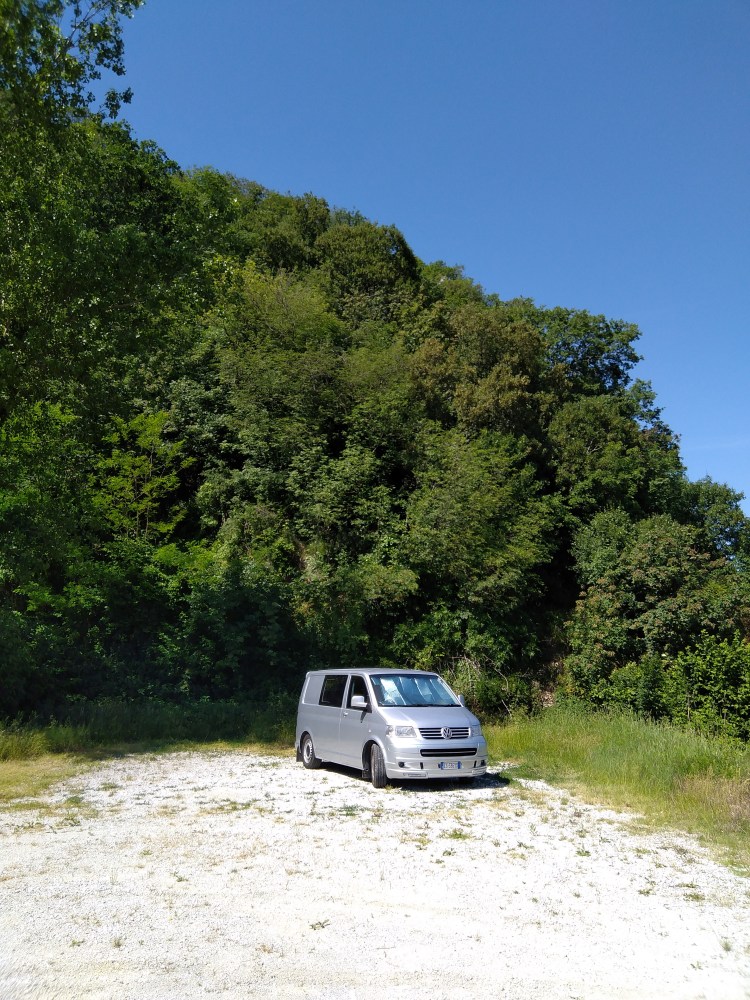
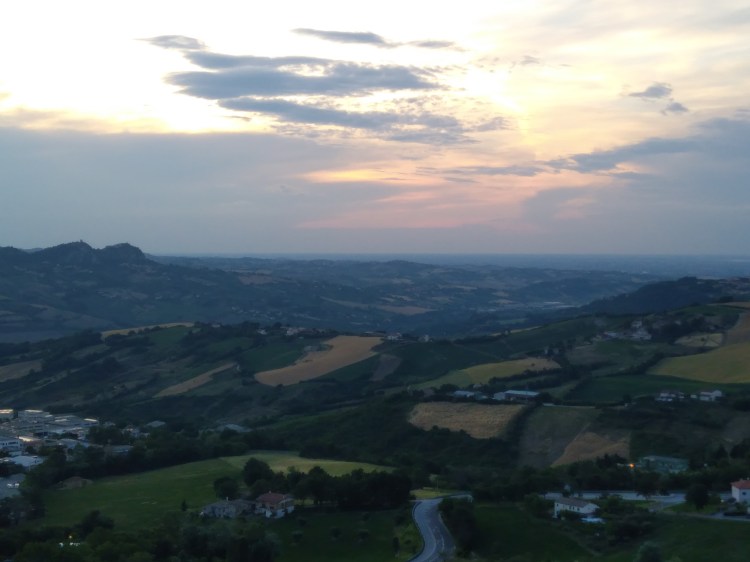
Our first stop was the tiny republic of San Marino. In fact it’s the world’s smallest and oldest republic founded by a Christian named Marinus in 310 AD. The people of San Marino have one of the highest average incomes in Europe, and the men have a higher life expectancy than any other country in the world, so it must be a good place to live! The historic town centre is nestled at the top of Monte Titano resulting in a picture perfect town that wouldn’t look amiss in a Disney film! We picked a place to camp for the night on the edge of Borgo Maggiore at the base of the huge rocky outcrop. There’s some designated Camper Van parking over three or four terraces that offer some beautiful views over the rolling foothills to the sea. It was a short walk up to the cable car station and before we knew it we were whizzing up to the top of the world! The views from up there are just unbelievable. There’s the lush, green Appenines to one side, then the flat coast to the other. You can even see the Alps in the distant.
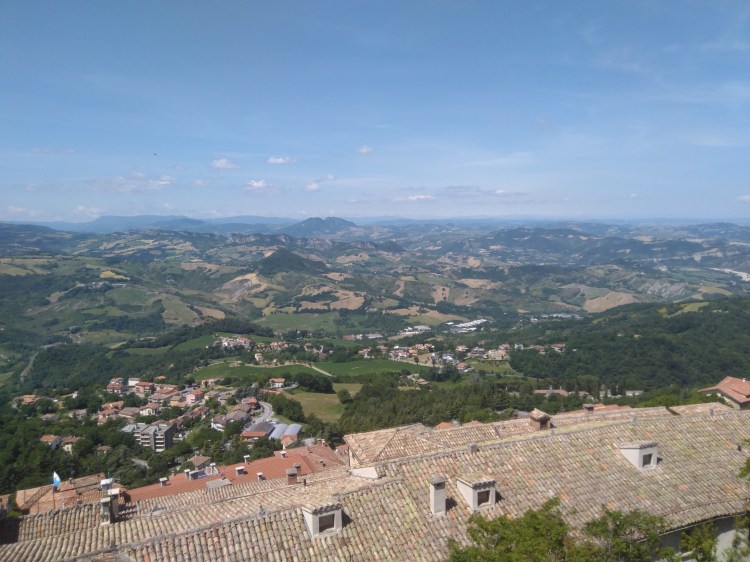
There was little point putting the camera away because as we delved further in the small town centre there were beautiful panoramics at every twist and turn. We shouldn’t have been surprised at how quiet it was; that day was the first day travel in to and out of Italy and between regions was allowed. But we couldn’t believe how lucky we were to see it like this. There were only a handful of other tourists that we came across and with day trip visitors usually reaching three million a year we felt extremely privileged. We followed the naturally flowing path along the length of the rocky outcrop to admire the three towers that stand guard on the three peaks of the mountain. When you’re up here you can see why the mountain is so named; apparently it is one of the mountains the mythological Titans climbed to reach the heavens. Due to it’s easily defended location it’s of little surprise this republic has managed to keep outsiders at bay and as a result very little has changed since the 13th century. The three towers date back to the 11th century and usually visitors can enter two of them to admire the thousands of weapons and learn about the founding of San Marino in the relevant museums. However, they were not open when we were there. Luckily though the restaurants were and we stopped to refuel with pizza and wine on the terrace of La Capanna a great little restaurant that’s been there since 1927.
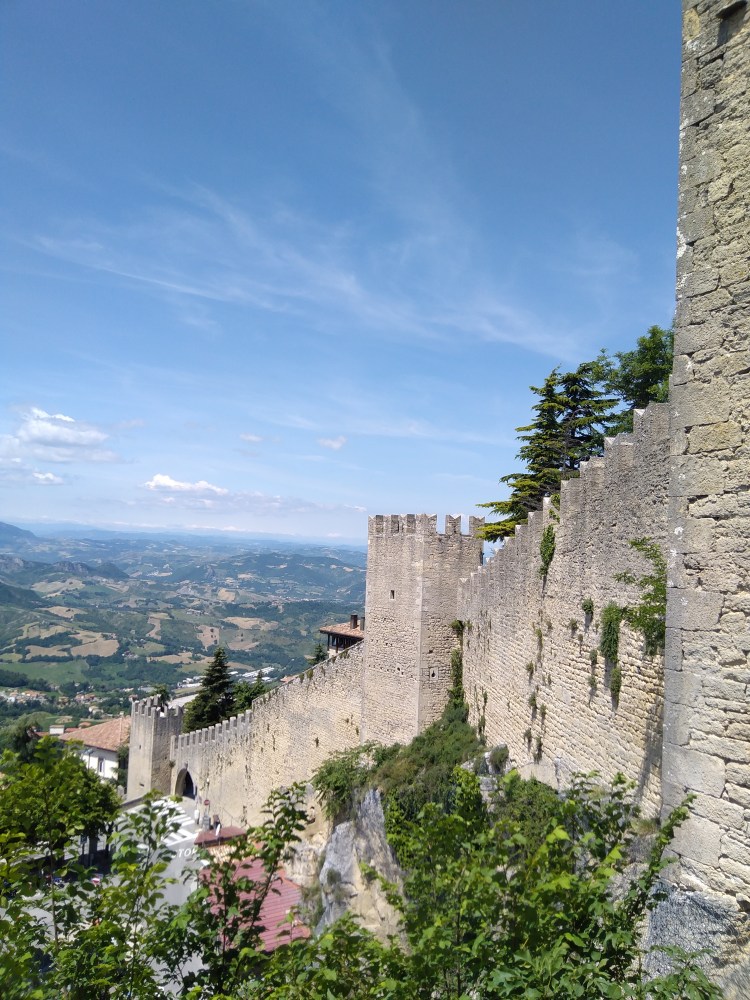
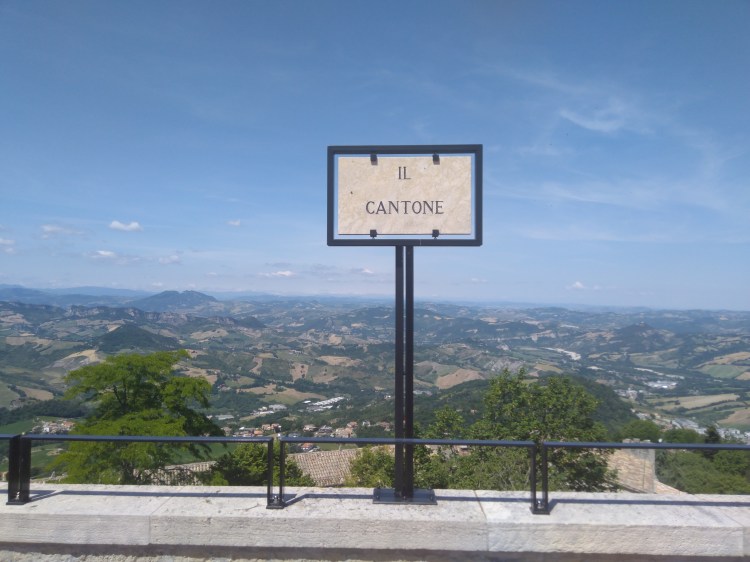
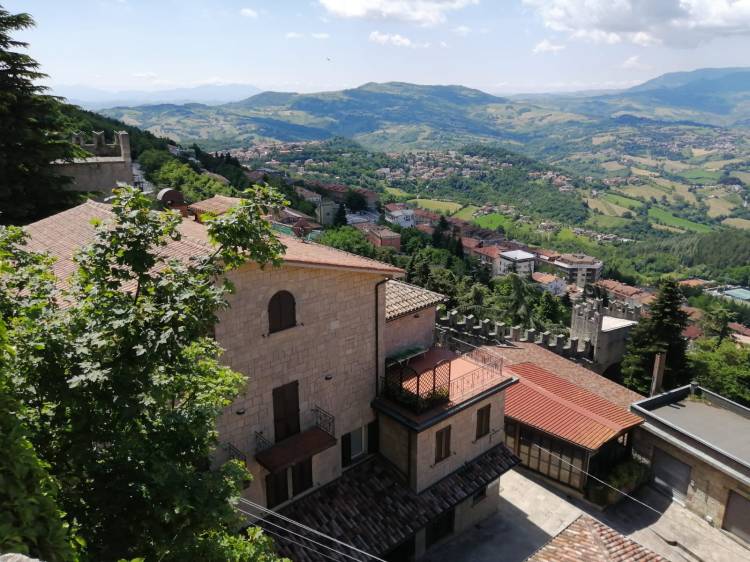
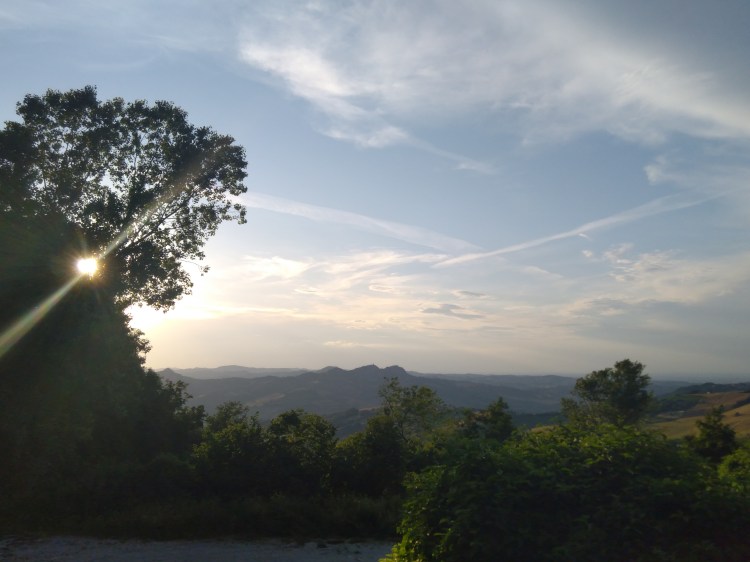
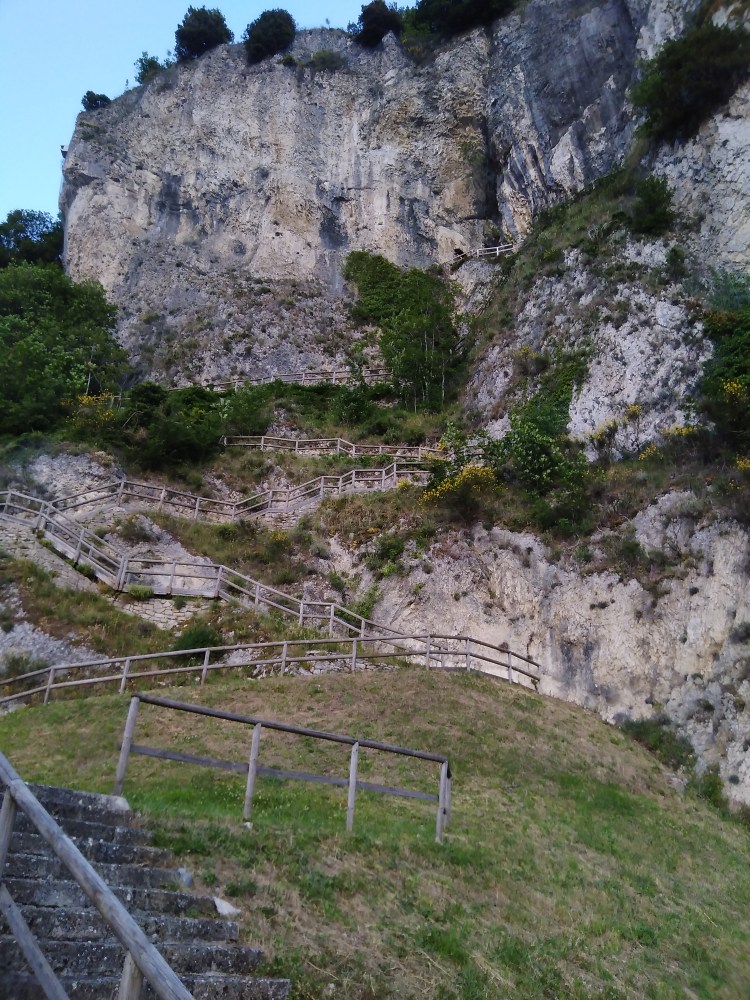
We spent the next couple of hours winding our way amongst the narrow, medieval streets of the old town centre. It was a delightful mix of gorgeous old architecture studded with the seemingly random shops geared up for the hoards of tourists who are obviously desperate for tax free sunglasses, watches, perfume and even guns! When a thunderstorm started to roll in we took our cue to leave and headed back down to the van for the evening. After a BBQ dinner we took a stroll down the quiet street and around the corner to find a huge staircase zig zagging up the rock face to a shrine. It was the site where San Marinus first climbed the mountain and lived a pious life in a cave for many years in the 3rd century before moving to the top of the mountain. It provided us with some spectacular views as the sun dipped behind the rolling hills and well worth the climb. The night was spent with the van door open so we could soak in the scene of the millions of twinkling lights below us stretching to the sea, the glorious sight of fireflies bobbing along the nearby vegetation and the accompanying soundtrack of crickets singing us to sleep…just magical!
Cesenatico
The next destination on our list was the coastal town of Cesenatico. Our attention was drawn to this particular place because it is the birth place of a very famous cyclist called Marco Pantani. We didn’t really know what to expect from this name on the map but I’m so pleased we visited. It’s one of my favourite places so far. We decided to upgrade to a hotel for a couple of nights and after some online research we came across Lungomare Bike Hotel. If you’re reading this and not a cycling fan then don’t worry, you won’t be bored to death with talk of Pinarellos and Gran Fondos. But if that is right up your street then click here to read all about it!
Lungomare Hotel is also for non cyclists too and is run by the most welcoming and warm family that you could ever meet. It’s a couple of miles down the coast from the centre of Cesenatico itself and as it was drizzling when we arrived early that morning we decided to walk to the town rather than go for the planned bike ride. The walk was down a wide boulevard running the length of the shore with hotel after hotel on one side and bagno after bagno on the other. We’ve learnt going to the beach is done slightly differently here, you don’t just rock up and claim your sandy square like you do in the UK. Most of the beaches are split in to bagnos who own their designated strip of beach. They have restaurants, bars, children’s play areas and row upon row of loungers. All of which should be full of people escaping to the coast for the weekend, but with the lack of people and only the odd hotel open, it made for a very melancholy atmosphere.
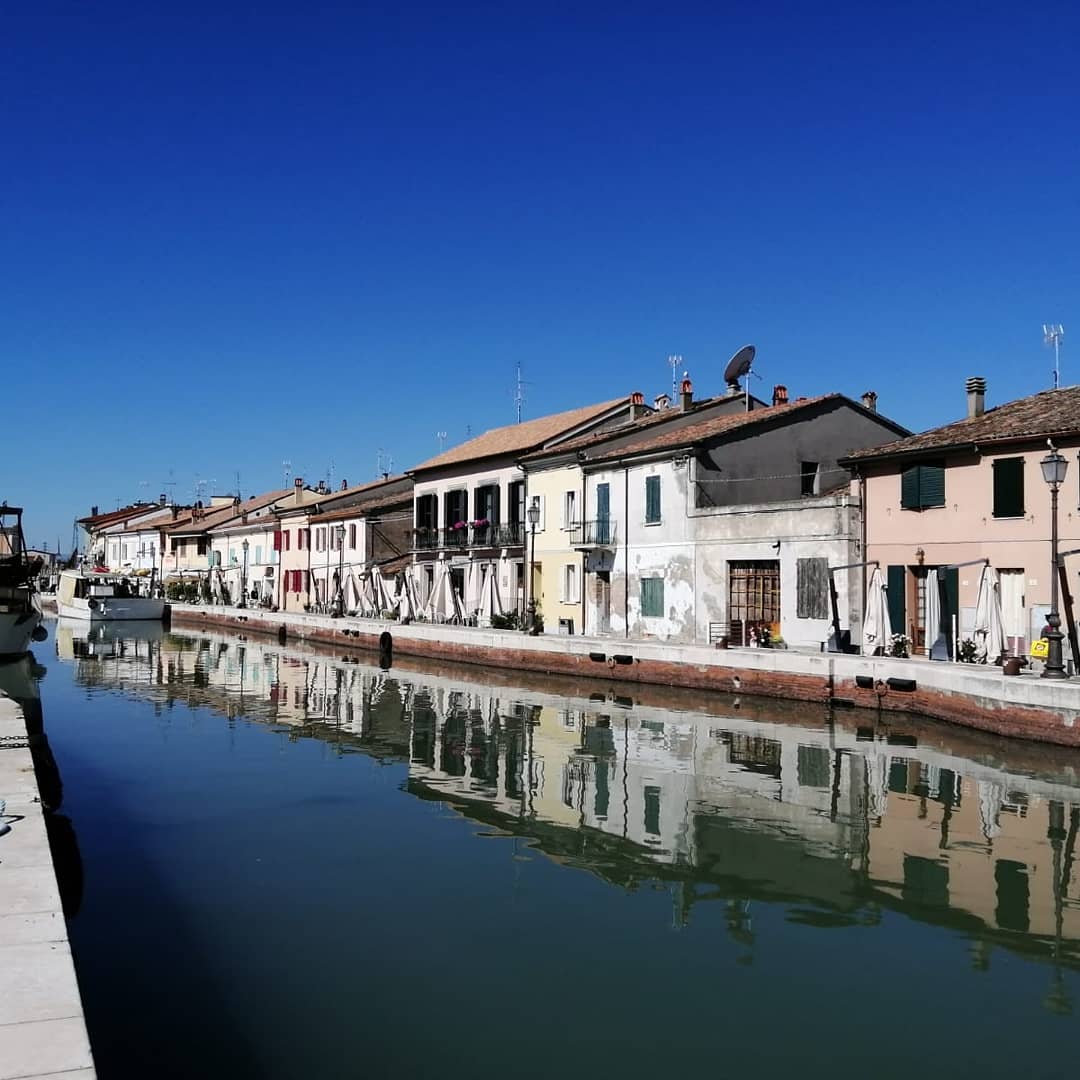
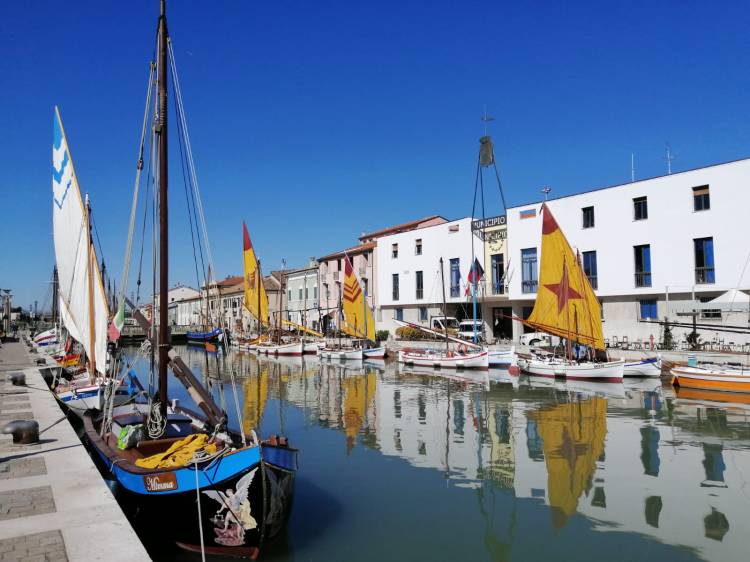
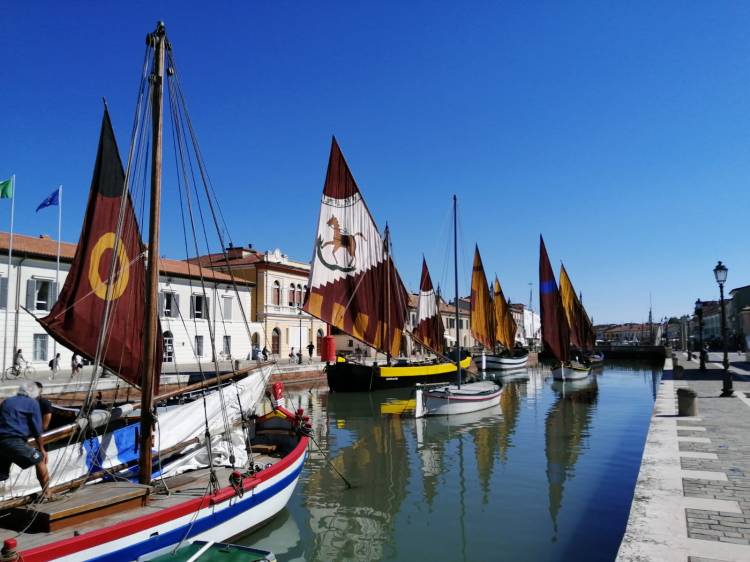
As we approached the town centre the typical beach themed shops gave way to more historical buildings, then your path is blocked by the Porto Canale which takes you inland. The quaysides were lined with fishing boats whose crews were hosing down after a hard morning’s work. The town was founded in 1302 by the people of nearby Cesena with the idea to build a port and later a canal to connect the two towns. But the small canal they’d built kept silting up, so in 1502 Leonardo da Vinci redesigned it to what it is today. It has a feel of Venice about it but on a much smaller, personable level.
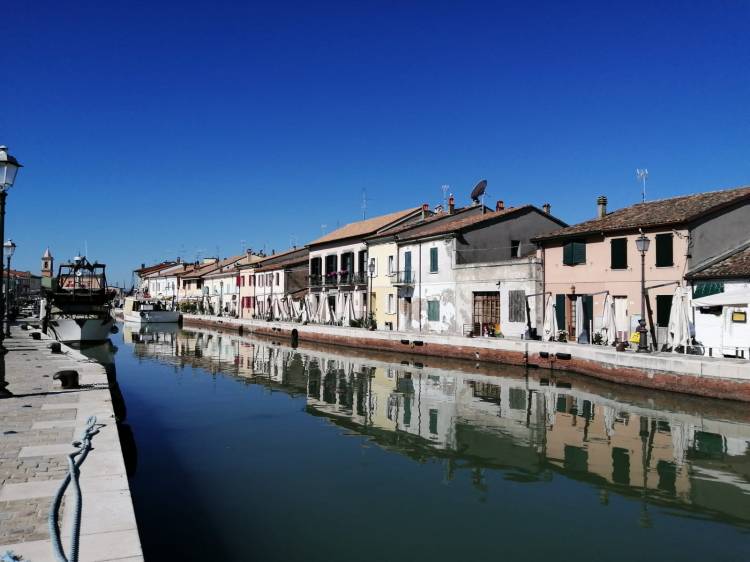
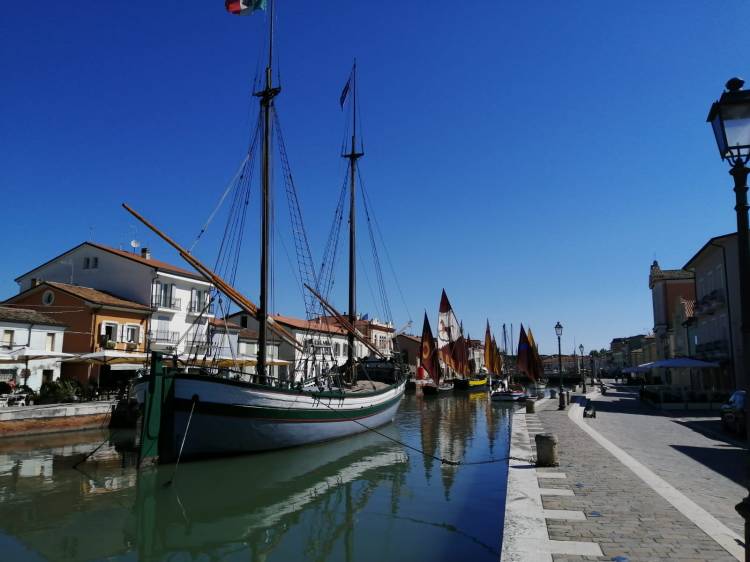
A walk along the canal takes you past the most wonderful looking seafood restaurants, bars and cafes up to the historical display of boats at the end that make up part of the Museo della Marineria. With the colourful boats sat proudly in the water flying their authentic sails you really get a feel for what the place was like centuries ago. We also found the covered fish market which had a beautiful selection of fresh fish and seafood only a stones throw from where it was unloaded that morning. Later, thanks to our cycling guide, we visited Piazzetta delle Conserve where there still remains an old pit that was filled with ice and snow and layers of fish to keep the daily catches fresh over winter. There’s also a daily fruit and veg market every morning in the same square. We loved exploring this little gem of a town and if it wasn’t for wanting to squeeze in a visit to one more place then we would have stayed for longer.
Ravenna
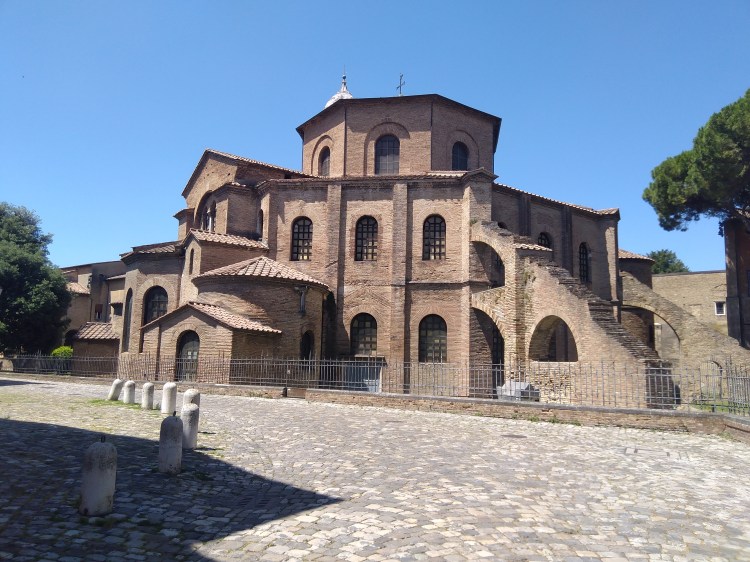
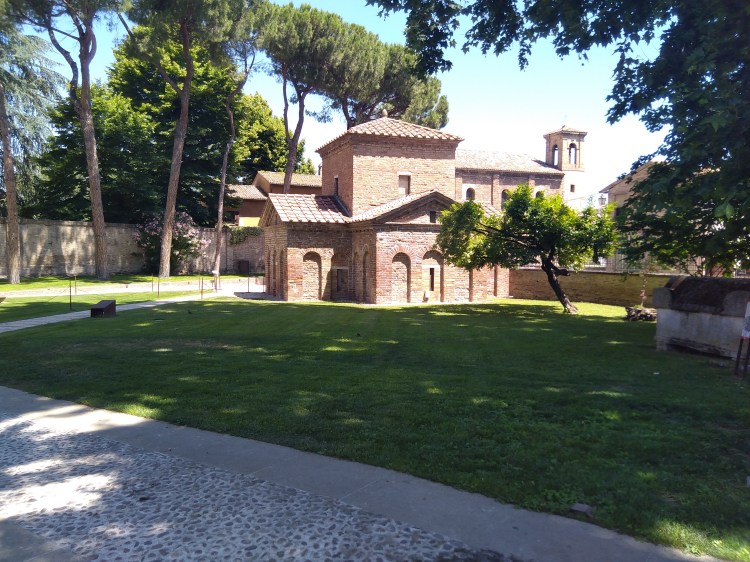
About half an hour up the road is the city of Ravenna. This fascinating city peaked early on it’s history and seemed to miss out on all the grandeur of the renaissance years. It’s older than Venice and was once an important Roman settlement, second only to Rome. One could be forgiven for thinking nothing good came of the Dark Ages but this unassuming city begs to differ. Reaching it’s fame towards the end of the 400’s this place really has some history. One of the main reasons people visit Ravenna is to marvel at the wonderful Byzantine mosaics that adorn the interiors of most of the churches, mausoleoms, crypts and houses. This is also what I was most looking forward to seeing, however the sightseeing gods weren’t on our side, as they were all still closed…opening again in two days time. We did, however, have a very pleasant wander round, admiring the buildings from the outside, struggling to contain our incredulity at how old they were. The church of San Vitale is a definite must see, it dates back to 525 AD and is an impressive building. With it’s octaganol shape, plethora of arches, butresses and curves it’s a wonder in itself. The interior is said to contain some of the best mosaics in the world along with the Mausoleum of Galla Placidia which can be found in the grounds of San Vitale. This empress, with roots in Constantinople, had this mausoleum built as her resting place, but after a most eventful life ended up in Rome instead. Nonetheless she became Ravenna’s first patroness and can be remembered by visitors to this site. I can only imagine how striking the interior is by comparison to the unassuming, plain exterior.
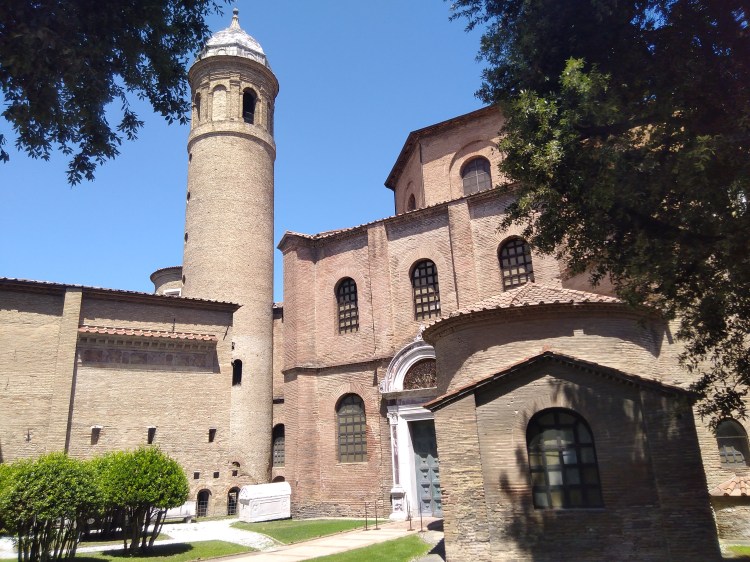
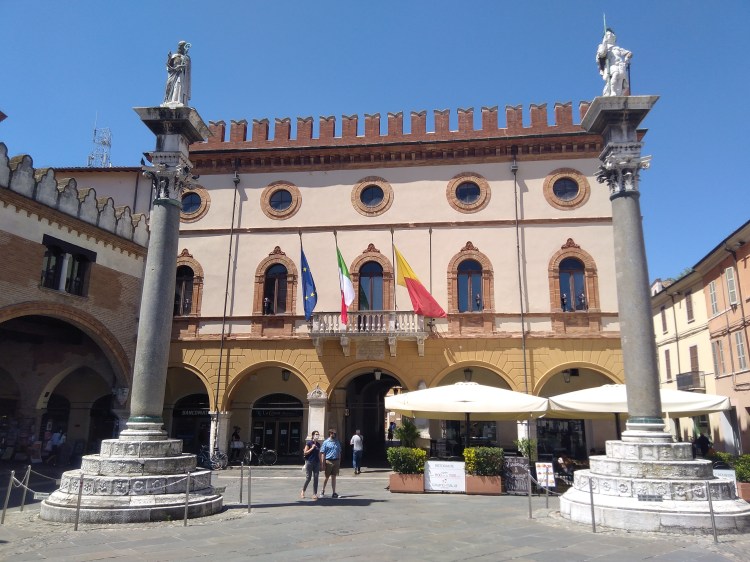
Another sight to see in Ravenna is the Piazza del Popolo, a centre square that was designed by the Venetians when they briefly ruled in the 15th century. It contains two columns topped with figures of San Vitale and Saint’Apollinare, the city’s two patrons. The church of Saint’Apollinare Nuovo is also said to contain some wonderful mosaics but we made do with admiring it from the exterior.
We had a delicious lunch in a seafood restaurant tucked away down a quiet street, before a wander round the refurbished covered market and a look at Dante’s tomb, where the famous Italian poet is buried after spending the last three years of his life.
It’s unfortunate the current state of emergency meant we couldn’t experience the main attraction of this wonderful city but we really enjoyed our day here and shall just have to return another time. Back to Ferrara we headed, to pack our things and get ready to head South.
Links
- If you’re visiting San Marino check out http://www.visitsanmarino.com
- I can’t recommend Hotel Lungomare enough, their website is http://www.hlungomare.com
 Brand New Day
Looks so picturesque
LikeLike
Great post 😁
LikeLike
We had a chance to visit San Marino many years ago when we were staying in Rimini. I blown away by the sheer beauty and the panoramic views. I would love to go back to Italy one day to see more of it. Thanks for sharing and inspiring 😀 Aiva
LikeLike
It all looks so beautiful. The buildings are amazing and such history. x
LikeLike