Wine Time in Tuscany

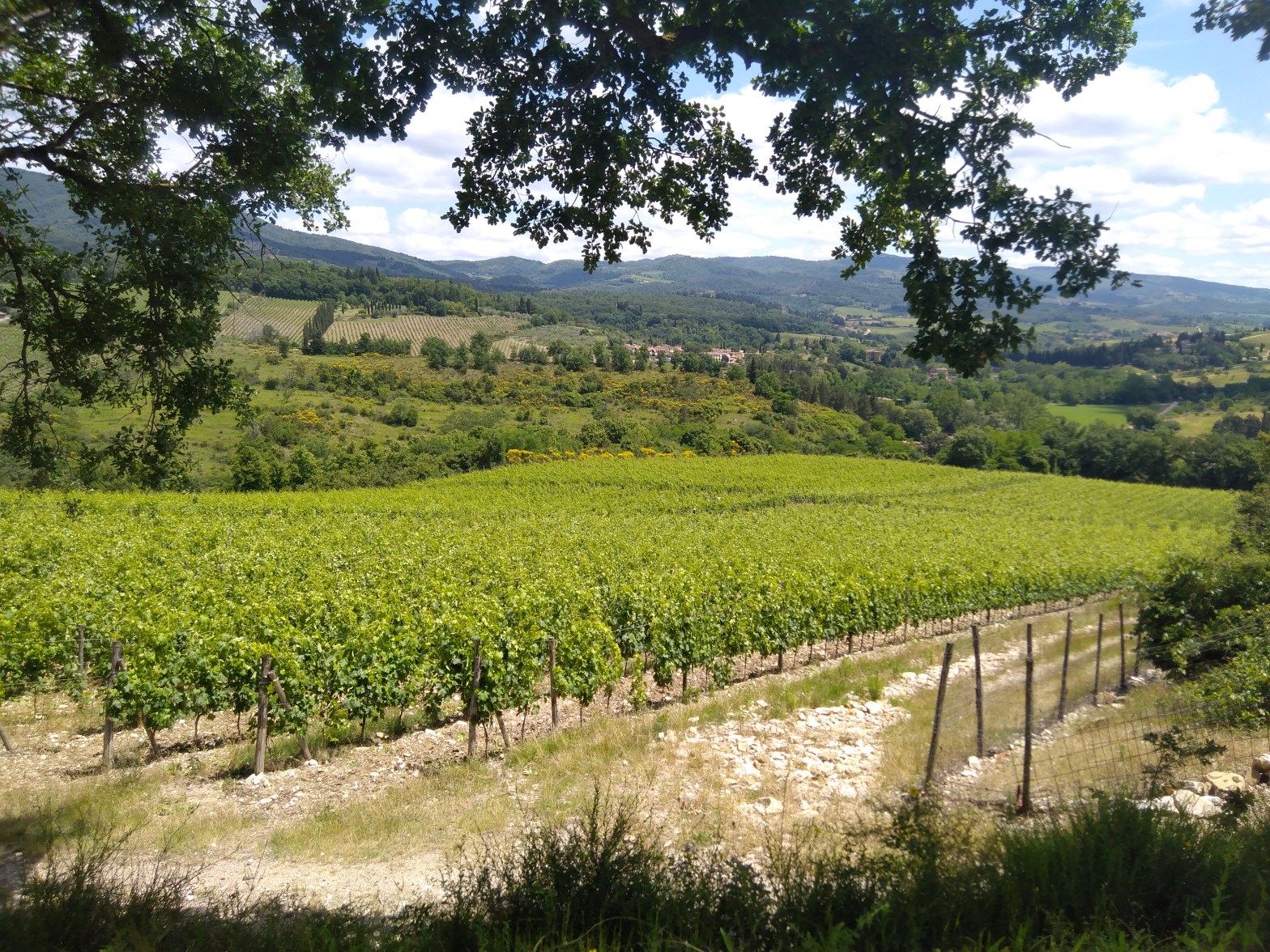
Is there anything more quintessentially Tuscan than a row of tall, thin cypress trees disappearing in to the distance, standing guard over row upon row of bright green vines? This is the view that greeted us after every twist and turn of our journey through Tuscany, more specifically the Chianti region.
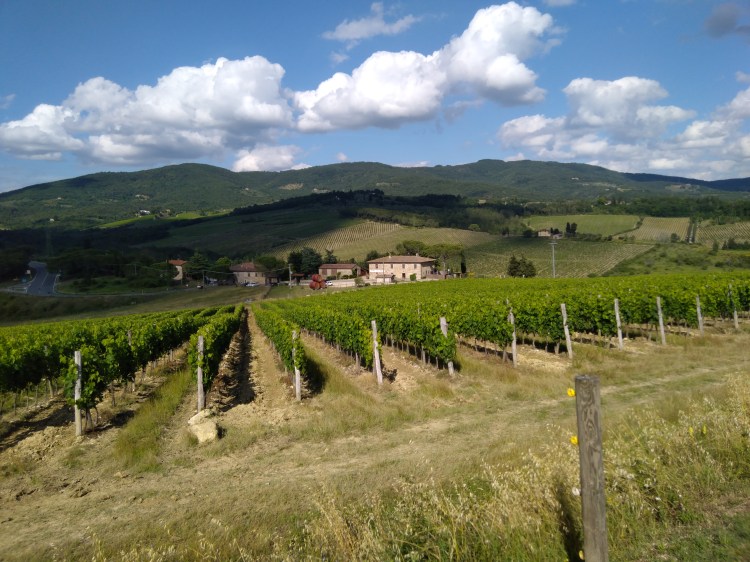
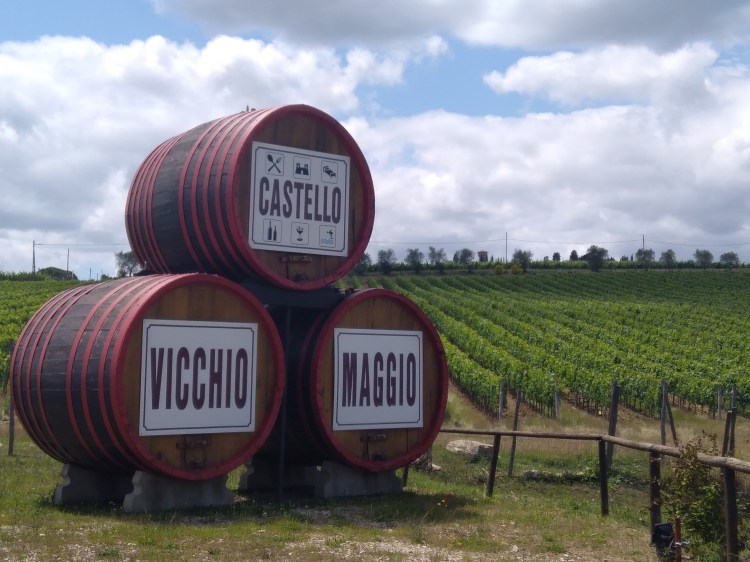
The vines of Castello Vicchiomaggio

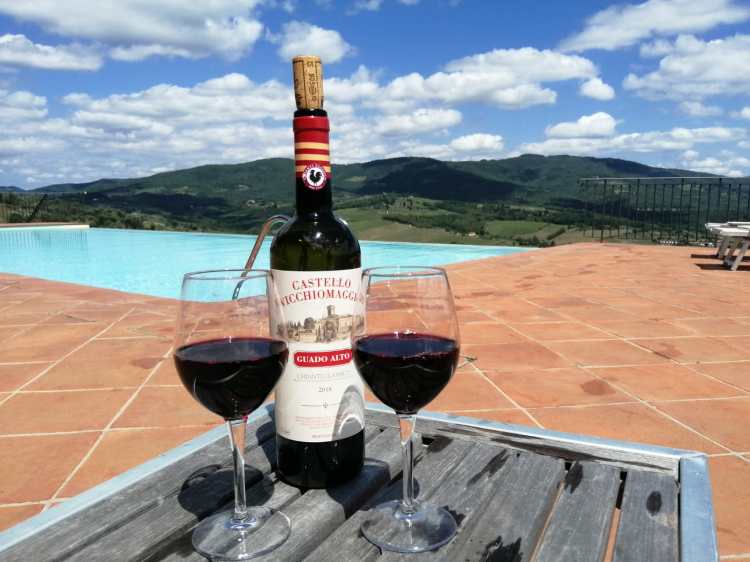
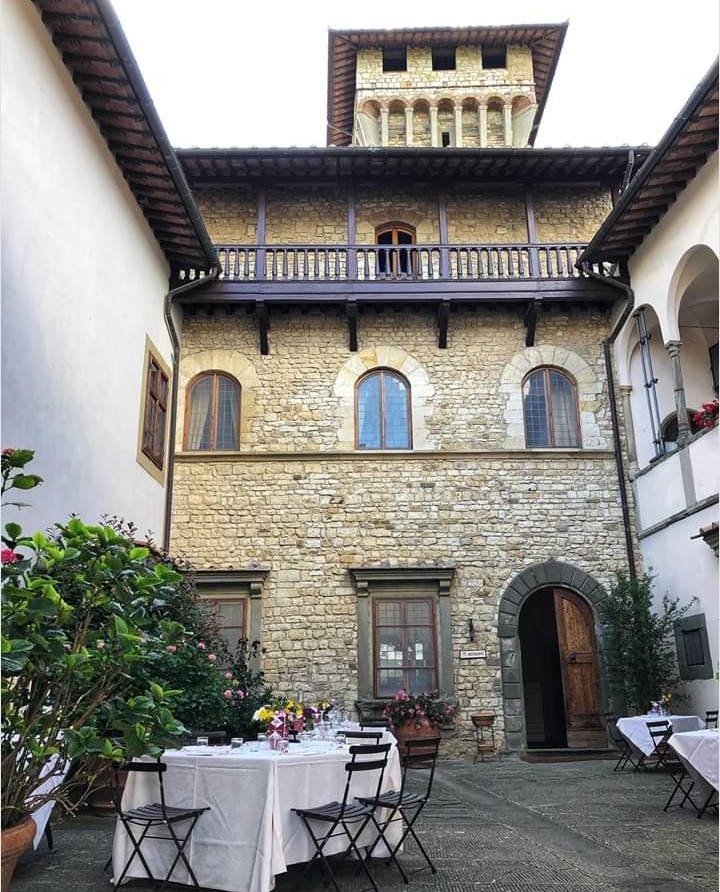
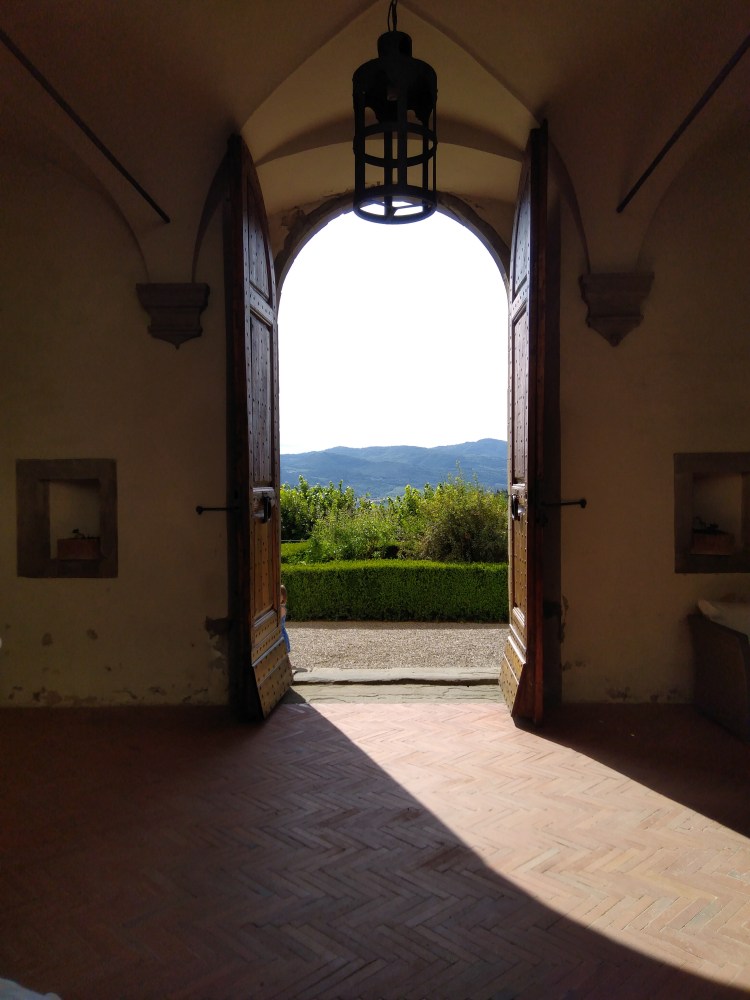
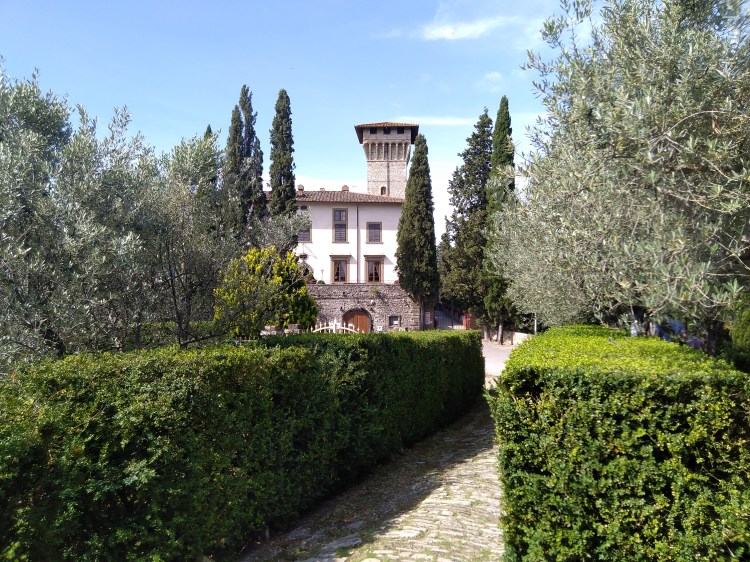
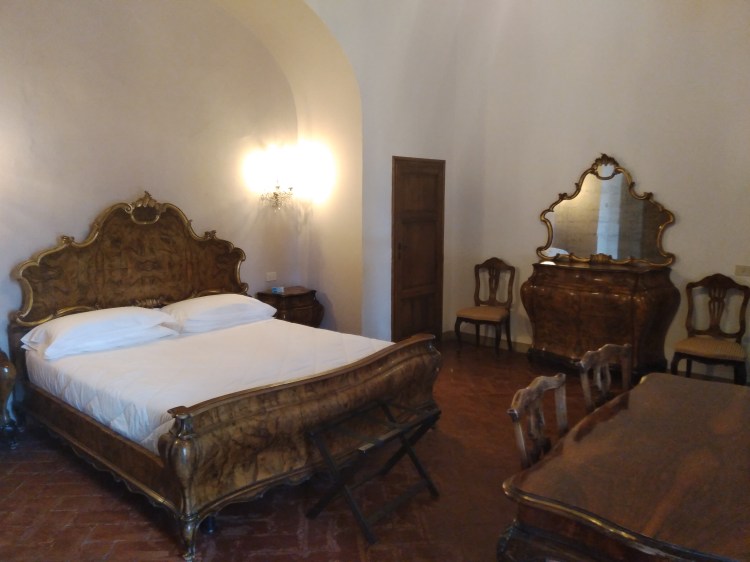
It’s also the backdrop to the stunningly beautiful infinity pool belonging to the hotel we’d booked for two nights. After scouring hundreds of hotels in Tuscany I’d narrowed it down to this one, Castello Vicchiomaggio, positioned on a hilltop just to the north of Greve, in the heart of Chianti. This beautiful estate is run by the Matta family; a family where wine really is in their blood. At the helm is John Matta, who’s father established a large wine importing business in the 1920’s before buying the hilltop castle in 1964. The production of wine flourished under John’s guidance, resulting in numerous awards over the years. The vineyard specialises in Sangiovese and Merlot grapes and I can certainly vouch for the quality of their produce! With John’s eldest two daughters involved in the business, the estate has become a wonderful place to stay, with a selection of beautiful self-contained apartments available in the castle itself. The building is set around an open courtyard where we dined one evening and enjoyed breakfast with the crenellated tower, dating back to the 1100’s, as an impressive backdrop. The castle has a very colourful past, being used as an important defensive position for many battles throughout the Tuscany region, before becoming a Renaissance villa, with plenty of noble guests staying here. The most noteworthy of which is Leonardo da Vinci who resided here whilst painting the Mona Lisa. So we decided it would do for us!
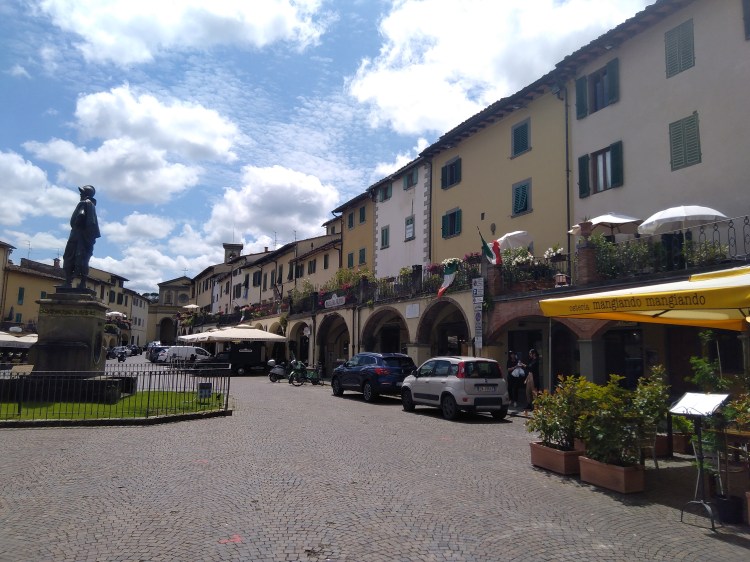
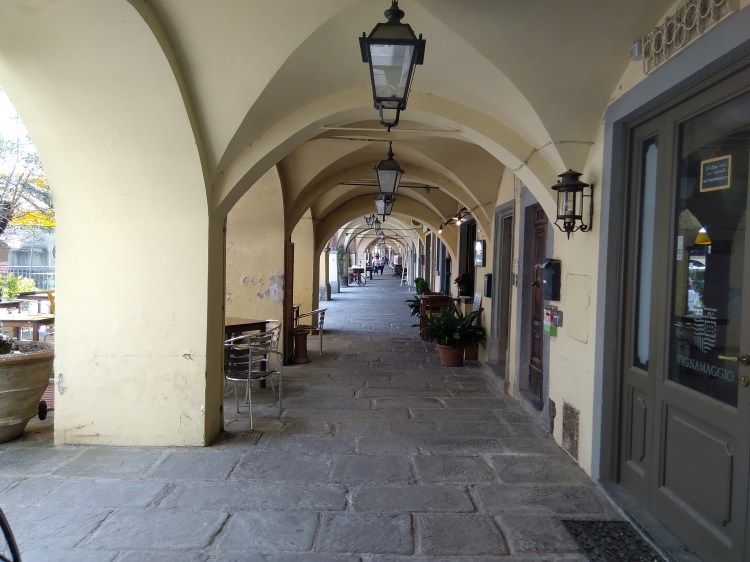
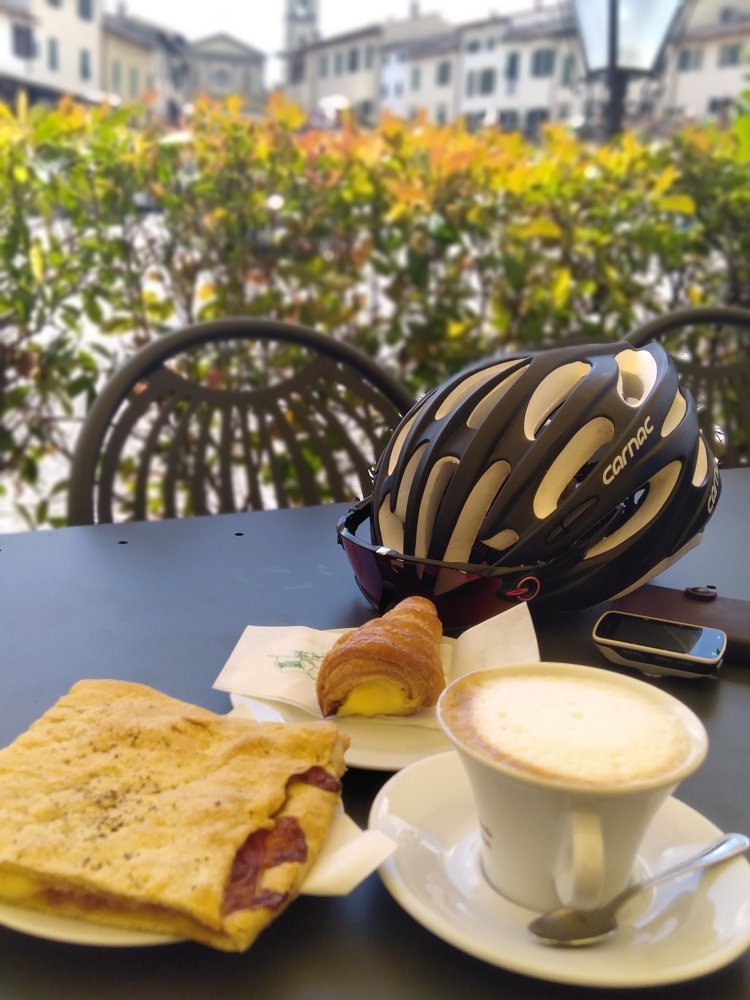
Our time in the Val di Greve started with a wonderful bike ride which saw us take in 20 miles or so of beautiful Tuscan roads, having only really ridden the flat roads of Ferrara for the last few weeks it was a slight shock to the system. We started and finished in Strada in Chianti, where before long we were on a narrow, smooth road that hugged the side of a hill and went up and up an up. In fact it carried on up for 7 miles! But the omnipresent views of beautiful olive groves, interspersed with rows and rows of vines and the odd patch of wild forest lessened the burning ache in the legs. When I finally made it to the top (Mr BND having already been there for some time!) the sense of euphoria was only magnified by the inevitable descent, which was equally as long as the climb and just wound it’s way down the valley as though someone had just draped a piece of tarmac along the hillside. With a lovely road surface, few cars and wide corners it was a joy to ride. The road ended in the town of Greve where we stopped for lunch in Piazza Matteotti, an ancient triangular piazza which has stood at the centre of Greve for over five hundred years. The arched loggia that runs round the edge houses a delightful selection of shops offering local gifts, artisan products and wonderful wines.
The route back to our van saw us climb up, out of the Greve valley, past the turn off to Castello Vicchiomaggio, (which tantalised us with it’s wine tasting sign) and rolled back to Strada. A tough but wonderful bike ride back in the land of hills. You can find the Strava route here.

We were joined at the hotel, by some good friend’s who’d driven down from Ferrara and we soon all decided a visit to a vineyard wouldn’t be complete without a wine tasting. So we spent a very enjoyable couple of hours sat on the terrace quaffing their finest wines. Our friends’ little girls could safely play and for us it was interesting to learn a bit more about the wines. It also made choosing a bottle for dinner slightly easier too. The food was typical Italian fare and was very good, made even more special by sitting in the open air courtyard.

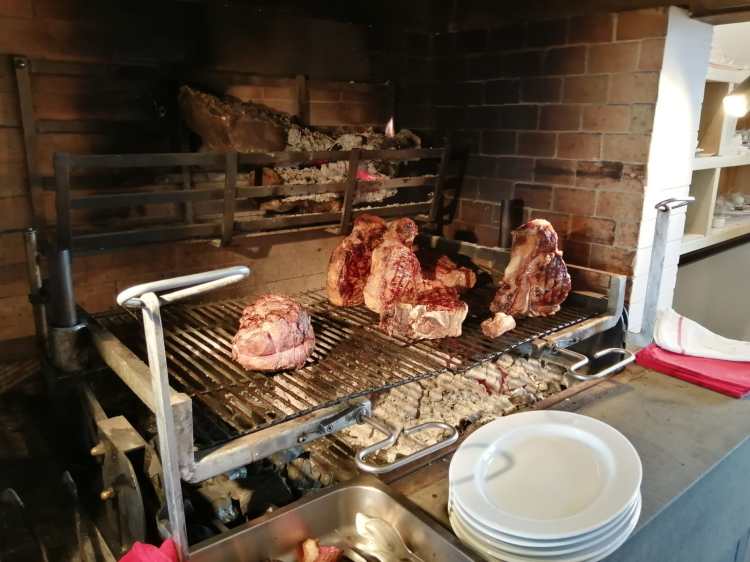
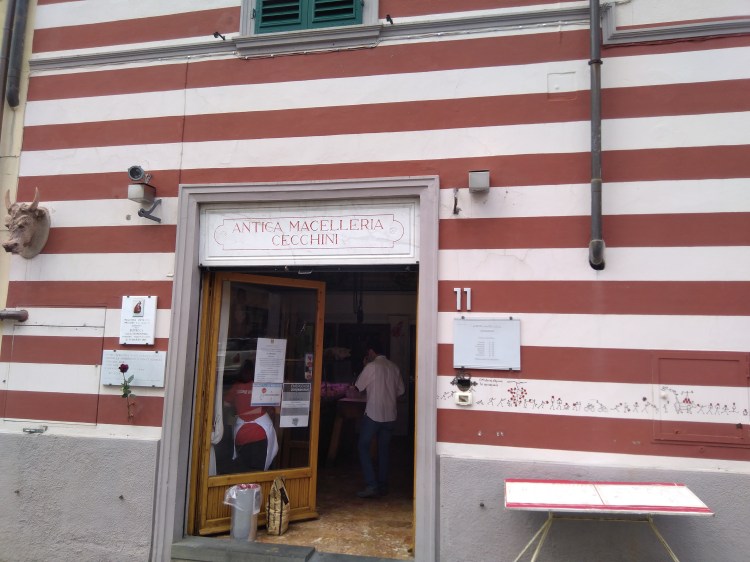
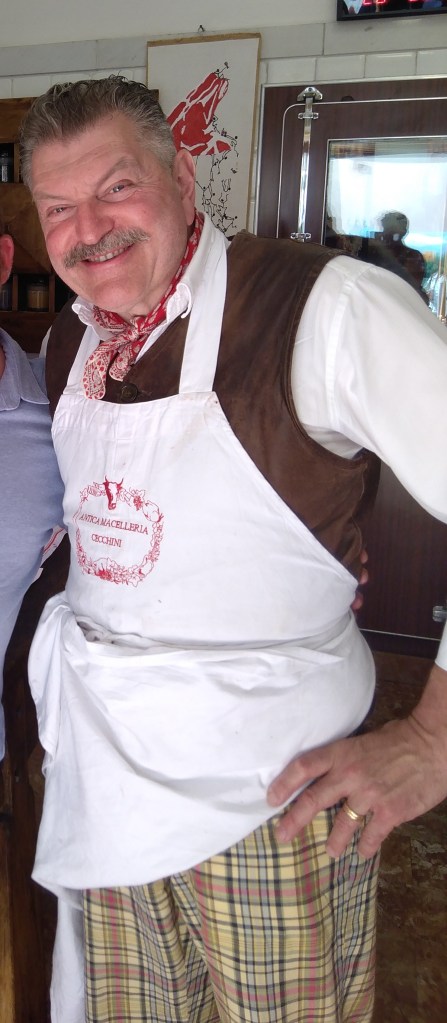
A short drive the other side of Greve is a gorgeous little village called Panzano. After watching the Netflix series ‘Chef’s Table’ we made sure we added this village to the list of must visits. There’s a restaurant called Officina della Bistecca which is now renowned the world over due to it’s media coverage. It’s run by local Dario Cecchini, an eighth generation butcher who’s ethos is centred on respect for the animal and the bringing together of friends and family over quality food. A fitting end to our time in the North as we were joined by two more good friends from Ferrara, resulting in a meat themed send off! (My vegetarian days last year seem such a long time ago now! I must apologise to my Brother for falling off the wagon so spectacularly!) Dario was instrumental in returning the Bistecca alla Fiorentina (Florentine steak) to all it’s glory after it’s popularity decreased years before.

You can’t miss this quirky, unique restaurant due to it’s red and white facade and hoards of people gathering outside for the apperitivo which is included in the set menu. There’s a note on their website that says ‘the officina is not recommended for people of little appetite.’ Never before have I agreed so wholeheartedly with a statement. We were booked in for lunch, which was a blessing, as we needed the rest of the day to recover! They bring out cut after cut of mouthwatering beef, culminating in the Fiorentina as the piece de resistance at the end, all accompanied by delicious sides, bread and wonderful wine served in traditional carafes. This was the first place we’d seen that was busy since lockdown finished. It was bizarre to be around so many people! But it was just tantamount to the excellency and popularity of the place.
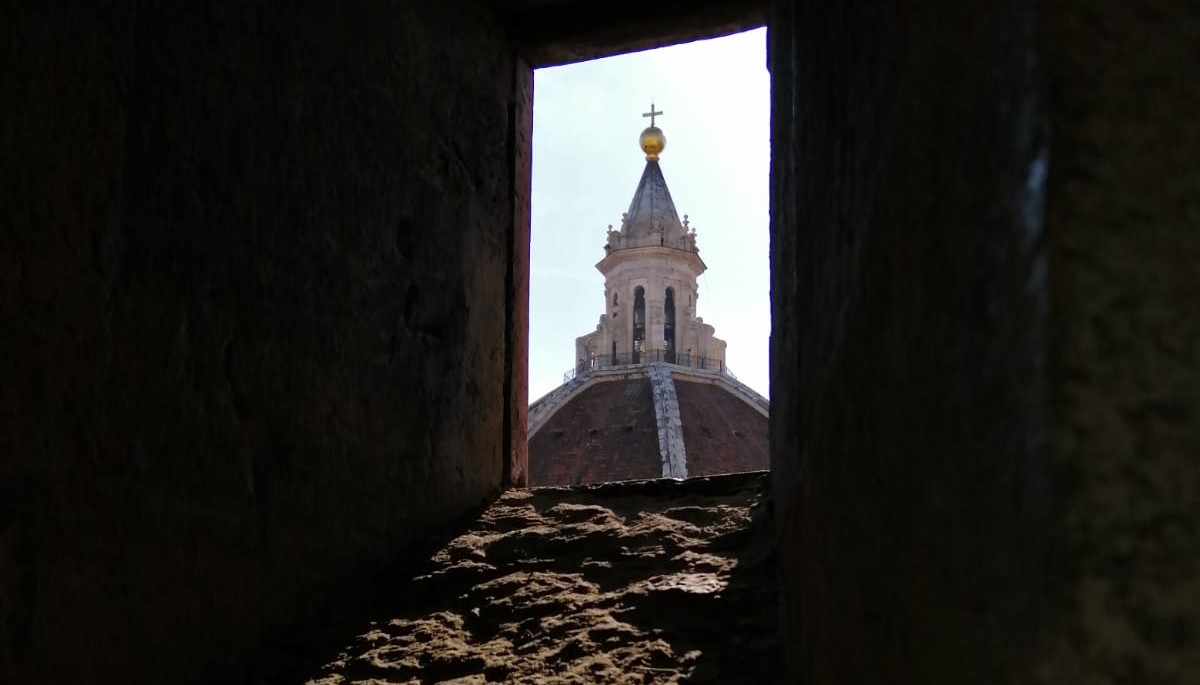
The village itself is much more than just home to the restaurant and a walk up to the hilltop the other side of the little square is well worth the effort. With a beautiful little church and panoramic views it’s a nice way to end the visit. The Chianti region is always a joy to visit and with there being so much more to offer it’s remaining on our list of places to visit. Our stay was the perfect way to close one chapter before starting the next.
Life after lockdown for Italy’s tourism.

On the surface life is back to normal. There’s the usual hubbub of people going about their daily lives; the only indicators of the last few months being face masks that spend most of their time pulled down over the chin, peeling stickers on supermarket floors to remind you to keep your distance and bottles of hand sanitiser positioned at most shop and office doorways.

Both in the north and the south of Italy, the traffic hum is back to a normal level, having had a few weeks of eerie silence punctuated by the odd noticeable bus or whining moped. Back in March, the chatter of people walking past our ground floor flat slowly dwindled as the lockdown restrictions tightened and upon release it was a joy to hear again; both for us as well as for the perpetrators the other side of the bars, revelling in the newfound freedom. In fact, in Ferrara, it was busier than we’d ever seen it, particularly when the market resumed and people could get out shopping again.

However, life is far from being back to normal. On the local, day to day level there might not appear to be much amiss but on the tourist trail it’s a different story. It’s a bittersweet feeling. We’re so lucky to see so many places devoid of the usual melee of sight-seers and tour groups. It makes a delightfully refreshing change, having had so many sight-seeing experiences marred by the hundreds of other people clutching ipads and selfie sticks clamouring for the best view. St Mark’s square in Venice with a handful of people in the distance, Ponte Vecchio in Florence to ourselves and Sorrento’s Marina Grande dotted only with local fishermen is a pure privilege. I know we’ll never again experience these places in the same way.

Whilst we can take time over snapping the perfect photo, just pause and appreciate the true beauty or really listen to the accompanying soundtrack of so many wonderful places, my heart goes out to those who are so negatively affected by the last few months. Not that it stops there. It’s not just a handful of weeks that are lost, can be forgotten about and moved on. The true impact on the tourist trade will be much more long term. Yes travel is allowed around the country but international travel on the usual scale is a long way off returning.

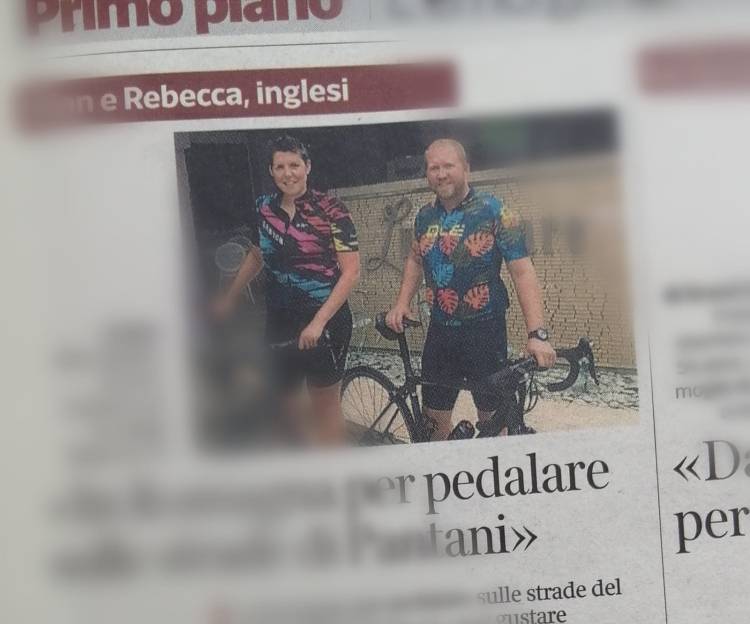
Whilst staying in Cesanatico a couple of weeks ago we made a national newspaper because we were the first cycling guests at the Lungomare Bike Hotel since lockdown. When we booked it we certainly didn’t think it was a news worthy event! We were just keen to experience as much of the North as possible.

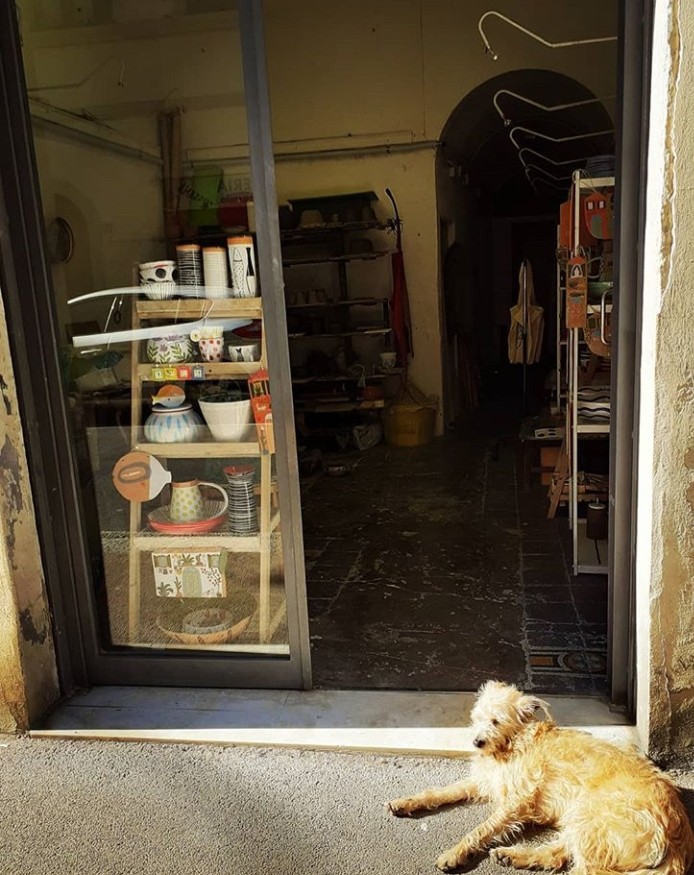
For me though, two comments have had more of an impact. When walking in to Florence from our hotel we passed a tiny ceramics studio and shop. I insisted on stopping and having a look. The very talented artist and creator was called Eva Puccioni and as we entered and marvelled at her bright and beautiful creations she looked at us and said “It’s so nice to hear English voices.” A sentiment that was reflected through the relief on her face. She showed us her pottery wheel, which to my untrained eye seemed very basic and traditional and she showed us the difference in the colours of items before and after being fired. Not wanting to carry round a beautiful vase with us all day we promised to return the following day to make our purchase. It dawned on me though, about how much Eva must rely on tourism. Her products are a quintessential souvenir, something that would sit on a window sill or dining table and when commented on, the story of meeting her and seeing her studio would be regaled. Not necessarily purchased by the inhabitants of Florence, or even Italy.

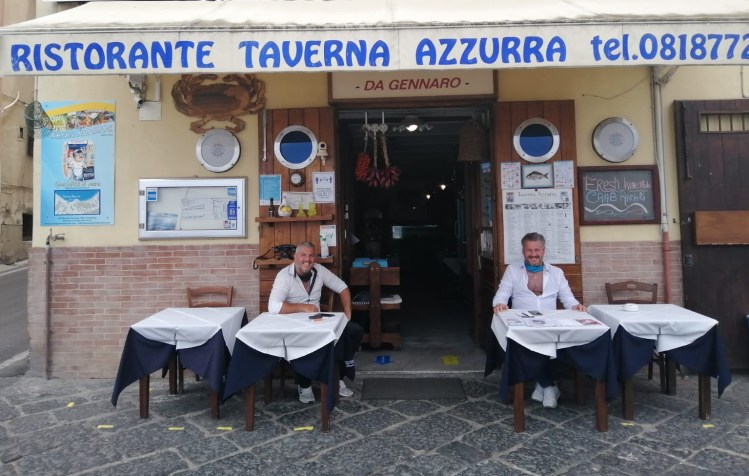
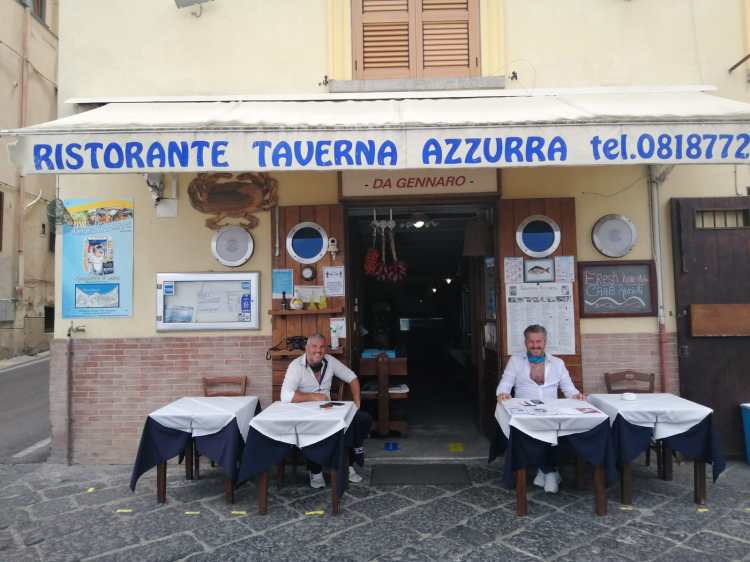
The second comment that struck a chord was this last weekend in Sorrento. As we were walking the small front of the Marina Grande we passed a row of restaurants, the friendly proprietors all said ‘ciao’ as we passed but one man in particular heard us conversing and asked where we were from. I could understand his need to enquire when he said, “hearing an English accent at the moment is like seeing a white fly.” A sad reality in a location that relies so heavily on international tourism. The few beaches of Sorrento were busy with Italian sun worshippers but judging by the amount of traffic Sunday morning the majority were locals from the Napoli area who would more than likely take their own lunch and then head home for dinner. The man in question was Gennaro, one of two brothers who run the harbour side restaurant Taverna Azzurra. Despite the current footfall, he was optimistic that it would soon pick up. Which I really hope it does because the business was founded by his Great Grandmother in 1930 and if it was forced to close it would be a real shame.

These are just two small businesses in one country, which makes you wonder how many millions out there are struggling and perhaps won’t survive. Never before has supporting independent businesses been so important. Buying a vase or stopping for lunch can make such a difference to a real family.

So at the moment, in my mind, it’s a win win situation, we get to travel and experience these wonderful places like never before but by us doing so we can make a difference to someone’s day and support the local economy. 2020 is a year that will go down in infamy, but here’s to 2021 being the year the world bounced back; bigger and better than before.

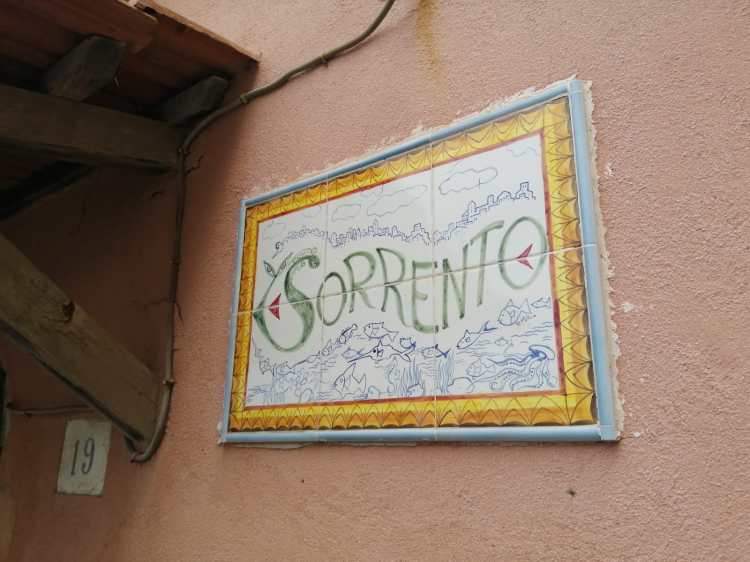
Campervanning in Sorrento

We’ve made it down to our new home just north of Naples. To say there’s a north south divide is a slight understatement. Emilia-Romagna boasts beautiful renaissance towns, with well kept parks and open spaces. Here in Campania there’s a much more laid back approach with crazy driving, lots of litter and plenty of stray dogs. There’s more similarities with parts of Africa than north Italy. Some of the other Brits out here have said “You’ll cry when you arrive, but then cry when you leave.” I can understand why. If we hadn’t be forewarned about some aspects it could be a bit of a culture shock but having spent time in places that are a little rough round the edges, I know we’re going to love it, it has a fantastic atmosphere and is so well located to explore some of the best Italy has to offer.

So it was for that reason we decided to hit the ground running and we spent our first weekend on the Sorrento peninsula. Having spent the last week driving lots of miles we didn’t want to spend too long on the road, so being an hour and half away Sorrento was perfect. We booked in to a campsite, packed the van and were on the autostrada before we knew it! We went straight to Sorrento where we found a fantastic car park on the edge of the town, in a secure, independent supermarket. Which as it turned out was the best supermarket we’d found since being in the country!

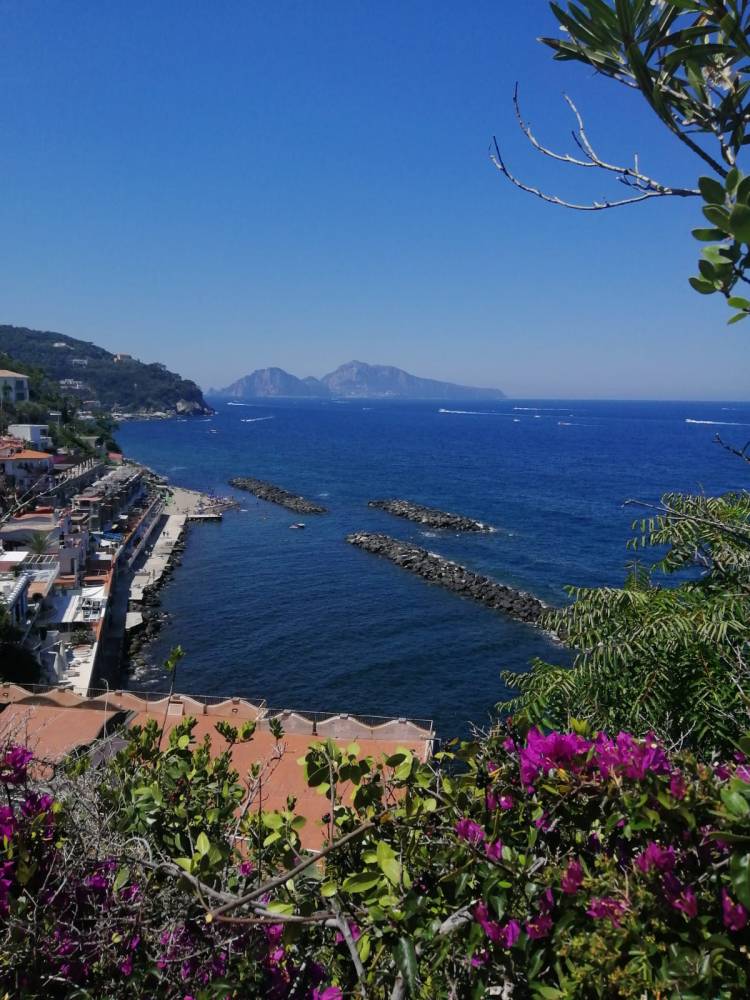
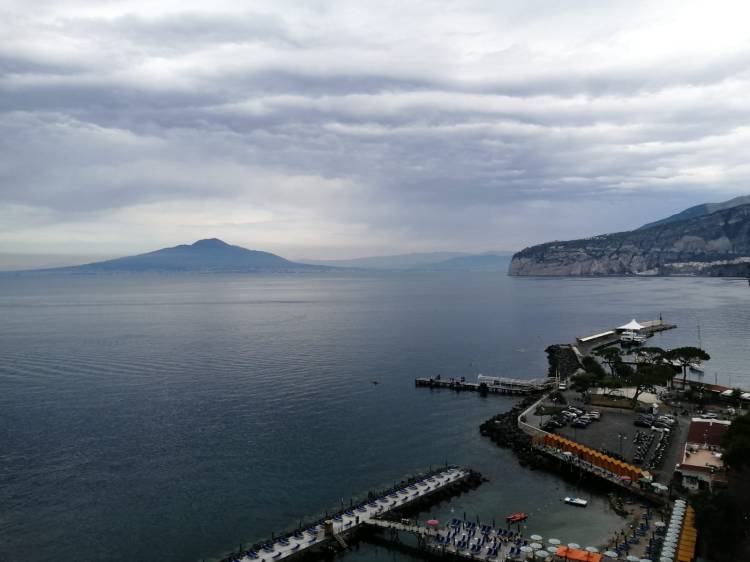
View of Capri from the mainland

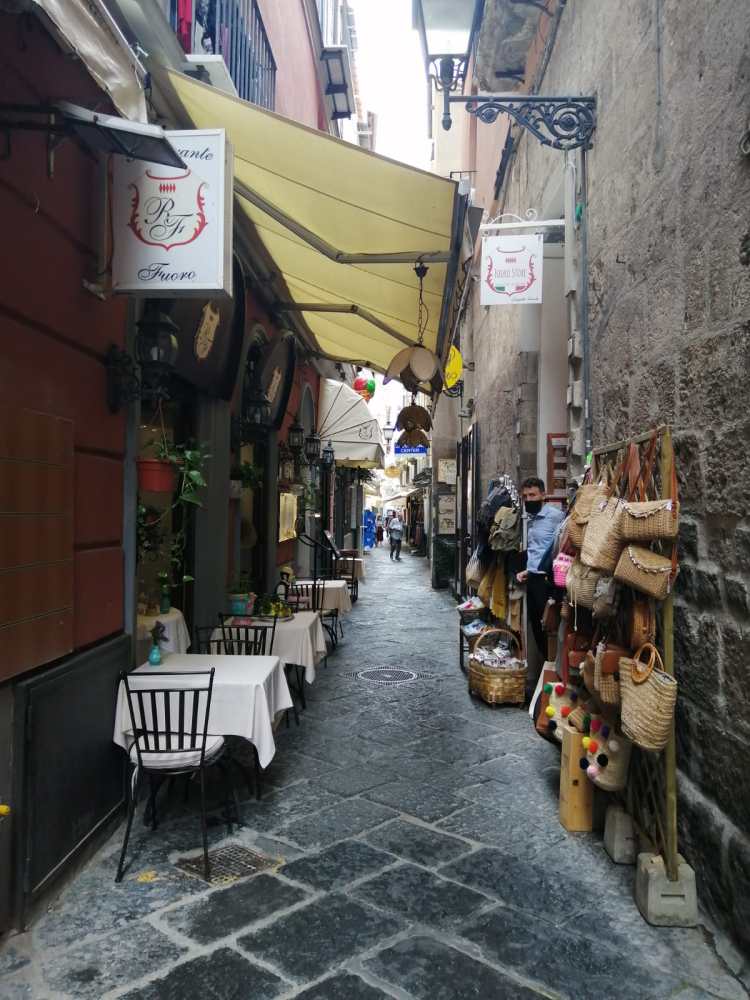
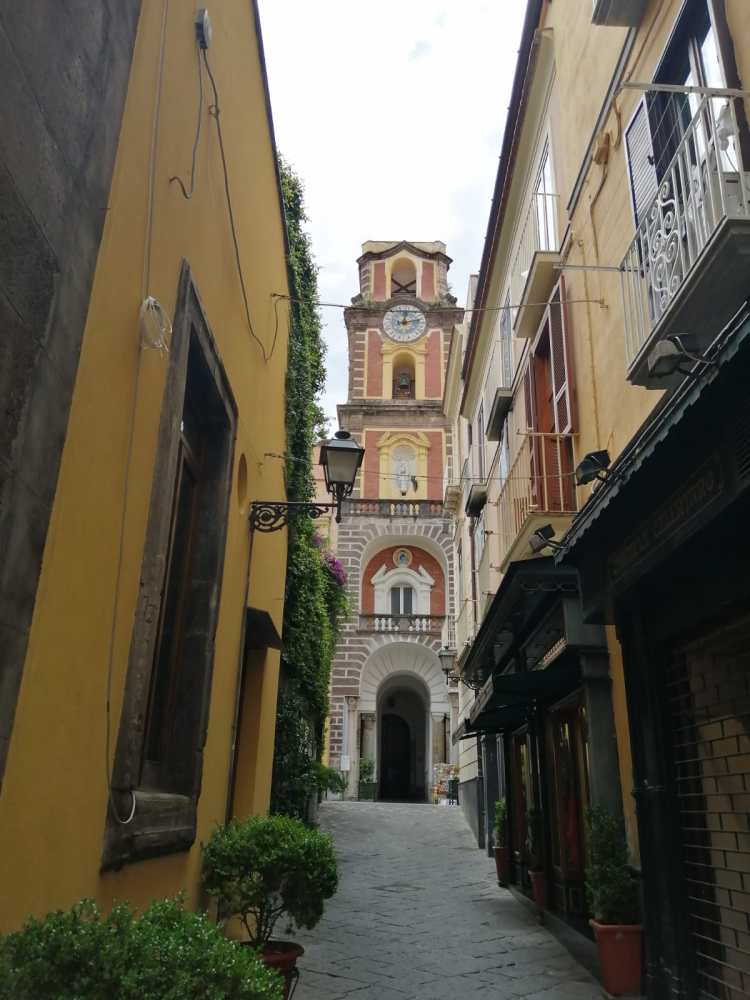
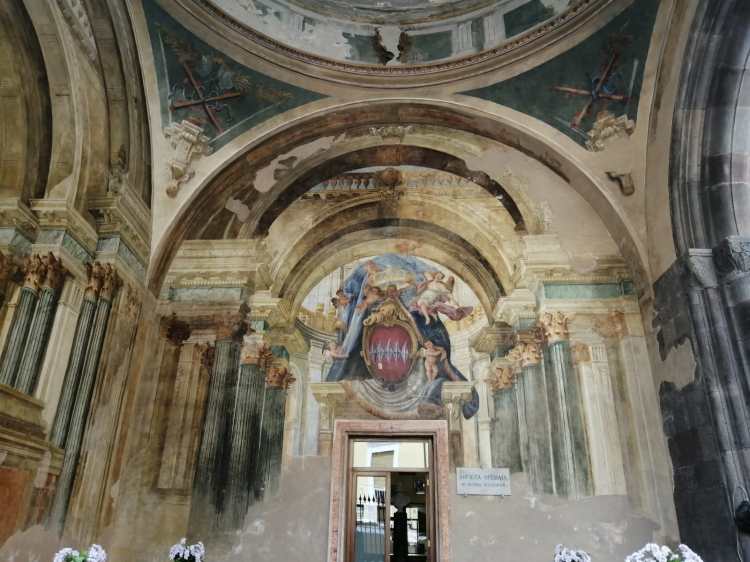
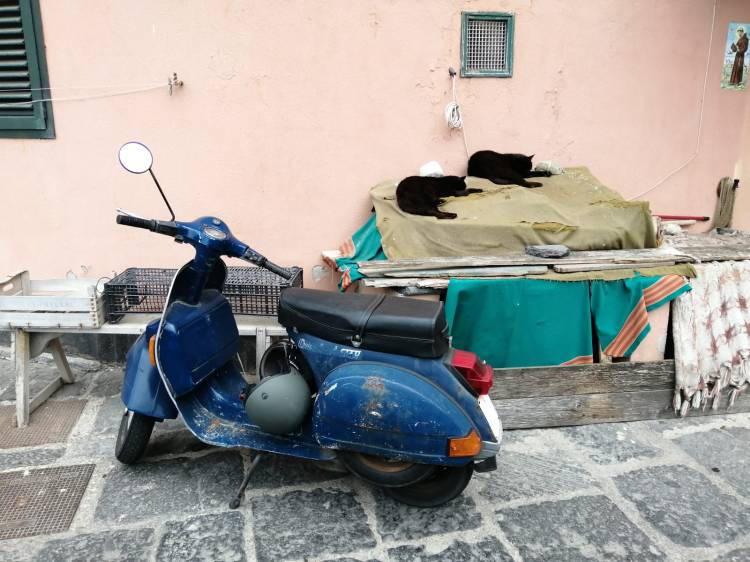
The next couple of hours were spent winding our way through the town following a self-guided walking tour which we found on Sorrento Insider. Having walked Via della Pieta and Corso Italia, the wide central boulevard lined with fashionable boutiques, the route took us in to the historical centre of Sorrento and along my favourite street, Via San Cesareo. This narrow street is paved with smooth flagstones worn with years of use, the tall buildings on either side are a delightful mix of tiny artisan workshops, restaurants and boutiques selling either leathergoods, clothing or a huge array of lemon themed souvenirs. Every so often the street opens up and you’re offered an unexpected view of the gorgeous Duomo bell tower or the Sedil Dominova; a beautiful 14th century loggia with absolutely incredible frescoes adorning the inside of its cupola.

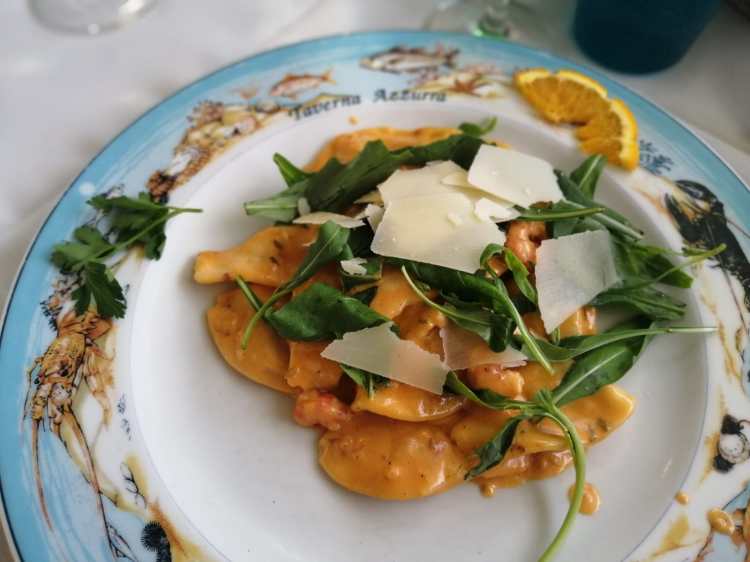
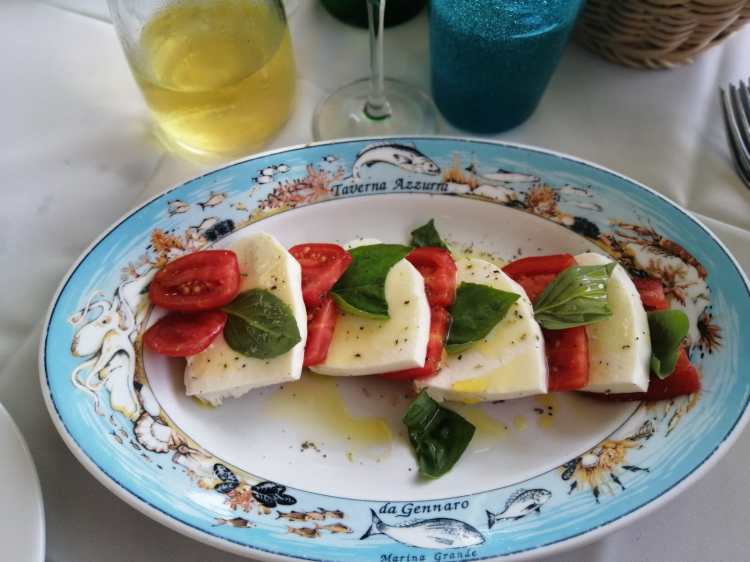
We then took in the glorious coastal view from Villa Communale, a large terrace hugging the cliff top, before winding down the old, cool streets to Sorrento’s Marina Grande, it’s little fishing village. Passing under the historic town gate you pop out just above this picture perfect little harbour. Normally this would be full of tourists at this time of year, all flocking to eat at one of the little seafood restaurants on the harbour front. However, apart from a handful of locals we had the place to ourselves. We decided to eat at Taverna Azzura, a family run seafood restaurant dating back to 1930 where the fish just doesn’t get any fresher! We shared the classic caprese salad, then both opted for that day’s special of crab filled ravioli in a creamy prawn sauce. Delicious! Washed down with some white wine and complementary, homemade limoncello. The walk back up the steep cliff seemed a lot harder than it should it have done!

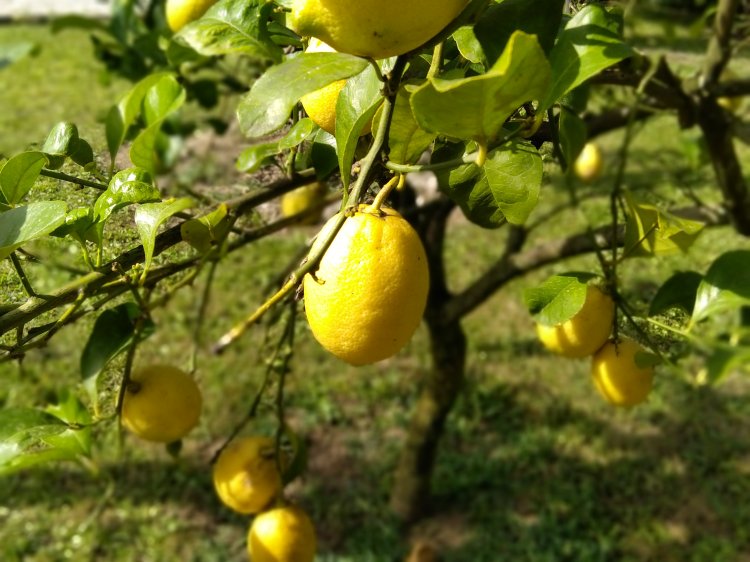
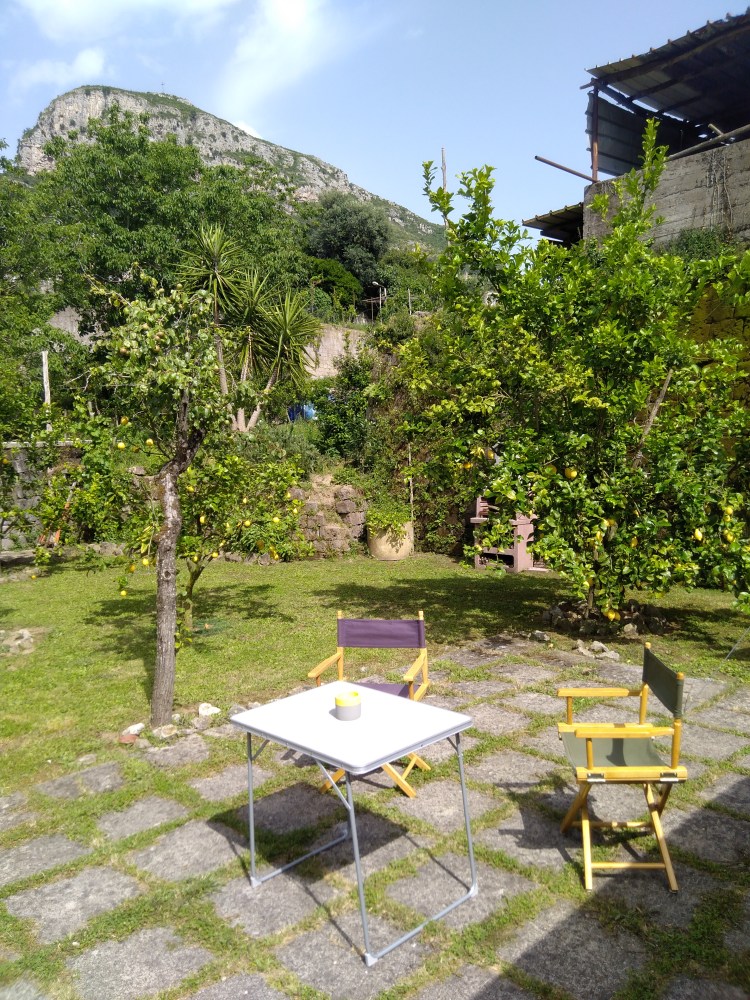
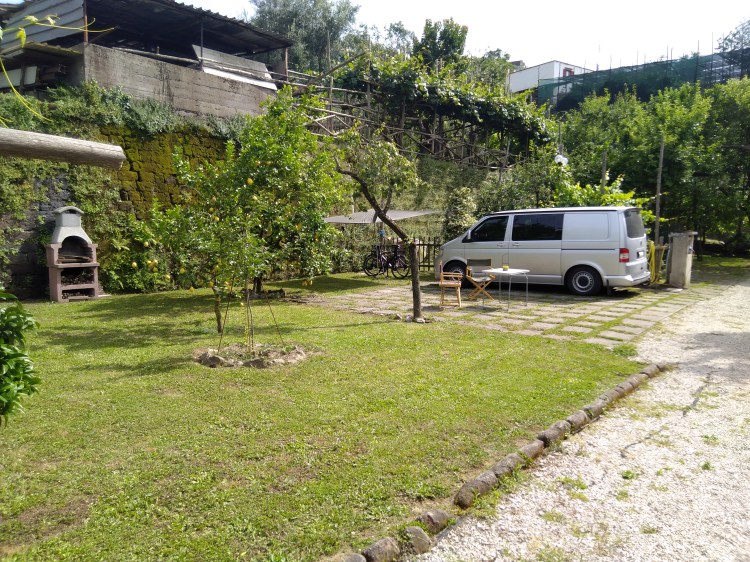
The rest of the afternoon was spent at the campsite, a delighful little agricampeggio ten minute drive up the hill from Sorrento. It’s called Oasi Verde and an oasis it certainly is. It’s accessed off a main road in to a small farmyard where the road just suddenly drops down a very steep drive in to an idyllic lemon grove nestled in to the hillside. There’s 8 pitches amongst the lemon trees, olive trees and vines, some with picnic benches and some with BBQ’s. We set up camp and relaxed with the scruffy farm dogs for company.

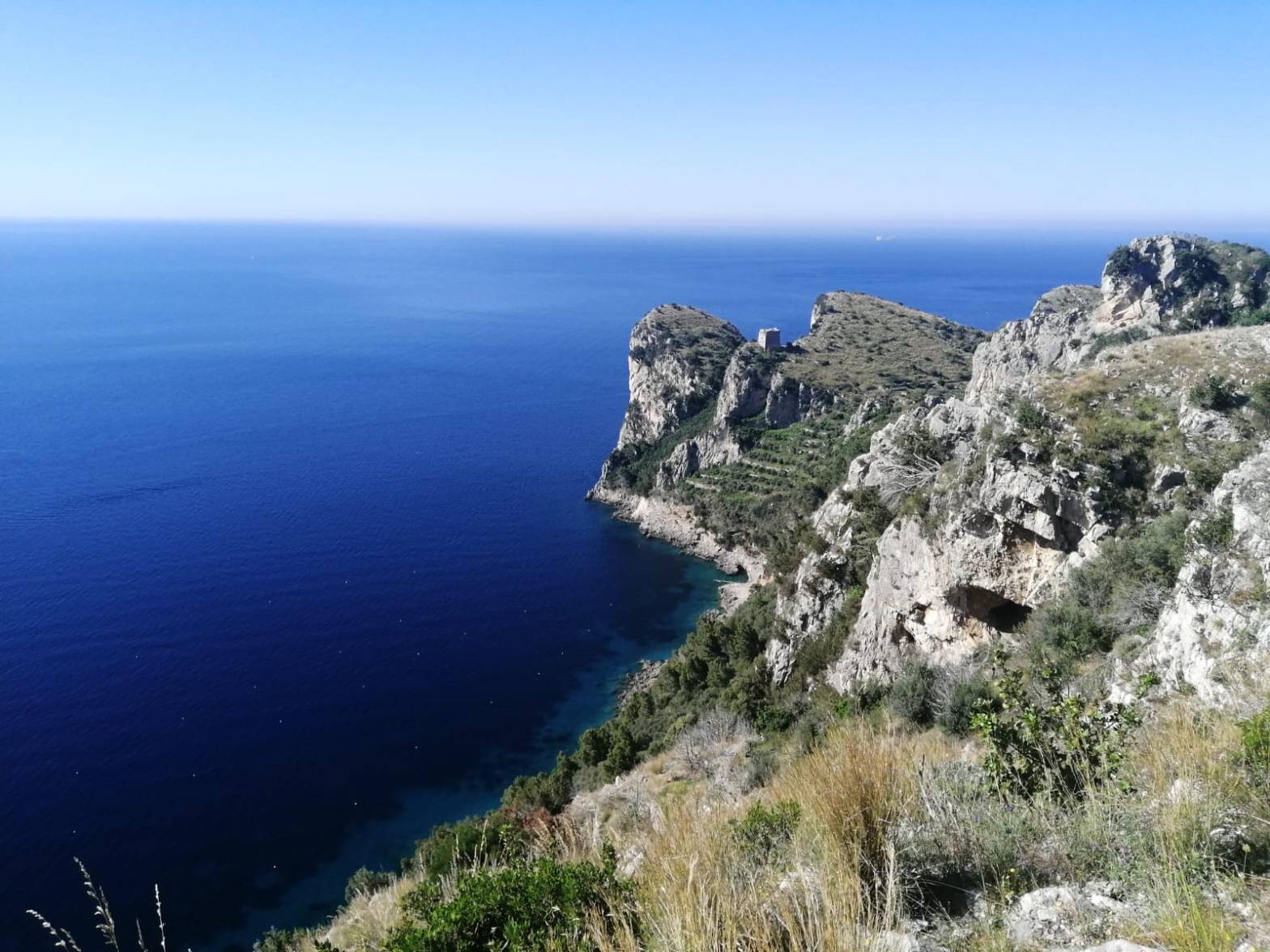
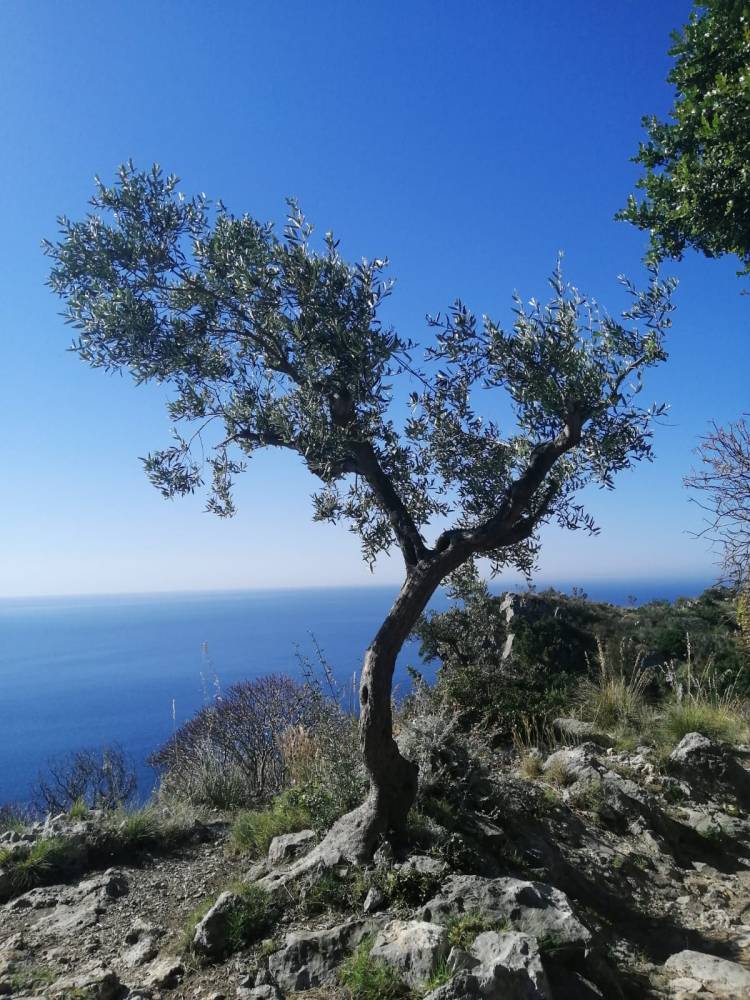
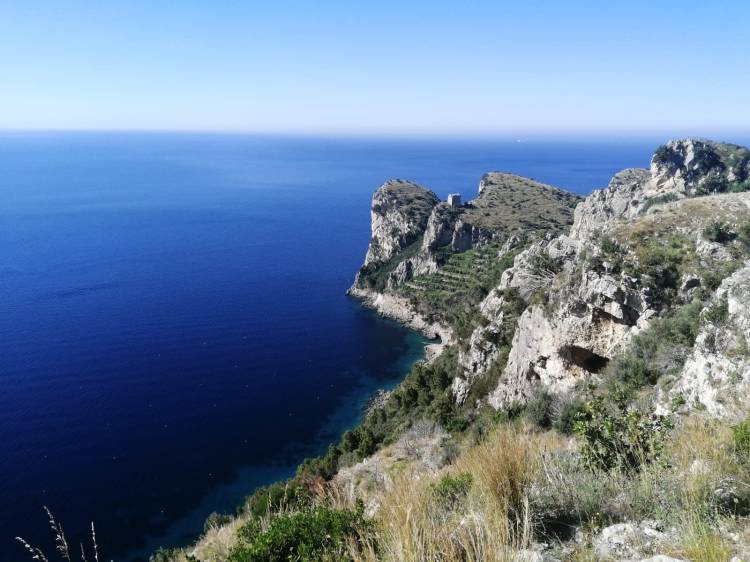
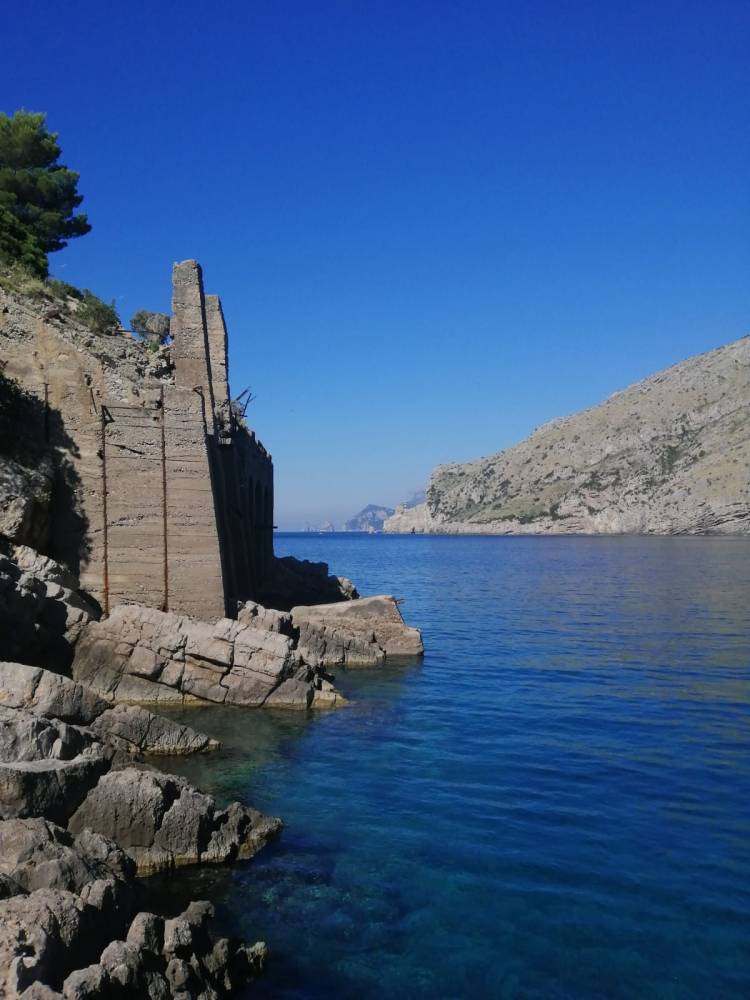
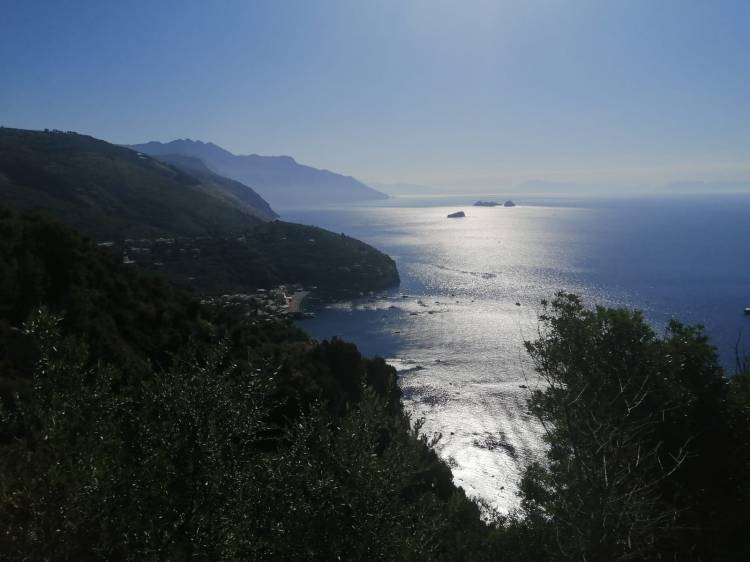
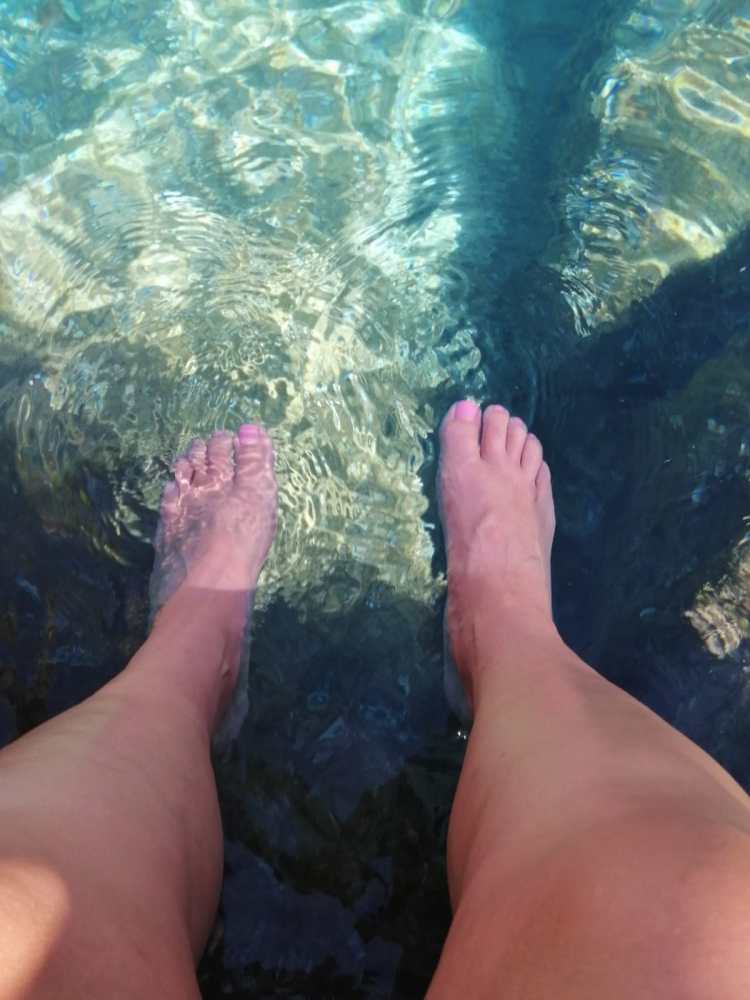
The next morning we were woken by the battle cries of the various local cockerels dotted about the hillside all eager to announce the imminent sunrise. The ‘crow off’ was then replaced by the beautiful chorus of birds punctuated with the odd dog bark and moped whine. We left early and headed for a little village called Nerano, where the wider, busier roads gave way to narrow, winding, quiet roads as we dropped down to park in the village. From here we hiked the 6 kilometres to the Bay of Ieranto, whose name derives from the Greek word ieros, meaning sacred land. The Sorrentine peninsula is known as ‘The land of the Sirens’ and according to legend this furthest point is where these mythical creatures sang sailors to their doom. The path hugged the cliff for the first part of the walk before reaching a rocky outcrop which offered absolutely gorgeous views along the coast. The path then dropped down in to a valley where it wound itself through row upon row of olive trees which in their regimented lines looked out of place in the otherwise rugged, wild landscape. The shaded grove offered some cover from the already hot sun and as we walked down the hillside the only sound was of birds chirping and the distant lapping of the sea. The path forked with an option to go down to the bay’s small beach where there were already a handful of people snorkelling and sunbathing. We opted to go down to the left to the large abandoned mining buildings that looked like they’d just been stuck to the cliffs above the water line. From here we could appreciate how crystal clear the blue water was and as it is a protected coastline with no motorised boats allowed, the whole area was immaculately unspoiled. As we dangled our feet in the refreshingly cool water we sat listening to the sounds of the water and the low hum of chatter coming from the group of older village men on the beach, obviously partaking in their Saturday morning ritual.

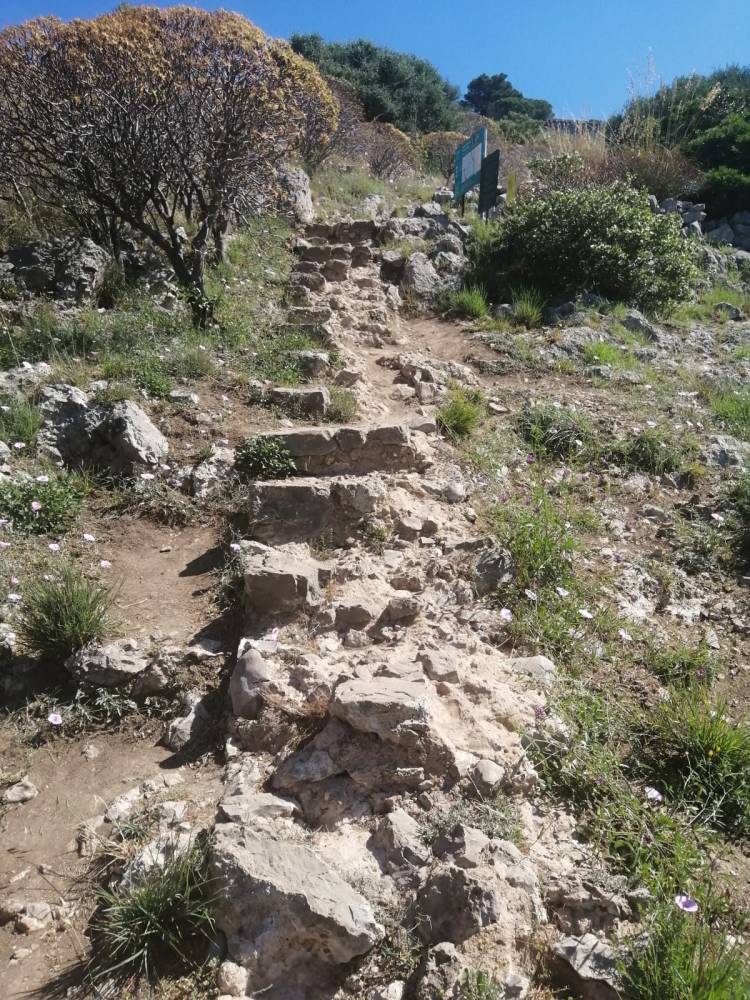
The walk back up took us up the ‘miner’s stairs’ which were a set of rocky steps precariously clinging to the steep cliff face. With views across to Capri offering a good excuse for regular breath-catching rests, the climb wasn’t too arduous and I felt quite good. As we neared the end of the trail at Nerano, the number of people going the other way increased so it was a good move to get up early and get on with it.

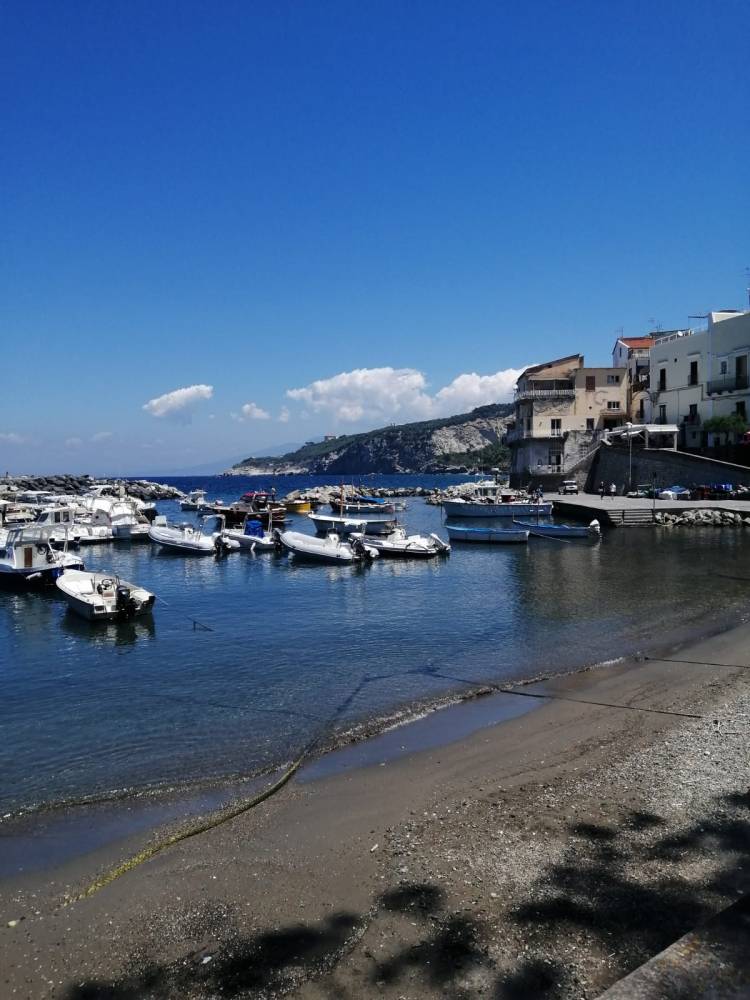
We left Nerano and drove back along the winding coast road to Massa Lubrensee, another picturesque town hugging the cliffs with a pretty, little marina at the foot of the hill. Having walked 12 miles we put our feet up for a bit that afternoon and that evening treated ourselves to a fantastic pizza in Sorrento at Pizzeria da Franco’s on the edge of town. A casual restaurant that turned out to be a great find as the locals poured in, to either eat in the restaurant or collect takeaways. It was a great way to end a lovely day.

The following morning saw a leisurely start before packing up and heading back. Perfect timing as the road in to Sorrento was full of cars and mopeds with locals making for the beaches. We only scratched the surface of this famous peninsula but having it so close by means we can easily pop back to explore more. Now for some settling in to the community and developing a routine!

5 Highlights of Florence

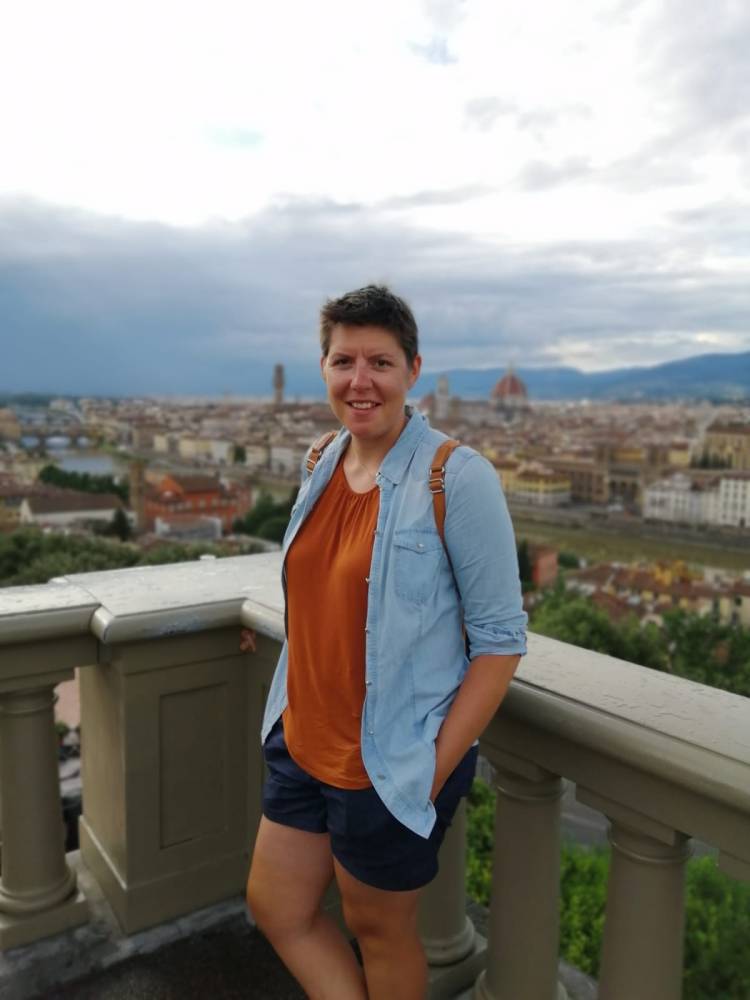
Our trip South from Ferrara to Naples included a few night’s in Tuscany. I’d been to this part of the world before but Mr BND hadn’t and was particularly keen to visit Florence. Knowing what a beautiful city it is, I certainly didn’t have any qualms about going again. So here’s five of our highlights from this magical city. Of course, not everything was open and back to normal, so there’s a few things we didn’t get to do. Which just means another trip will be needed!

1. Boboli Gardens

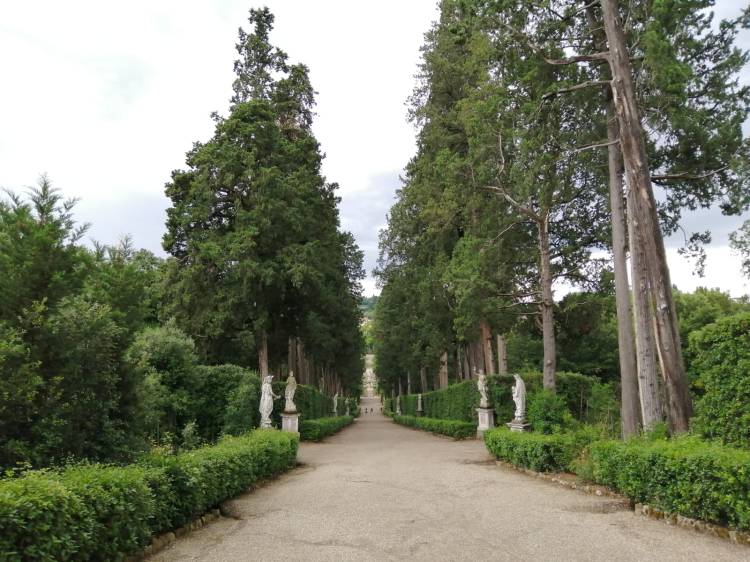
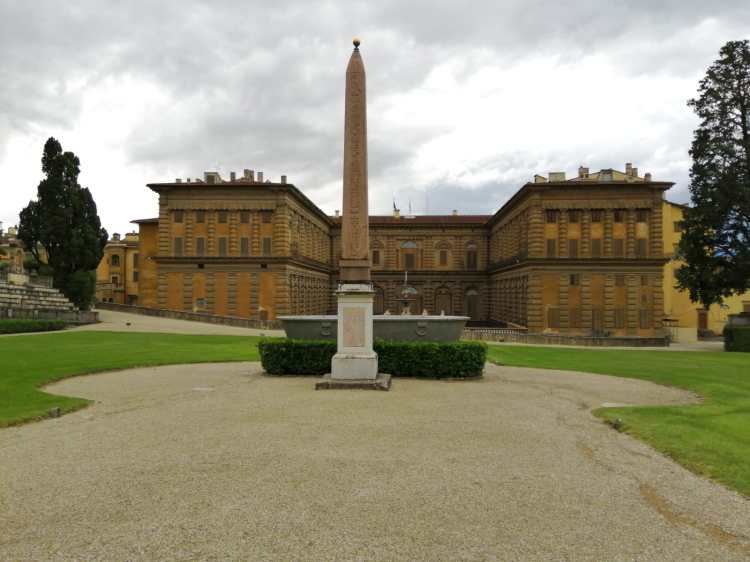
These gardens are a wonderful example of Italian Renaissance gardening, which influenced many other gardens of royal courts throughout the country. They sit behind the Pitti Palace; a huge, imposing building that was built in 1548 for the Pitti family, rivals of the Medici. But in 1549 it was acquired by Cosimo I and Eleonora di Toledo where it became the official residence of Florence’s rulers up until 1919. The gardens were begun in 1549 and designed by Niccolo Pericoli, known as Tribolo and encompass a vast area of the hillside that Florence is nestled at the foot of.

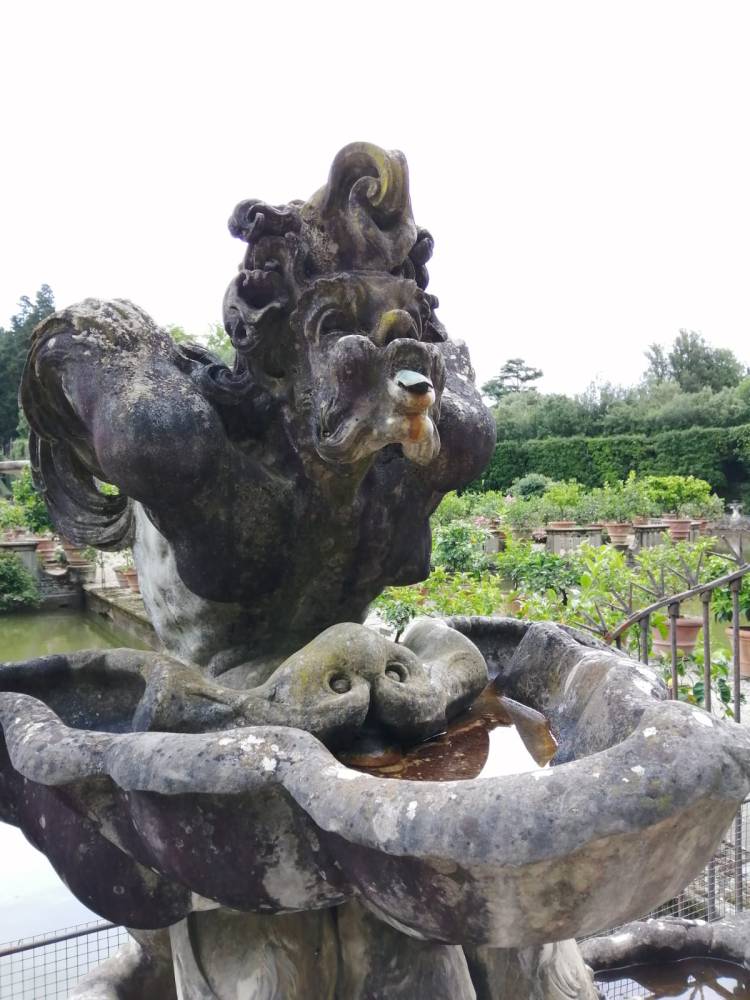
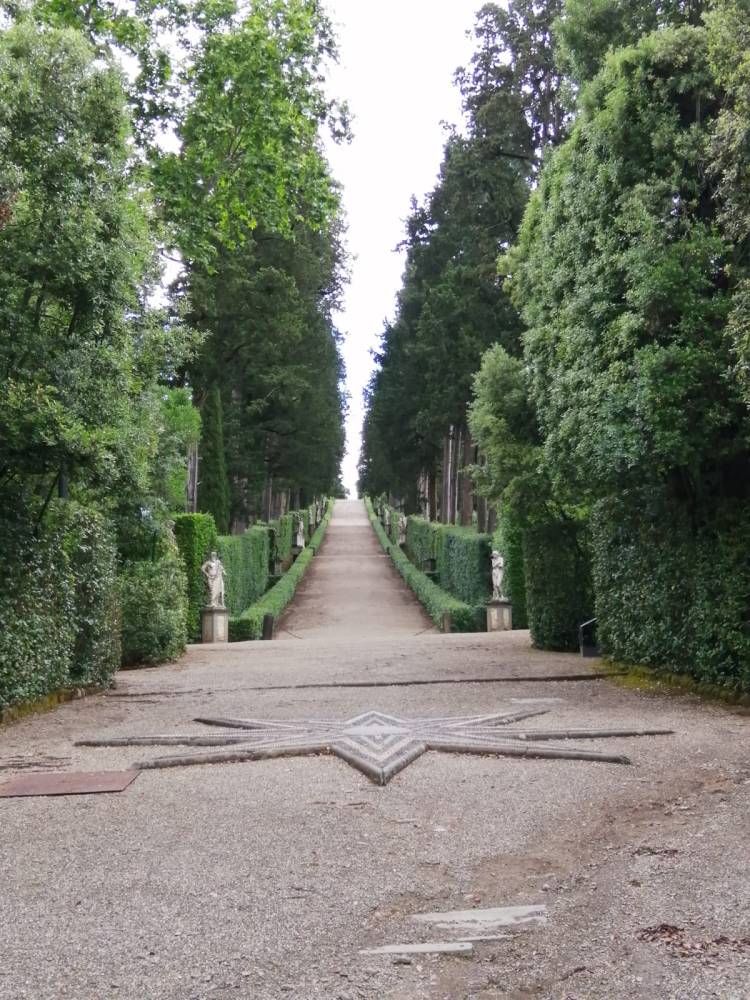
We loved wandering the wide avenues, meandering paths and regimented formal gardens. The wide avenue down the middle which is lined with Cypress trees makes for a good workout with it’s steep gradient and is wonderfully juxtaposed by the smaller, winding paths that disappear off to secret gardens filled with statues and fountains. The gardens are also adorned with grottos, the most famous of which is by Bernardo Bountalenti and two huge fountains; Fountain of Neptune and Fountain of the Ocean. We walked up the hill to the 18th Century Kaffeehaus, which unfortunately was not the coffee house we had in mind! Usually, on any given day in June the grounds, although large, would be teeming with tourists. They certainly were when I visited exactly nine years ago. So the most vocalised thought throughout our visit to Florence was, “I can’t believe how quiet it is. We’re so lucky to see it like this.”

2. Chiesa di San Minitato al Monte

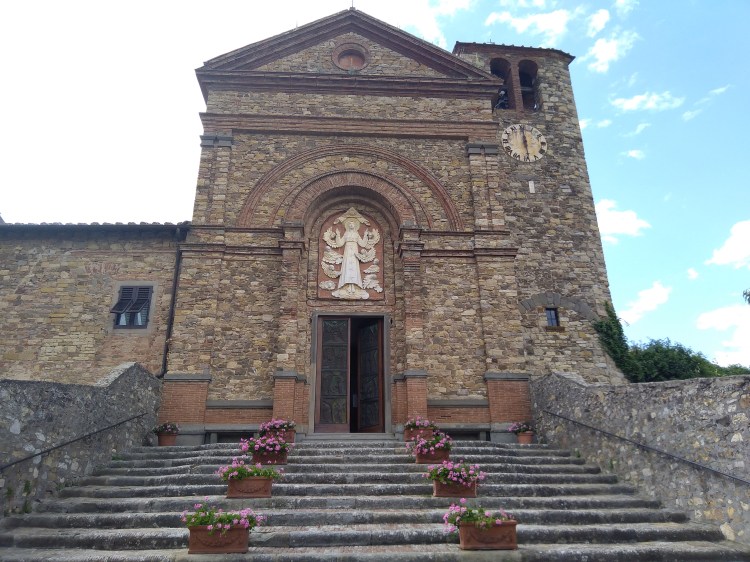
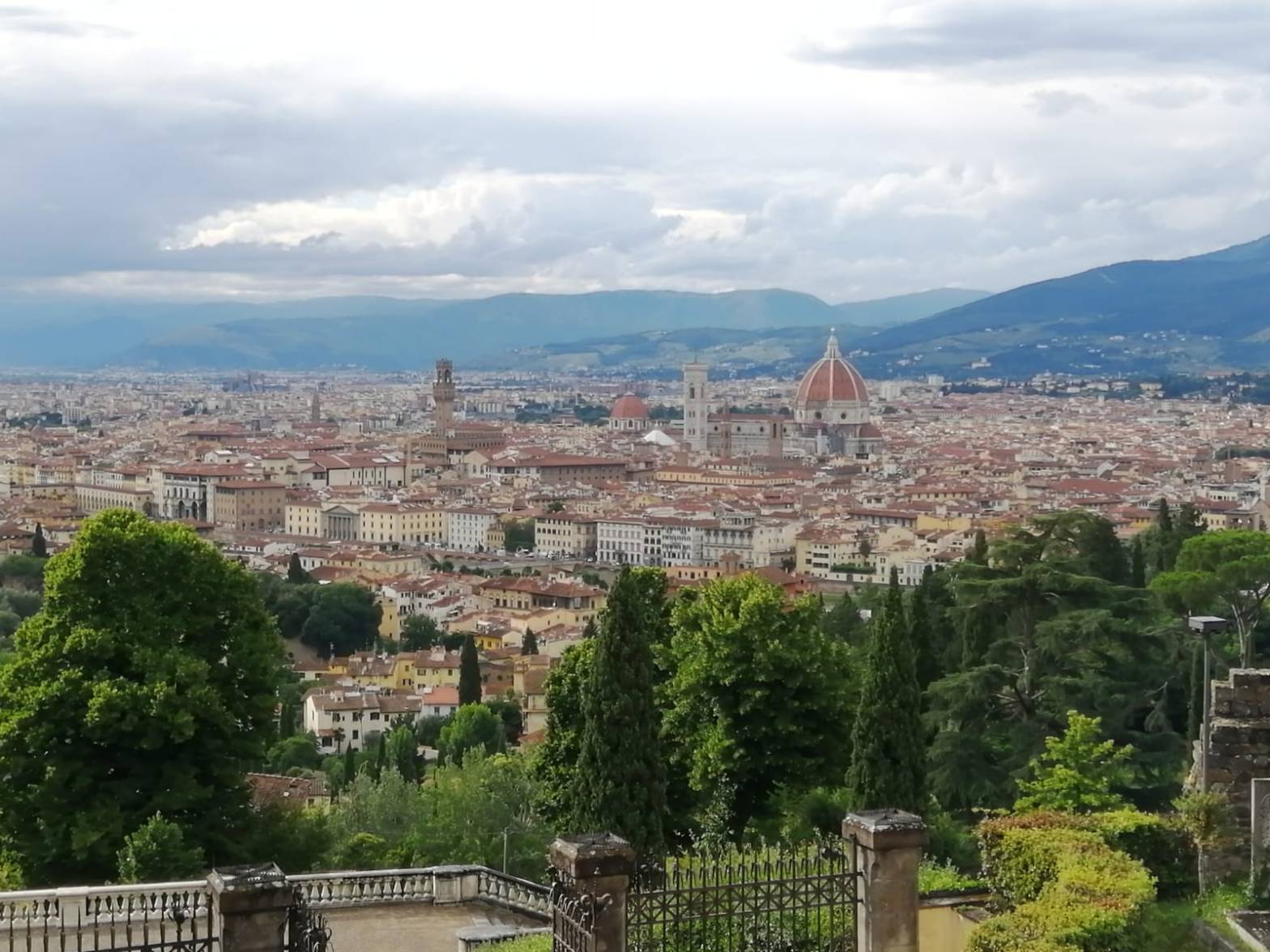
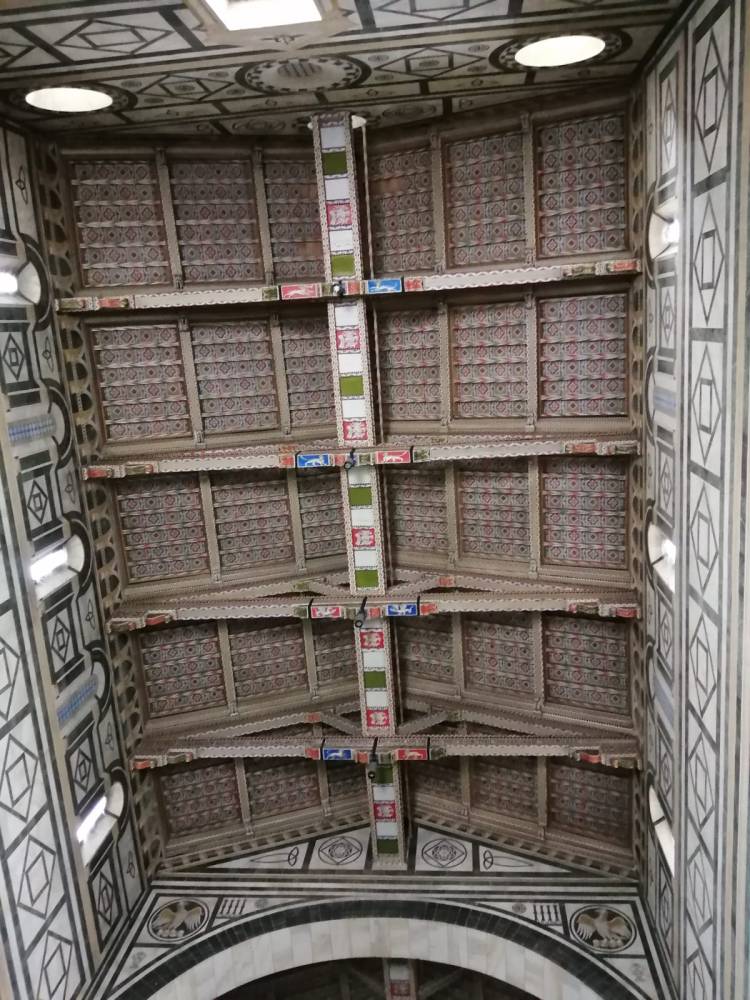
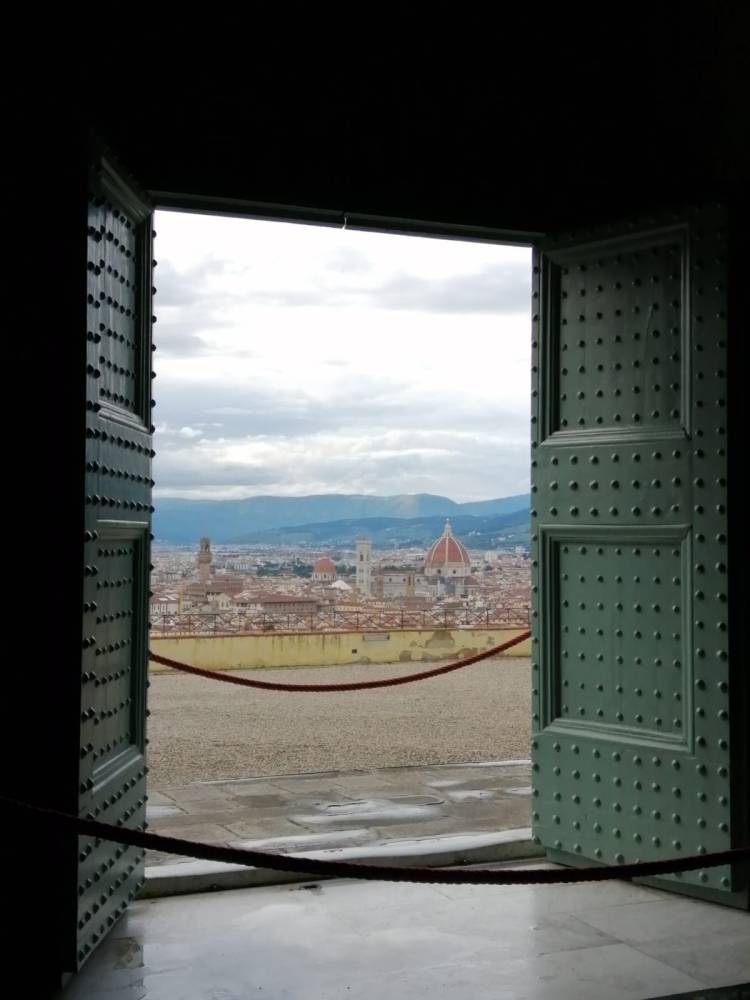
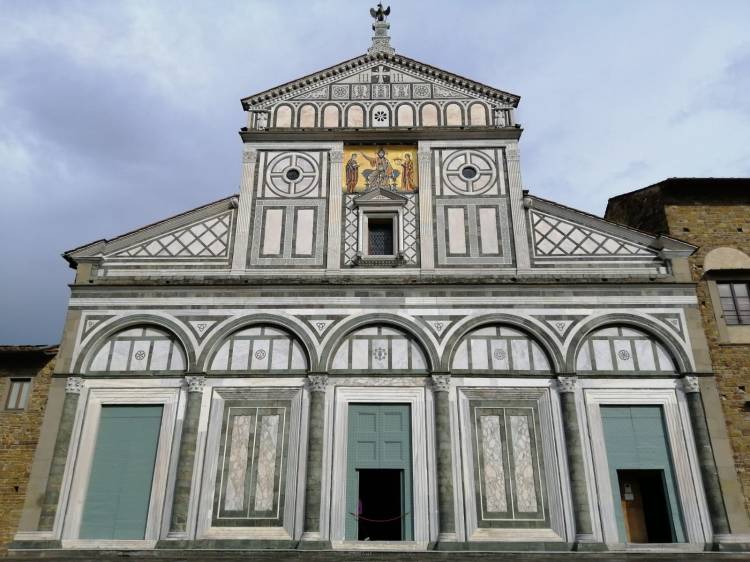
Of all the places in the world I’ve been lucky enough to visit, this little church is right up there in the top ten. You just can’t help but fall in love with it. Take a walk along the south side of the Arno and follow signs to Piazzale Michelangelo, a popular viewpoint over the city. The path either winds up the hill front past fountains and grottos, criss-crossing the road, or you can pop out through the old city walls and follow a cobbled path and steps that go straight up the hill. Both routes take you to Piazzale Michelangelo, a wide piazza, usually full of tacky souvenir stands and tourists trying to get that quintessential shot of the Florentine skyline. There’s also the towering bronze copy of Michelangelo’s David standing guard in the centre. However, don’t stop here, follow the road round and climb a few more steps up to the gorgeous church that sits proudly on the hilltop in an aptly celestial position. The extra effort will be duly rewarded. The exterior is a typical Tuscan geometric design of pristine green and white marble, topped with a statue of an eagle carrying a bale of cloth in homage to the guild of wool importers who financed the church in the middle ages. There’s also the beautiful 13th century mosaic inlay depicting Christ, the Virgin and St Minias which glistens in the sun. St Minias was a rich Armenian merchant who was beheaded for his beliefs in the 3rd century. Legend has it he either flew up from the city or walked carrying his severed head to his resting place here. The church dates from the 11th century and was built over his shrine.

As we climbed up to the facade we were awe-struck at how beautiful this little church is but once you turn around and take in the views from this vantage point you’ll be blown away. The panorama of the city below is just stunning and worth every step. The inside of the church is equally as beautiful, with more glistening mosaics and incredible frescoes dating from 1387. Before we begun the walk back down we took in the peacefulness and tranquility that this corner of the city offered.

3. David

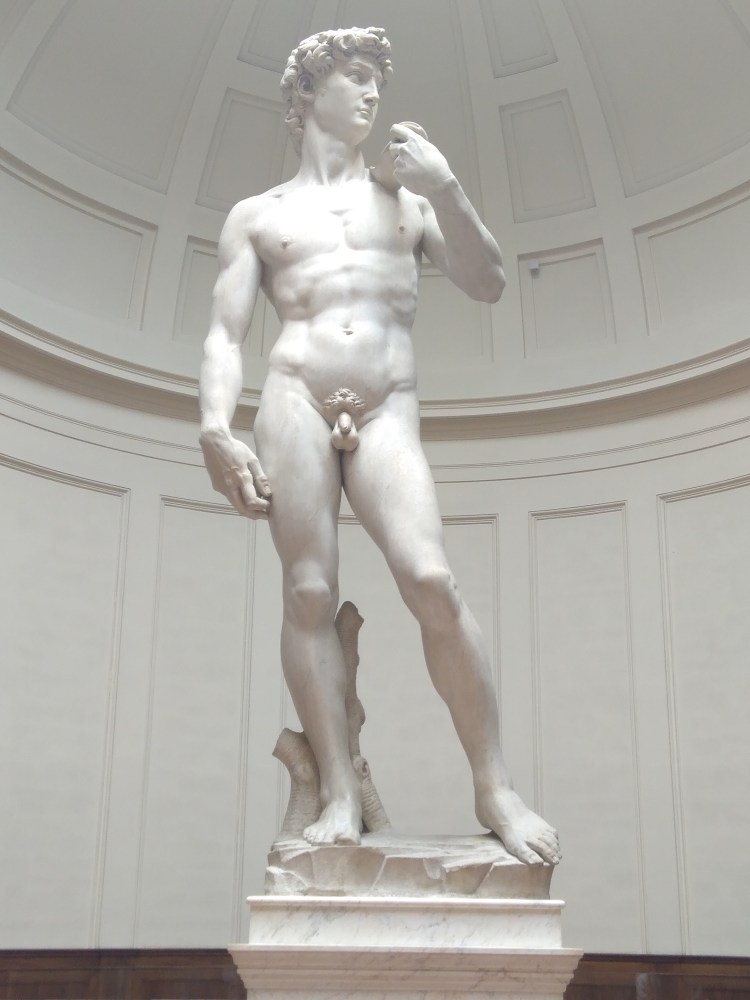
To truly appreciate the medium of sculpture there can be no other better example than that of Michelangelo’s David. Housed in the Galleria dell’Accademia, Europe’s first art school, the 17 foot tall sculpture of the biblical character is definitely the star of the show. Created in 1502-1504 from an abandoned chunk of marble in the cathedral’s courtyard, this giant sculpture catapulted Michelangelo into the limelight at the age of 29. It was originally in the Piazza della Signoria in front of the Palazzo Vecchio until 1873 where a copy now stands. With few other visitors we were able to really study the piece of art from all sides and sit and marvel at the astounding craftsmanship which resulted in every single detail being beautifully created. Well almost….his right hand is proportionally bigger than the rest of his body causing speculation as to why. Some say it’s a nod to David’s nickname, manu fortis, strong hand. Or it could be due to the fact that originally he was destined to be placed high up on Florence’s cathedral. Whichever it is it’s incredible to think he was created from one block of marble over 500 hundred years ago.

4. Giotto’s Bell Tower

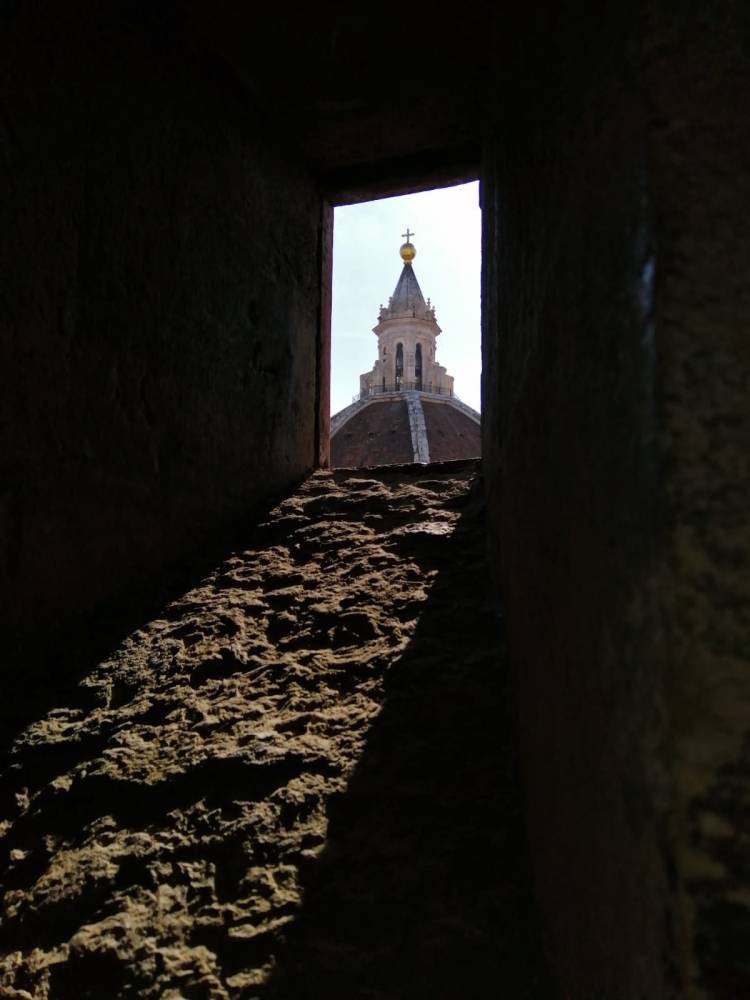
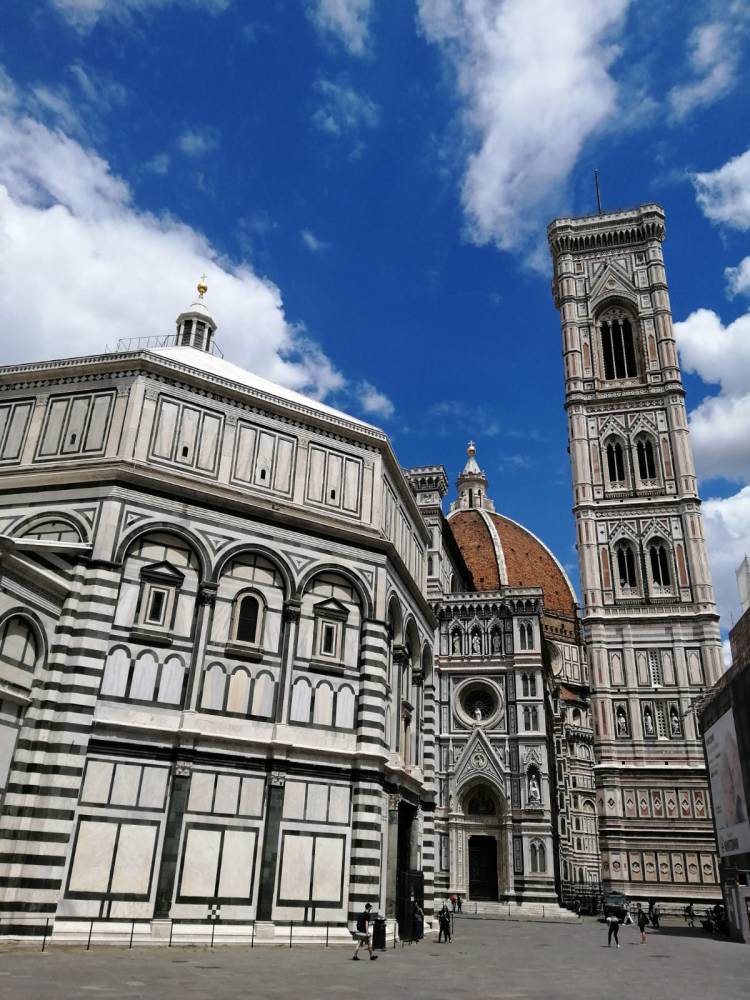
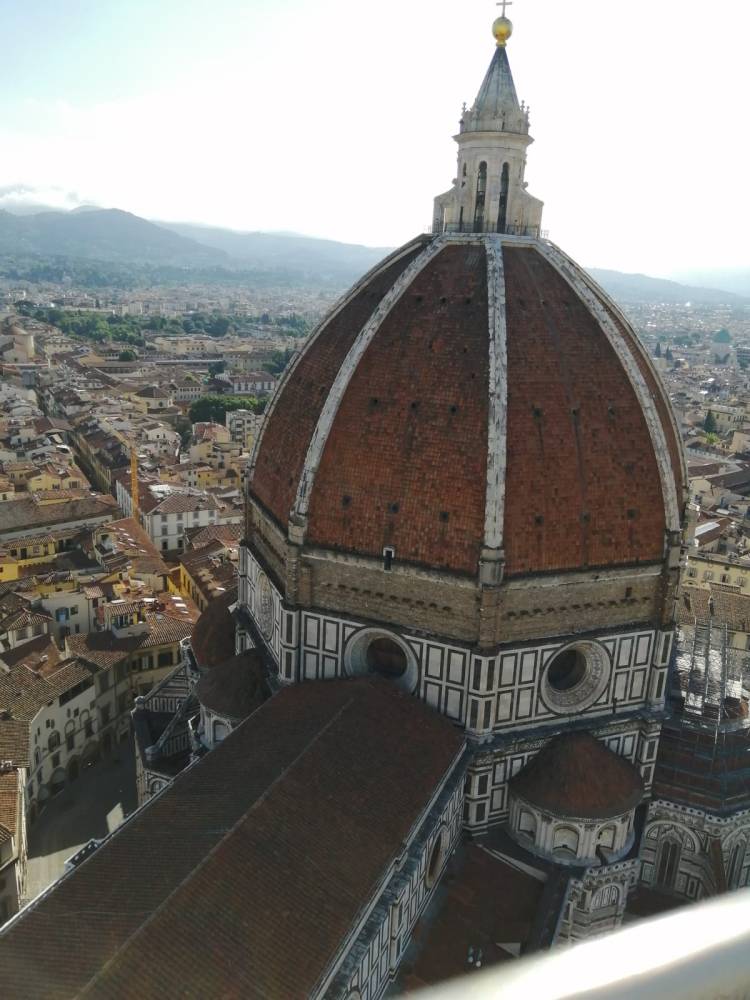
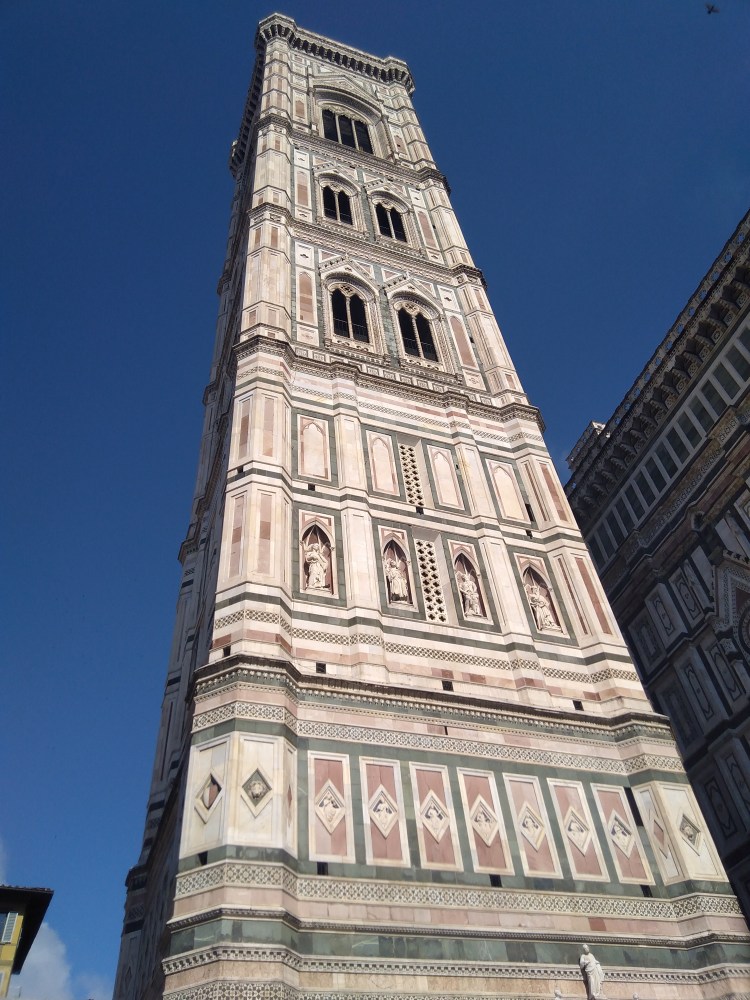
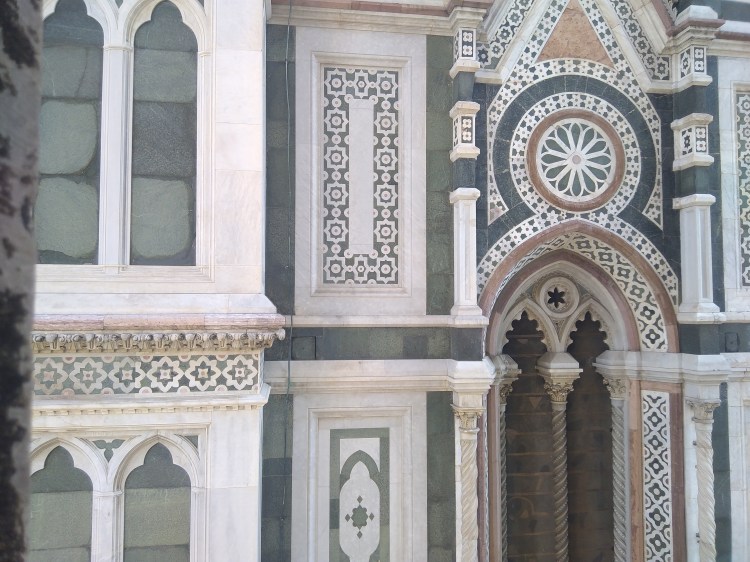
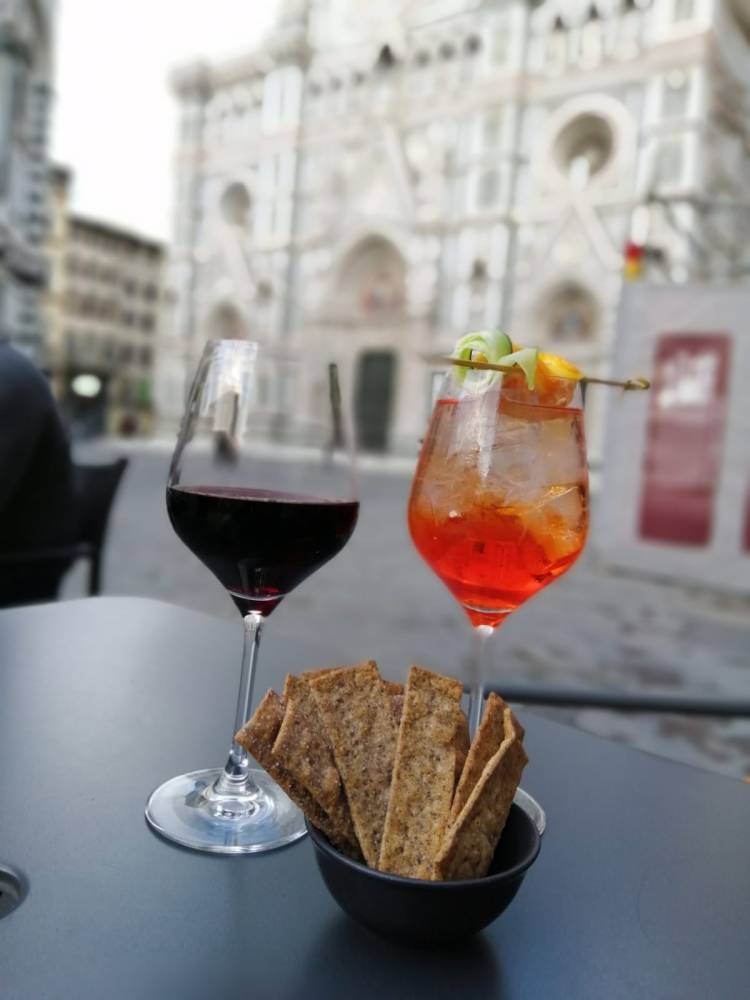
Florence’s iconic symbol and most widely recognised building is it’s cathedral, or Duomo. Work began on this incredible building in 1296 and it’s most famous feature is the terracotta tiled dome designed by Brunelleschi and built between 1420 and 1436. It was the largest dome of it’s kind to be built without scaffolding which only makes the great feat even more impressive! Alongside the cathedral is the Campanile, or bell tower. It was designed by Giotto in 1334 and completed after his death. The gorgeous pink, green and white marble facade of the cathedral was added later to match the bell tower. Opposite the main entrance to the cathedral is the Baptistry of San Giovanni, a beautiful octagonal structure dating back to the 4th century.

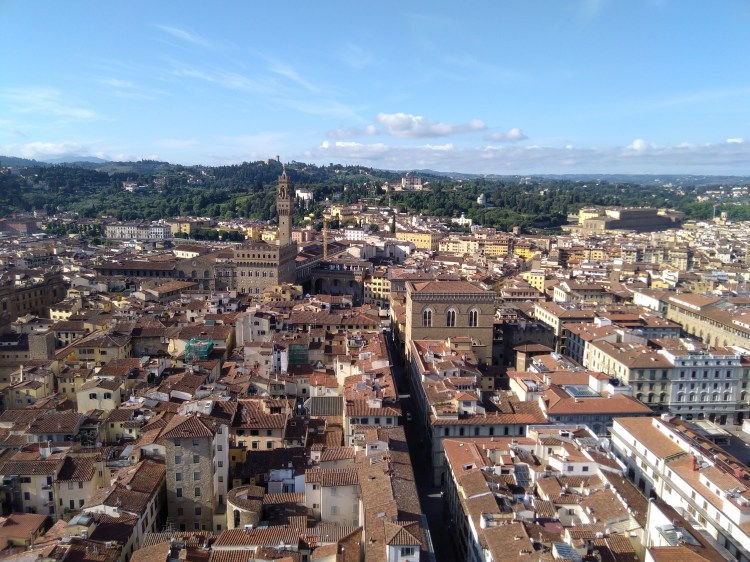
As we crossed the Ponte Vecchio and wound our way through the streets we went under the Uffizi gallery, pass the Palazzo Vecchio (which is one of my favourite buildings but was unfortunately still closed), through Piazza della Signoria where all of a sudden we turned a corner and there, seeming to rise up from nowhere is the beautiful duomo; an absolute feast for the eyes. The soft pastel colours of the intricate, geometric facade contrasted beautifully against the bright orange of the tiled roof. We found ourselves just standing mouths agape, drinking it all in. We would have loved to have gone up the dome but it also hadn’t reopened yet so we settled for an ascent of the bell tower which was equally as beautiful, if not more so as the imposing dome was so close you felt you could almost reach out and touch it. There’s 414 steps up to the top floor of the bell tower with varying views from different levels on the way up but every step is worth it as the views are incredible. We were very fortunate to have the top viewing area to ourselves, resulting in a magic few moments.

5. Food and drink

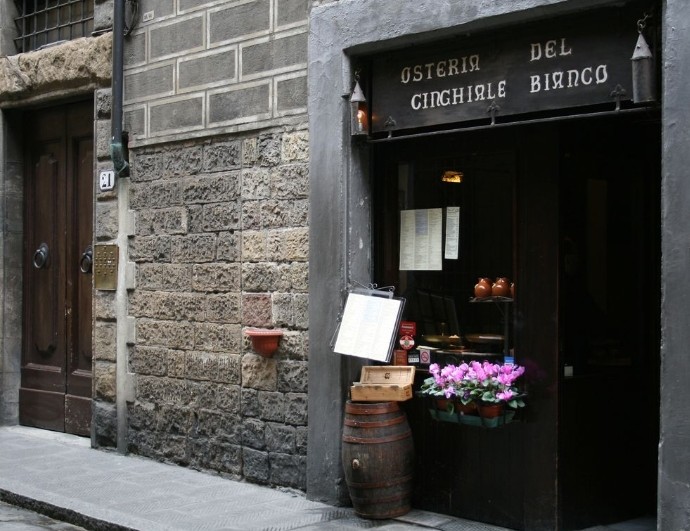
Obviously one of our highlight’s of Florence had to be food orientated. We weren’t disappointed as you sometimes can be in a tourist place. We had two nights in the city; for dinner the first night we found a fabulous little restaurant a friend had recommended called Osteria Cinghiale Bianco, or White Boar which is located in a 13th century tower in the heart of medieval Florence, not far from the Ponte Vecchio. It’s a family run business that’s been going since 1984 with Massimo Masselli at the helm. We had a delicious meal of local dishes, accompanied by the house wine served in earthenware jugs embellished with a white boar, whilst sat in the original part of the tower. Perfect!

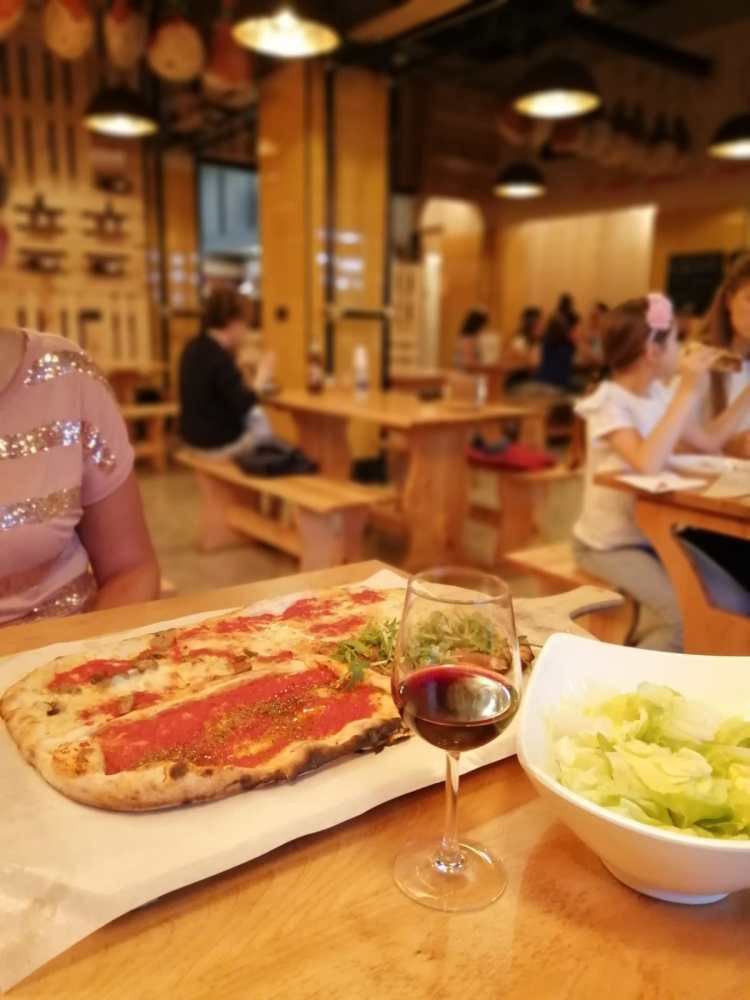
The second night we decided to try somewhere nearer our hotel, just outside of the city walls, the otherside of Porta Romagna. We’d seen a couple of lively looking places on the walk back the night before so popped down to try one. Fate played a part as we’d only planned to have a drink at Antica Porta, but when the waitress bought us place settings and cutlery we decided to be typically British and just go with it! I’m so pleased we did! It was a great little find, we were outside on the busy street and were entertained by the many locals coming to collect their pizza’s from the wood fired pizza oven inside. Both our meals were excellent and I had one of the best tiramisus ever! Except actually I keep saying that every time because I love that dessert so much!

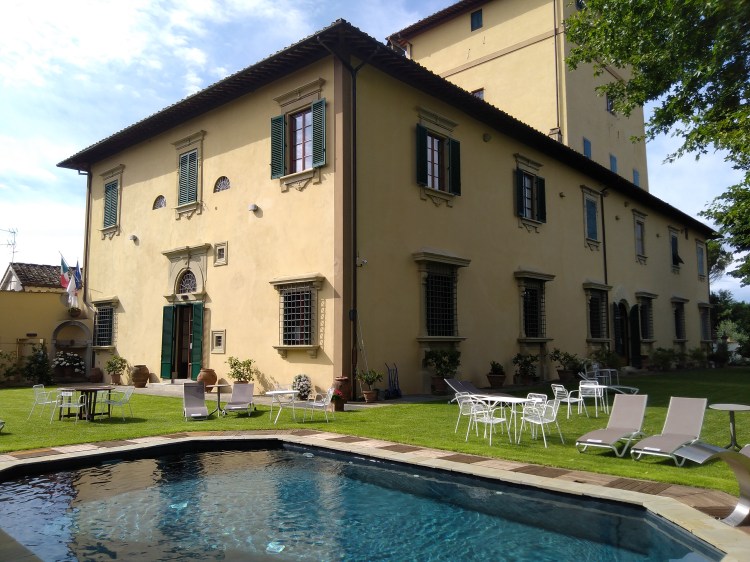
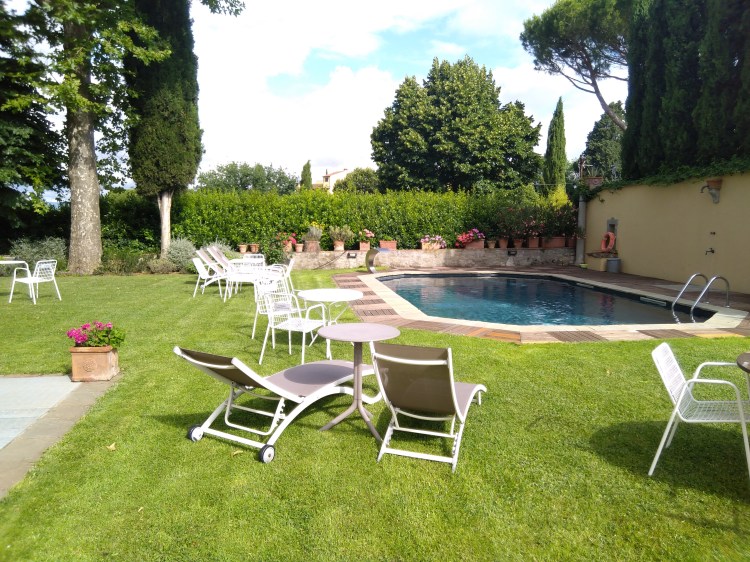
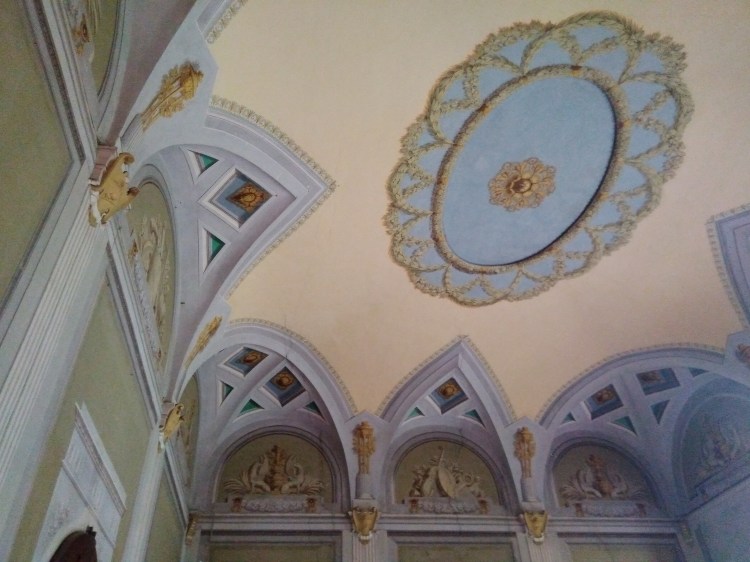
From there is was a short but very steep walk back to our hotel, Torre dei Lari Residenza d’Epoca. This was a beautiful villa that began life as a sighting tower in the late 12th century, later becoming a summer palace for Florentine families to escape the heat of the city. Lorenzo Strozzi bought it and when he married Maria Simona Macheavelli, neice of the famous writer Niccolo Macheavelli in 1614 he developed it in to the luxury villa it is today. Our room was a large, high ceiling affair with beautiful old furniture and a lovely modern bathroom. There was a beautiful pool and a lovely garden and breakfast was superb! So whilst it wasn’t that central, it was perfect to escape to and relax.

Florence is without a doubt one of my favourite places in the world and to share it with so few other people was very special.

Links

The best cycling hotel in Italy?

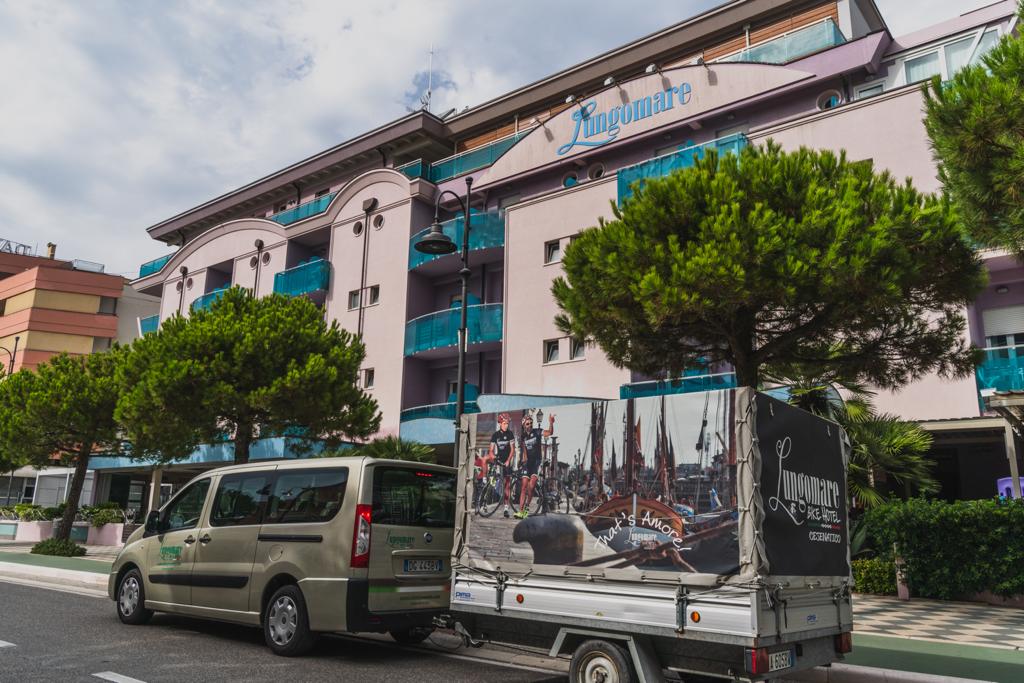
Whilst researching our road trip to the coast we heard about the town of Cesenatico, the home of the famous cyclist Marco Pantani, and soon decided it was to be added to our list of destinations. I stumbled across the Lungomare Bike Hotel online and I reckon if Pinarello made bike hotels, it would be just like this! You could be fooled by the bright and colourful exterior into thinking it’s just another one of the many hotels along this stretch of the Adriatic coast, but you’d be wrong. This one definitely stands out. The passion, joy and sense of family literally permeates out through the lobby door.

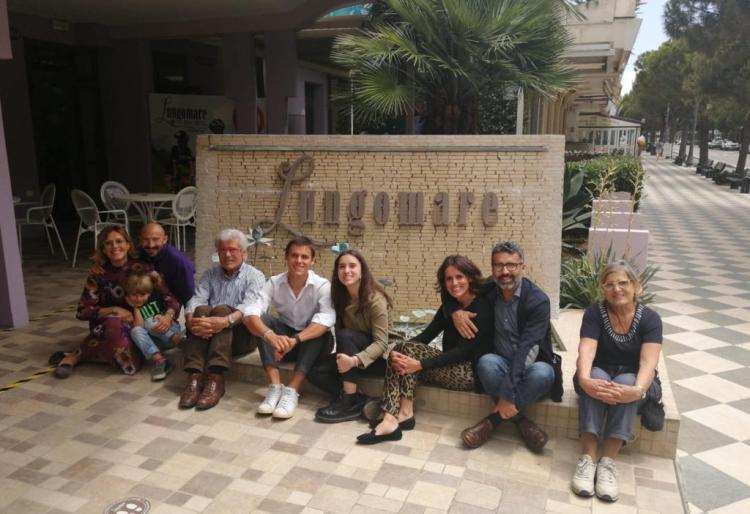
Our most recent experience of cycling accommodation was staying with a wonderful couple in a home stay in the Pyrenees, where the personal touch made all the difference. So I was reluctant as to how a hotel could do the same. However, I needn’t have worried. I’ve never received such a warm and welcoming reception than the one we were greeted with here. The hotel is a family run, third (soon to be fourth) generation business, a fact that’s evident in all aspects. The family is the Pasolini family and we had the most contact with Francesca, who runs the business with the help of her sister Silvia, Silvia’s husband and son Filippo who is currently studying hospitality at university. We also met Giuliano and Primula, Francesca’s parents, who were so integral in starting this business in the 1950’s. It’s a real family affair and they all have a wonderful passion for cycling that’s so infectious you just can’t wait to get out on the road! The ‘family’ doesn’t stop there either, the wonderful members of staff who looked after us so well obviously make up the extended family of the hotel and everyone seemed so happy and content in their work.

The Pasolini Family

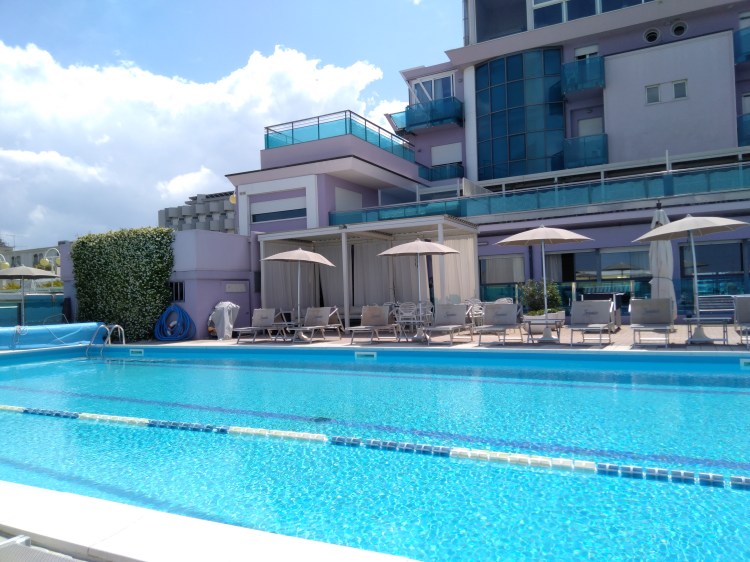
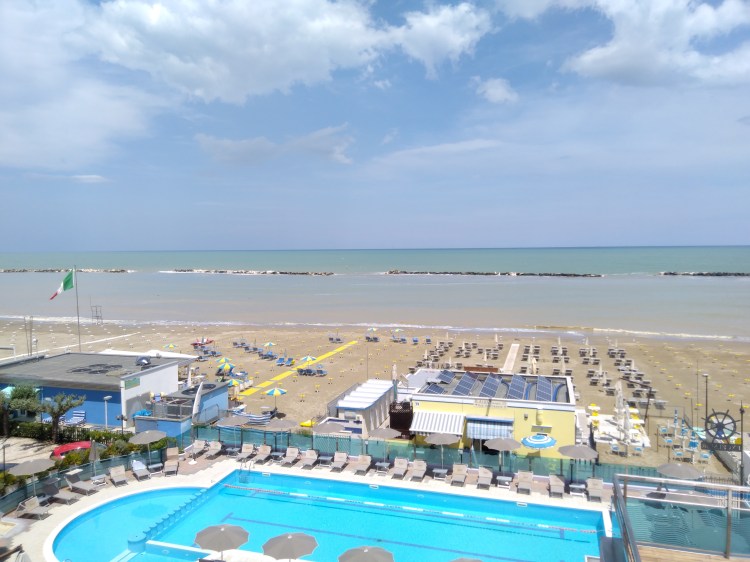
We were booked in for two nights on the ‘Easy Bike’ package in a sea view junior suite. The package included half board and full use of the hotel’s amenities, which includes a beautiful heated pool and a spa.

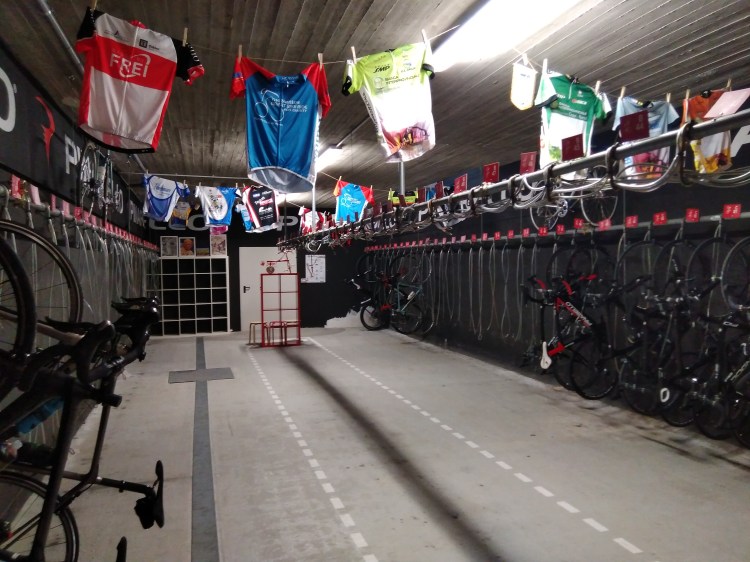
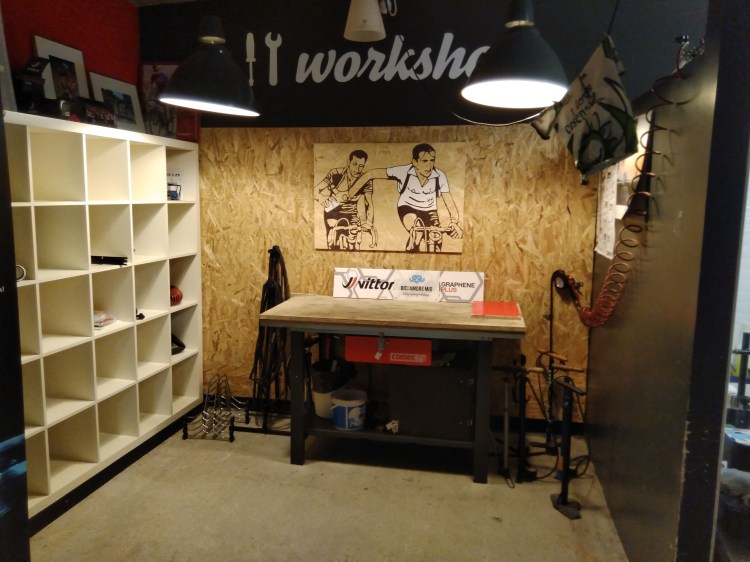
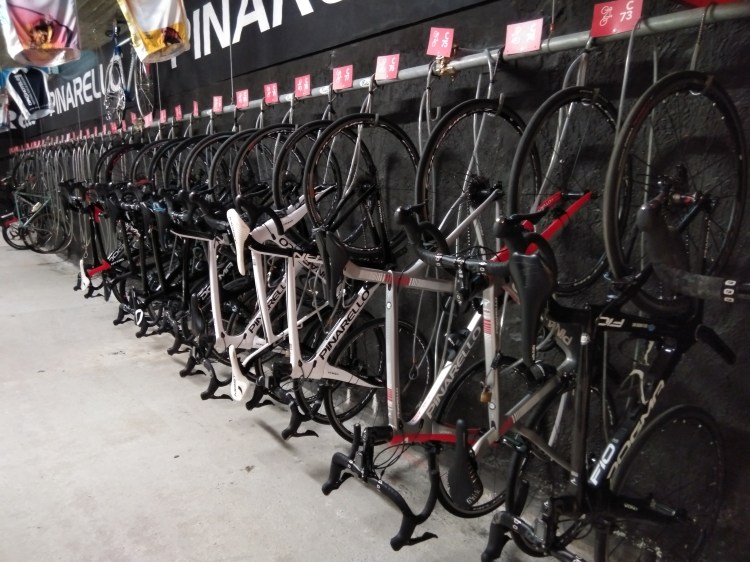
Before going to our room we checked our bikes in to their luxury accommodation too! As we were buzzed through to the secure bike room we were blown away by what met us. There were hooks for hundreds of bikes to be hung up and locked, there was a work station area with pumps and tools for tinkering away and there was even a bike wash area complete with shampoo, lube and rags. The cycling jerseys and memorbilia hanging from the ceiling finished it off perfectly. If you’re reading this and not a cycling fan then the impact of this room will be minimal but for cycling geeks this is the ultimate bike room! There were also a number of beautiful Pinarello Dogma F10’s hanging along one side of the wall which are available to hire.

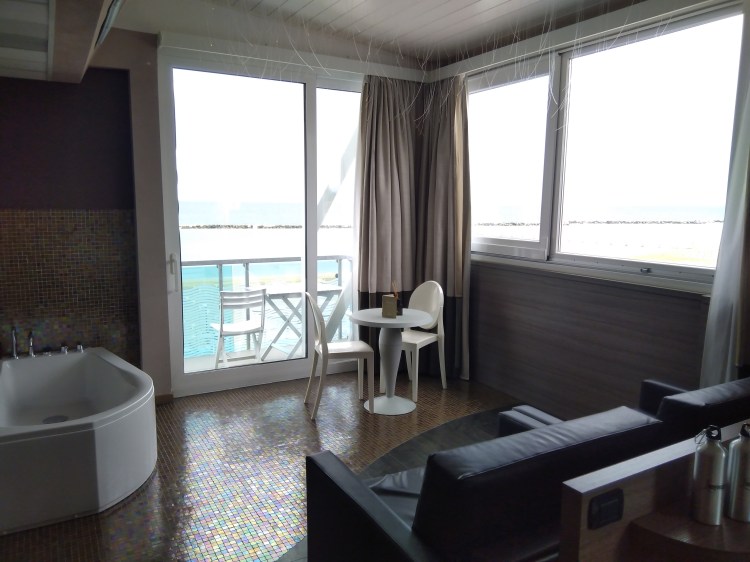
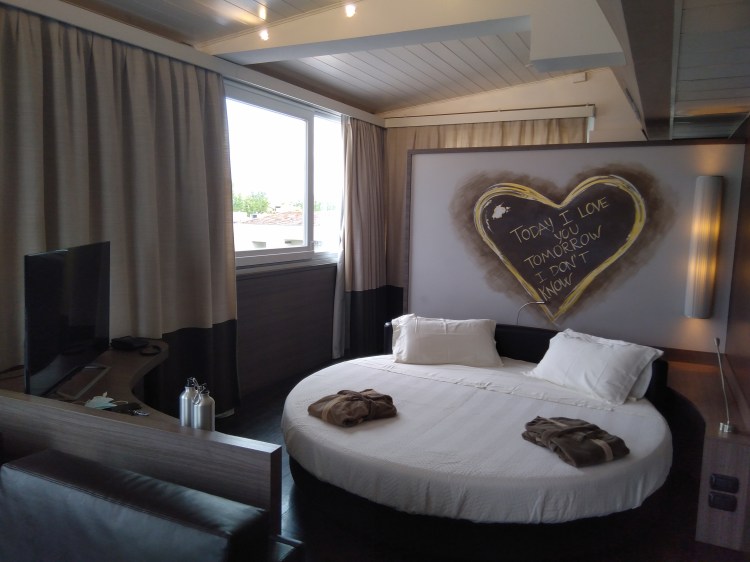
We were as equally impressed with our room too. We had a beautiful, airy junior suite on the third floor with fantastic views of the sea from two balconies. All the added touches that one associates with a luxury hotel were included, fluffy robes, luxury shower and bath with toiletries and as we were on the bike package we were also given a musette and bidon each too, which was a lovely touch. The bed was a gigantic round affair which swivelled so you could make the most of the views without having to leave. A very cool, modern touch were hundreds of colour changing fibre optic strands hanging from the ceiling which added a bit of pizzazz to the suite. It was the perfect room to come back to after a day’s cycling to unwind and relax.

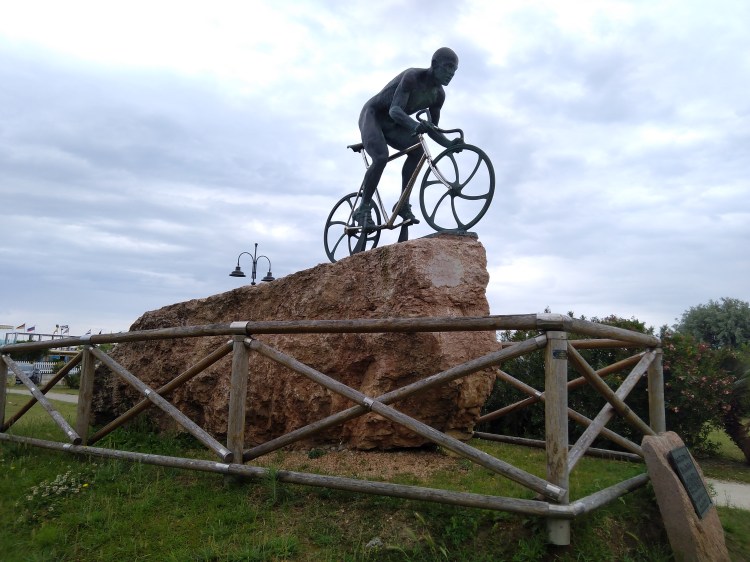
The cycling itself was also fantastic, with two rides over our stay. The first day had seen a wet start so we went out in the afternoon instead. Andrea was our guide, a local who is the epitome of an Italian professional. Obviously a very good cyclist, very cool but also down to earth and helpful. That afternoon he showed us the best local sights as well as imparting local knowledge. Stops included the Pantani statue on the sea front, Cesenatico centre (for more information see my post Three gems of South Romagna) and Cesena, another beautiful, medieval town and home to the Melatesta Library, the first public library in Italy. The ride included a 5 km climb to wake the legs up, which wasn’t the easiest after the delicious lunch and accompanying wine! 32 miles later we found ourselves back at the hotel having worked up another appetite for that night’s dinner.

The Pantani Monument

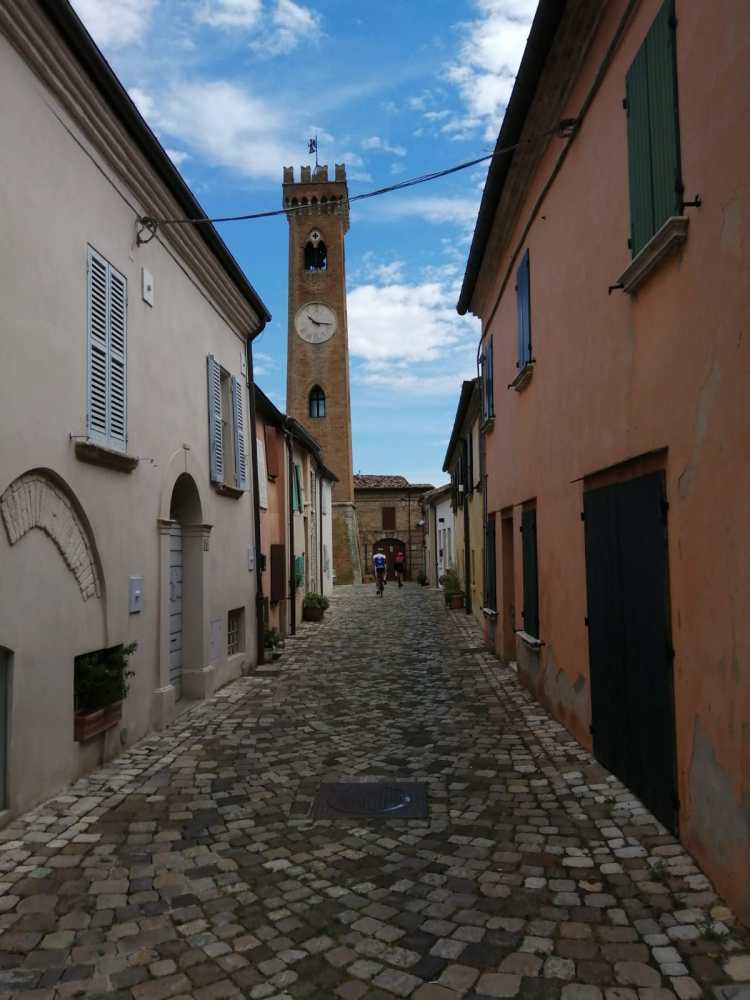
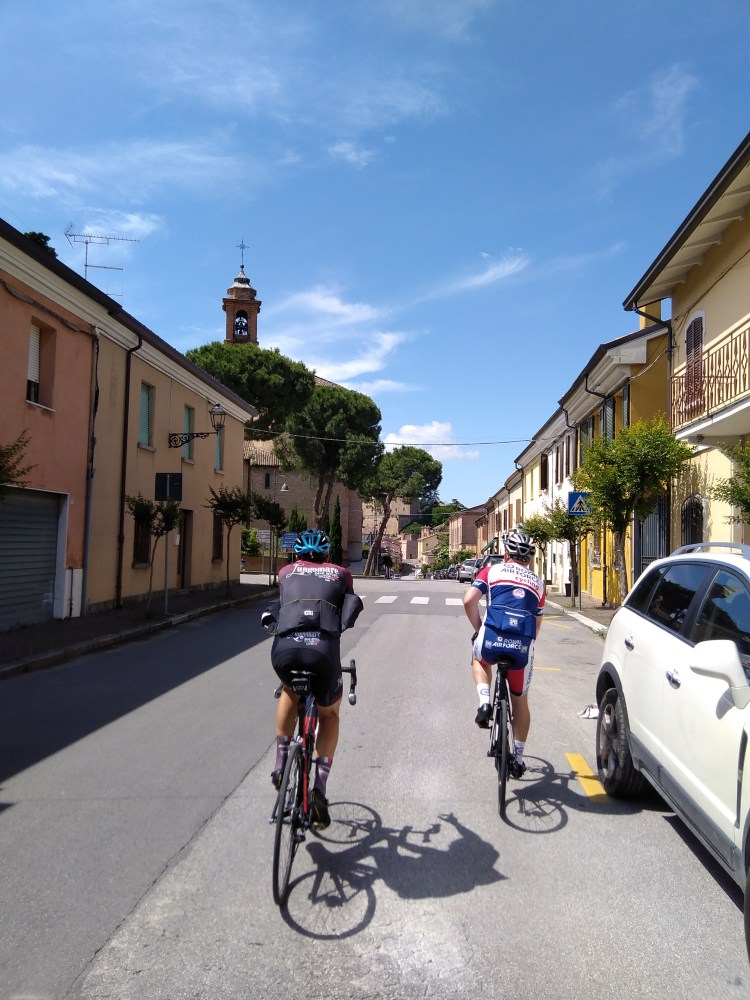
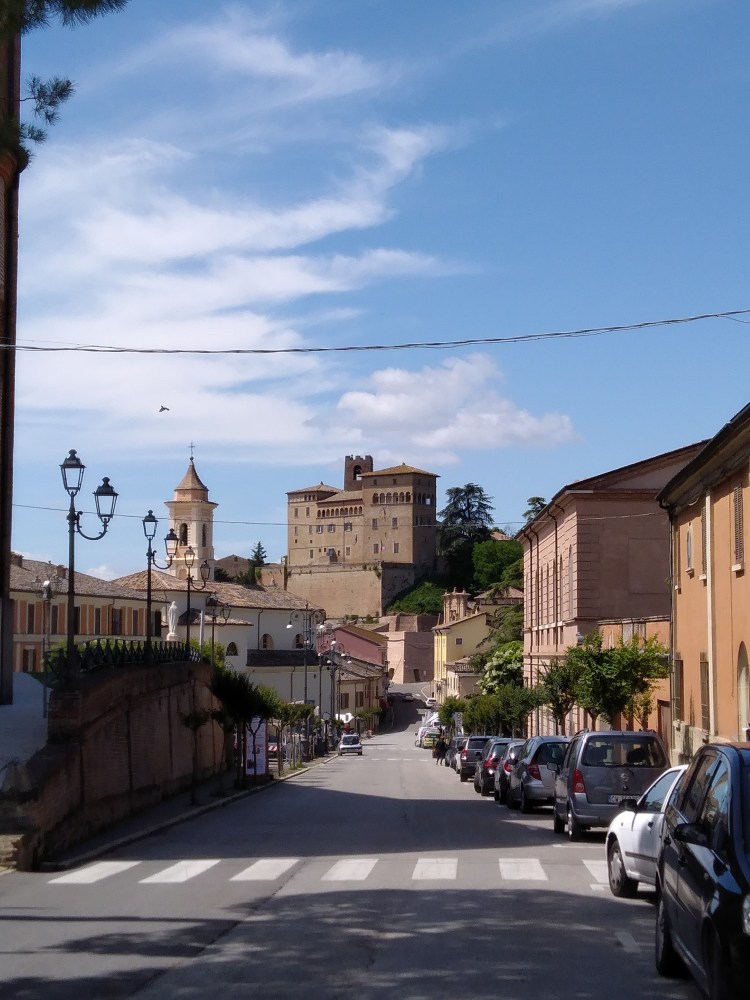
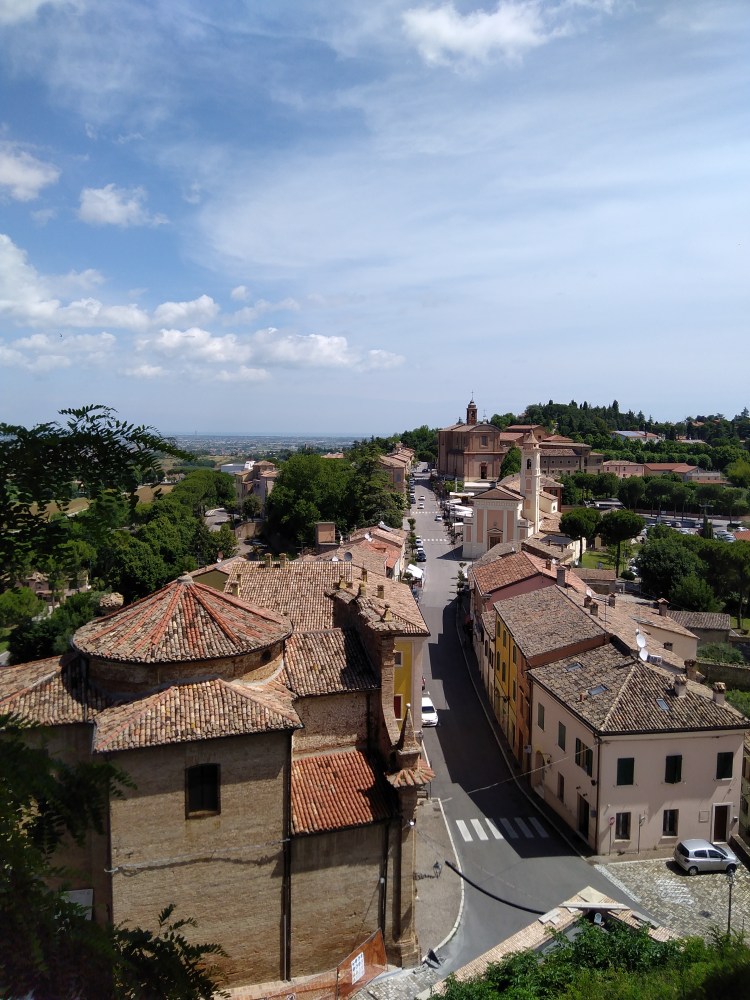
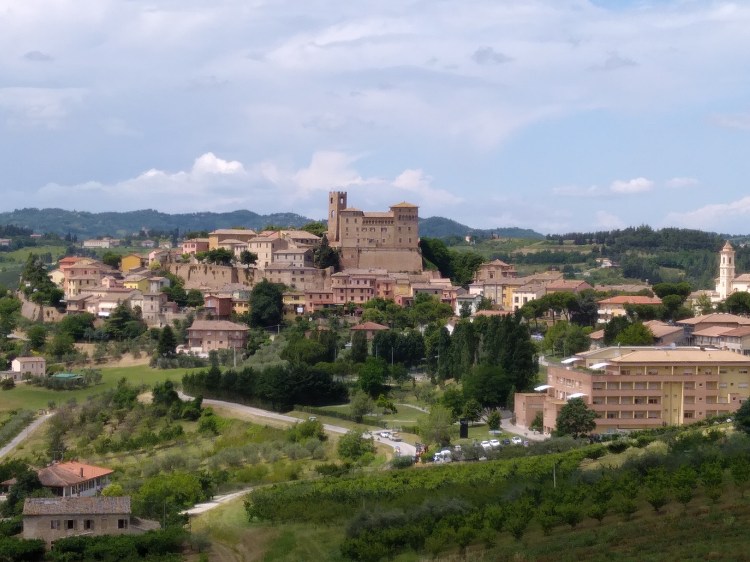
The next morning saw a drier start and after a hearty breakfast we set off again with Andrea. Normally, the hotel would be full of cyclists and there would be five groups heading out to do varying distances and speeds. The routes and profiles are all advertised on the rider’s wall in the hotel and riders sign up the night before by writing their names on the sheet; a great system. As it was just us though, Andrea had planned a perfect route, having gauged our ability the day before. Being on the coast means most rides include a nice flat warm up to get the legs spinning before going as hilly as you wish. We set off, enjoying just following a wheel and not having to worry about looking at directions on the garmin, consulting the map and worrying if the roads were suitable for cyclists. It took away all the stress and drama and we could just ride. First stop was Santarcangelo di Romagna, a hilltop town perched atop a rock at the start of the rolling hills. Due to the large market we had to cycle up a steep street to get to the old centre but were duly rewarded with beautiful views and narrow cobbled streets that have hardly changed in centuries, it was like stepping back in time. After a bit more flat riding we got to Lo Stadone where we hit a beautiful 3 km climb which was a bit punchy to start with but then levelled out. A beautiful descent and a flat stretch offered some respite before another 2 km easier climb to the town of Longiano with a fantastic castle offering commanding views for miles. We stopped here for the required cafe stop, a chance to soak up the sun and find out a bit more about Andrea. He told us how he used to race until the age of 18, has been leading rides for twenty years and also coaches children. The cycling world has changed so much though, gone are the days guests just go for a ride for enjoyment, when distance and speed is dictated by feel. Nowadays data has taken over, with some people moaning about cycling 5 km more or less than advertised, climbing 100 metres more than the profile said and chasing Strava segments; another sad case of when technology can take over and the real passion and enjoyment is lost.

The return route took us to the other side of the valley for the best view of the castle and town, a bit more of a climb and then an absolutely wonderful descent on wide, meandering roads that slowly wiggled down the hillside. A fast-paced run back in to the hotel via the Pantani family villa and Piadineria ended a fabulous ride.

What will stick most in my mind about these two rides is the fragrant smell of cut grass and gorgeous views of hilltop towns that seemed to glow in the sunlight. Andrea was a superb guide, encouraging and patient when needed but happy to push on slightly so you ended with a sense of achievement. On the climbs he left me to battle the pain whilst remaining nearby at all times describing the upcoming ramps when appropriate. I know they were small hills compared to some but considering the little cycling I’ve done over the last year and the toll treatment has taken, these rides filled me with confidence and I feel able to get back to where I once was.

The afternoon was spent by the pool and walking on the beach followed by drinks in a nearby bar and yet another dinner at the hotel, I particularly loved the fresh seafood that was on offer everyday.

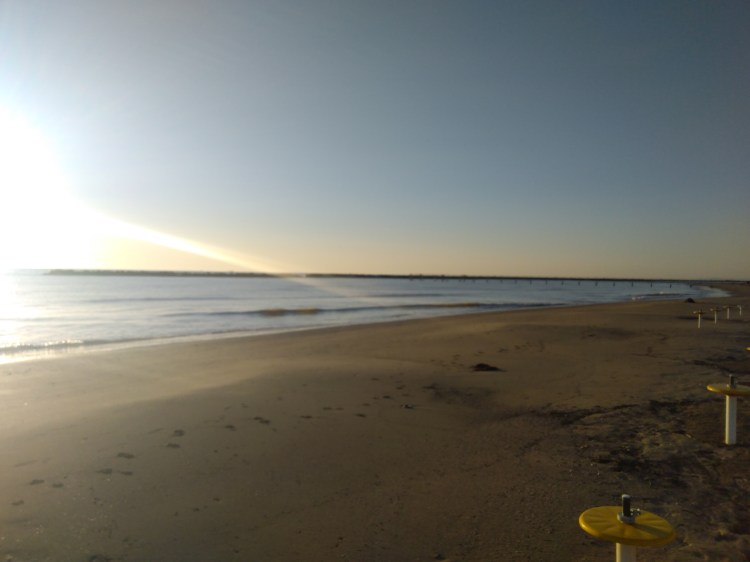
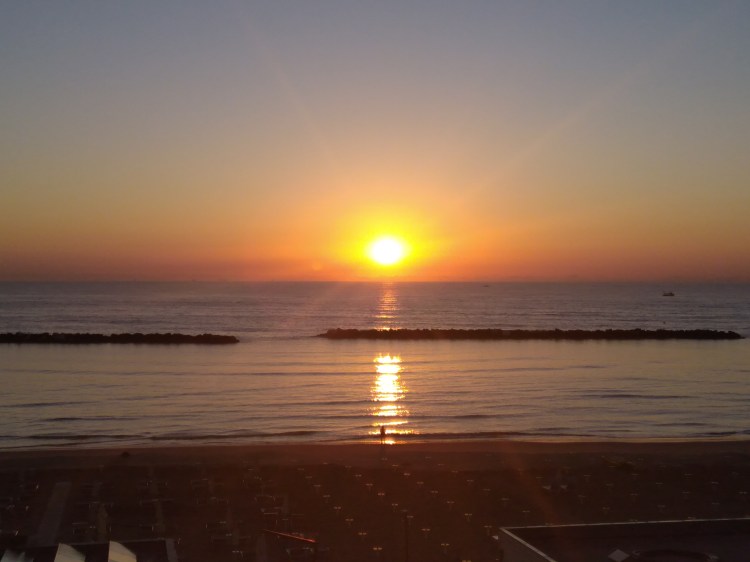
The next morning we were treated to the most beautiful sunrise with the flaming ball slowly creeping up over the millpond-like sea. It was too good to go back to bed so I went for a jog along the beach followed by some yoga and a paddle, a great way to end our stay.

Thank you to all the staff at the Lungomare Bike Hotel that made our stay so wonderful, it’s just a shame we couldn’t stay for longer. Whilst I obviously can’t comment on whether this is the best cycling hotel in Italy, it definitely has to be up there. I’m sure there’s no better in the region and if you’re after a mix of beach and hills then it’s perfect. This stretch of the coast is second only to Florida for hotels per square mile so you’ve got to be good to stand out and these guys definitely do that! If you like riding your bike on beautiful roads, eating delicious food and drinking good wine then this place is for you! We shall definitely be back.

Links

3 Gems of South Romagna

Our exploration of Emilia-Romagna continued with a trip to the South East corner of the region, which was originally known as Romagna before the two regions merged. There were so many places we wanted to visit before leaving but we narrowed it down to three…and we’re very pleased with our choices!

San Marino

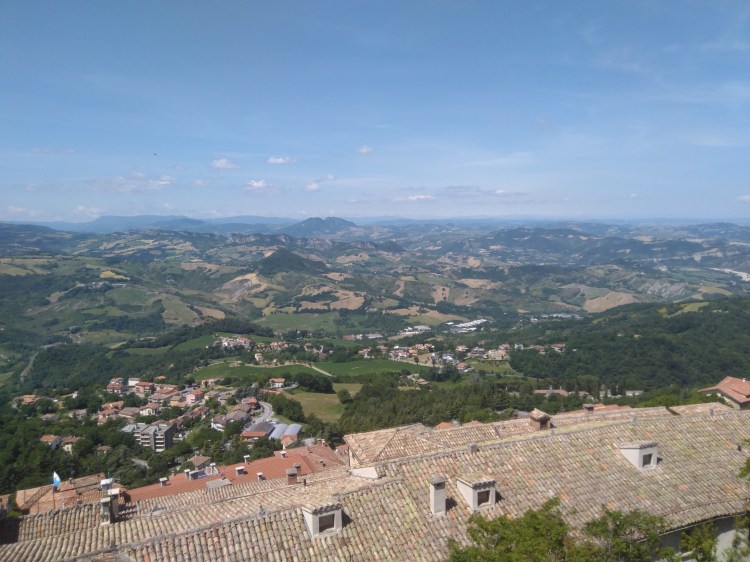
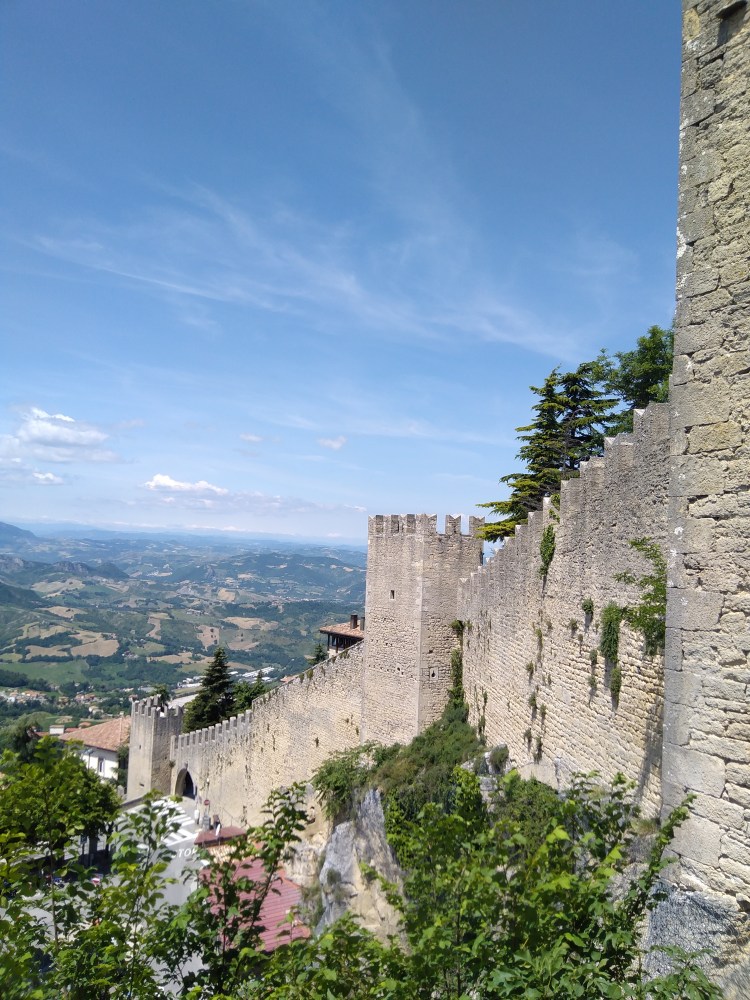
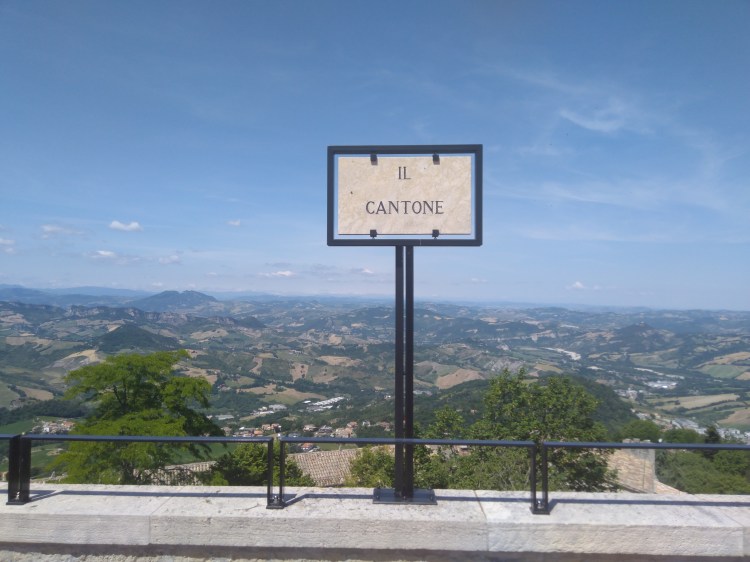
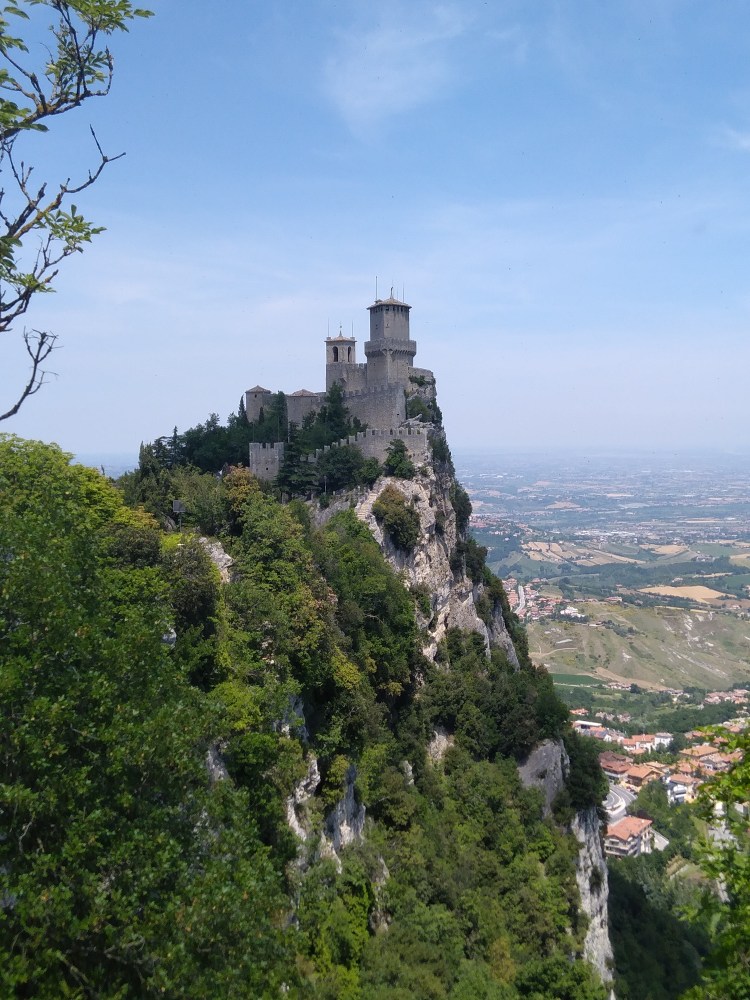
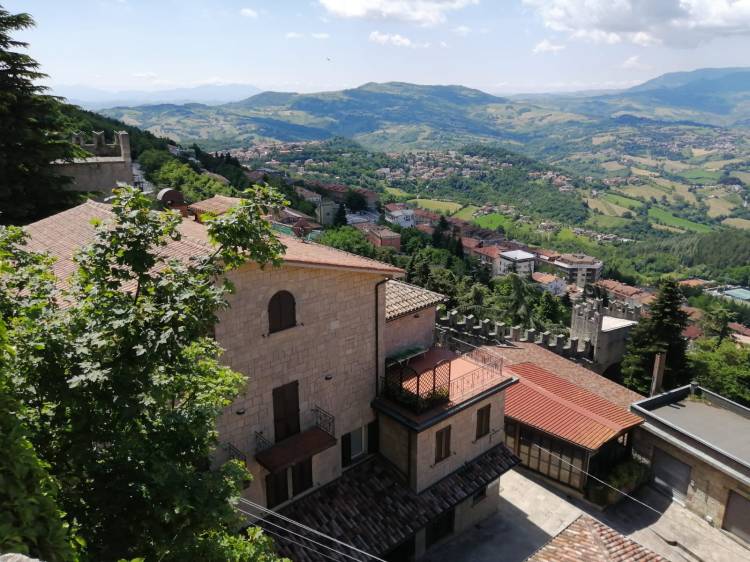
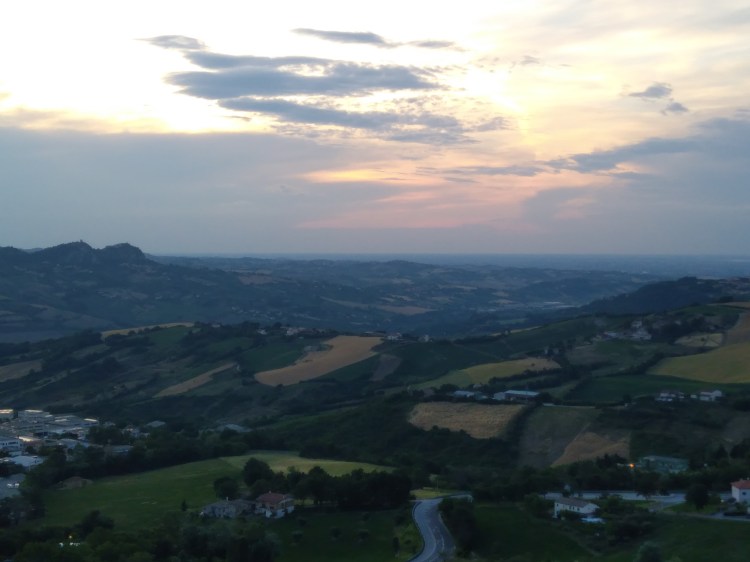
Our first stop was the tiny republic of San Marino. In fact it’s the world’s smallest and oldest republic founded by a Christian named Marinus in 310 AD. The people of San Marino have one of the highest average incomes in Europe, and the men have a higher life expectancy than any other country in the world, so it must be a good place to live! The historic town centre is nestled at the top of Monte Titano resulting in a picture perfect town that wouldn’t look amiss in a Disney film! We picked a place to camp for the night on the edge of Borgo Maggiore at the base of the huge rocky outcrop. There’s some designated Camper Van parking over three or four terraces that offer some beautiful views over the rolling foothills to the sea. It was a short walk up to the cable car station and before we knew it we were whizzing up to the top of the world! The views from up there are just unbelievable. There’s the lush, green Appenines to one side, then the flat coast to the other. You can even see the Alps in the distant.

There was little point putting the camera away because as we delved further in the small town centre there were beautiful panoramics at every twist and turn. We shouldn’t have been surprised at how quiet it was; that day was the first day travel in to and out of Italy and between regions was allowed. But we couldn’t believe how lucky we were to see it like this. There were only a handful of other tourists that we came across and with day trip visitors usually reaching three million a year we felt extremely privileged. We followed the naturally flowing path along the length of the rocky outcrop to admire the three towers that stand guard on the three peaks of the mountain. When you’re up here you can see why the mountain is so named; apparently it is one of the mountains the mythological Titans climbed to reach the heavens. Due to it’s easily defended location it’s of little surprise this republic has managed to keep outsiders at bay and as a result very little has changed since the 13th century. The three towers date back to the 11th century and usually visitors can enter two of them to admire the thousands of weapons and learn about the founding of San Marino in the relevant museums. However, they were not open when we were there. Luckily though the restaurants were and we stopped to refuel with pizza and wine on the terrace of La Capanna a great little restaurant that’s been there since 1927.

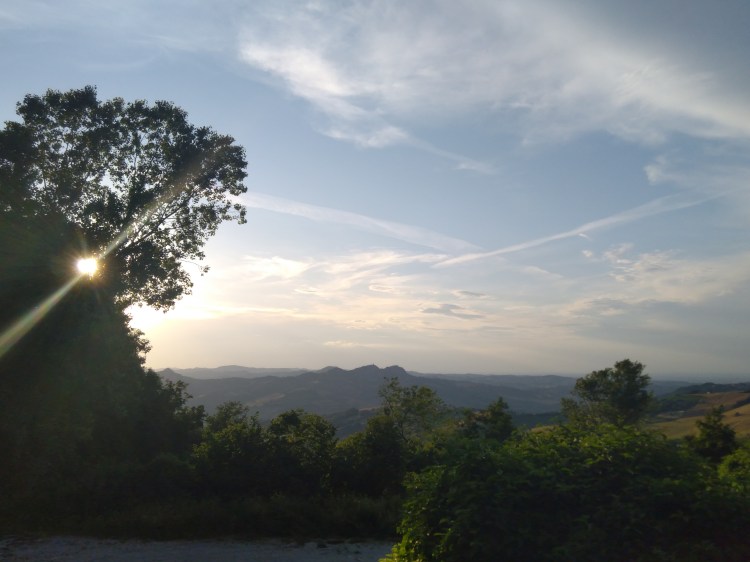
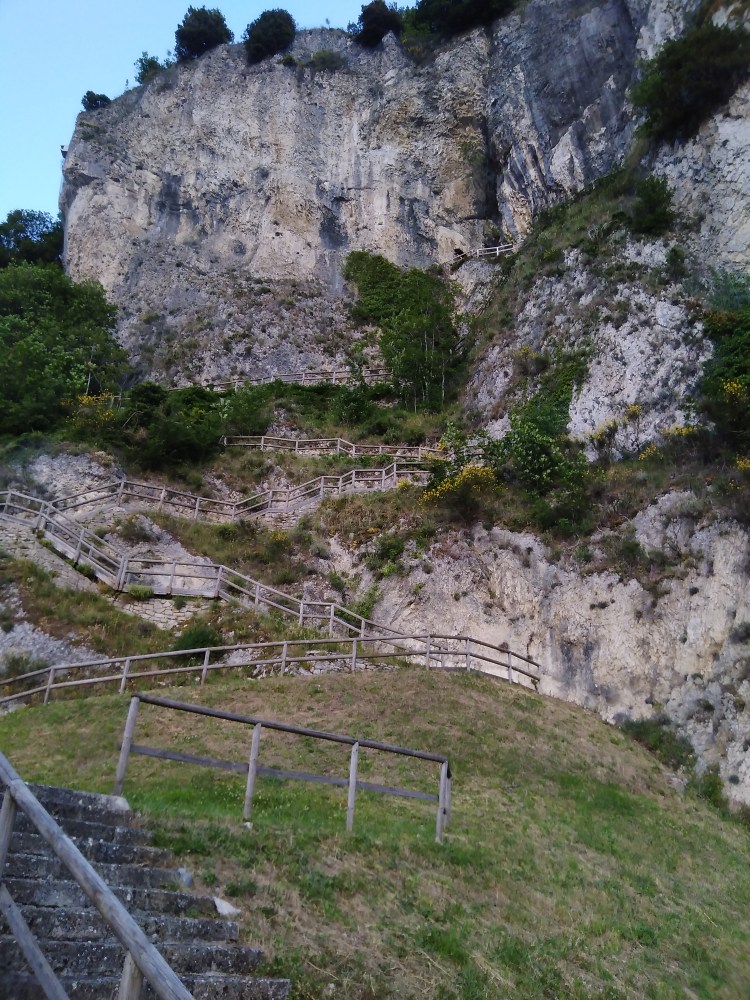
We spent the next couple of hours winding our way amongst the narrow, medieval streets of the old town centre. It was a delightful mix of gorgeous old architecture studded with the seemingly random shops geared up for the hoards of tourists who are obviously desperate for tax free sunglasses, watches, perfume and even guns! When a thunderstorm started to roll in we took our cue to leave and headed back down to the van for the evening. After a BBQ dinner we took a stroll down the quiet street and around the corner to find a huge staircase zig zagging up the rock face to a shrine. It was the site where San Marinus first climbed the mountain and lived a pious life in a cave for many years in the 3rd century before moving to the top of the mountain. It provided us with some spectacular views as the sun dipped behind the rolling hills and well worth the climb. The night was spent with the van door open so we could soak in the scene of the millions of twinkling lights below us stretching to the sea, the glorious sight of fireflies bobbing along the nearby vegetation and the accompanying soundtrack of crickets singing us to sleep…just magical!

Cesenatico

The next destination on our list was the coastal town of Cesenatico. Our attention was drawn to this particular place because it is the birth place of a very famous cyclist called Marco Pantani. We didn’t really know what to expect from this name on the map but I’m so pleased we visited. It’s one of my favourite places so far. We decided to upgrade to a hotel for a couple of nights and after some online research we came across Lungomare Bike Hotel. If you’re reading this and not a cycling fan then don’t worry, you won’t be bored to death with talk of Pinarellos and Gran Fondos. But if that is right up your street then click here to read all about it!

Lungomare Hotel is also for non cyclists too and is run by the most welcoming and warm family that you could ever meet. It’s a couple of miles down the coast from the centre of Cesenatico itself and as it was drizzling when we arrived early that morning we decided to walk to the town rather than go for the planned bike ride. The walk was down a wide boulevard running the length of the shore with hotel after hotel on one side and bagno after bagno on the other. We’ve learnt going to the beach is done slightly differently here, you don’t just rock up and claim your sandy square like you do in the UK. Most of the beaches are split in to bagnos who own their designated strip of beach. They have restaurants, bars, children’s play areas and row upon row of loungers. All of which should be full of people escaping to the coast for the weekend, but with the lack of people and only the odd hotel open, it made for a very melancholy atmosphere.

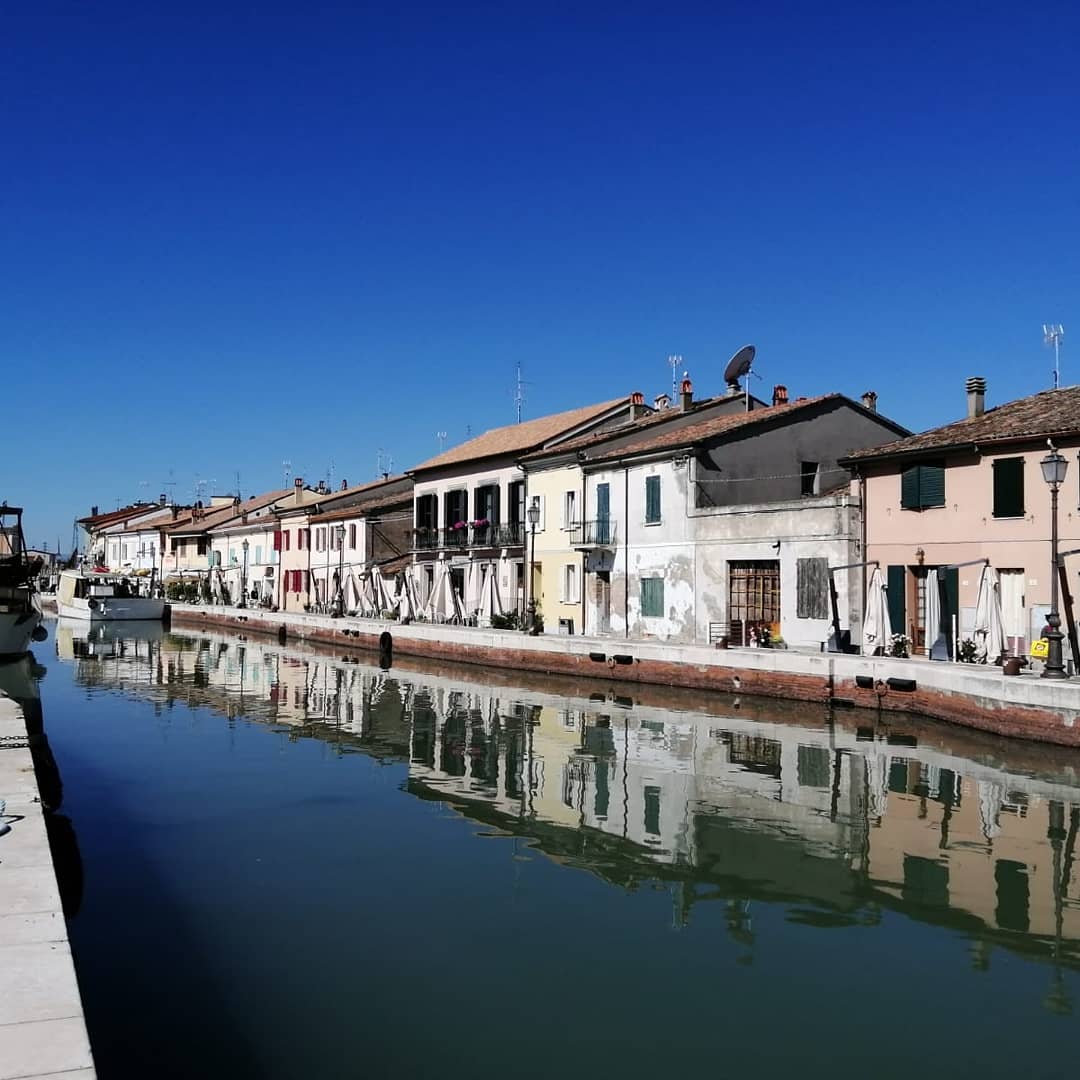
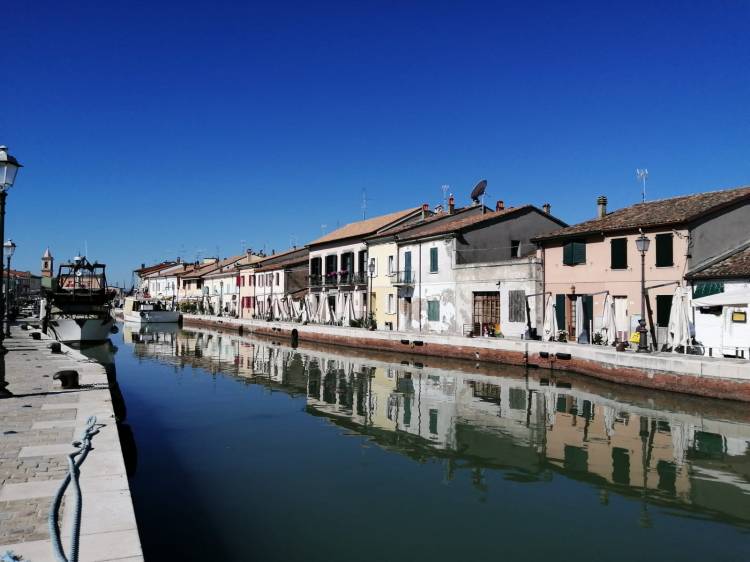
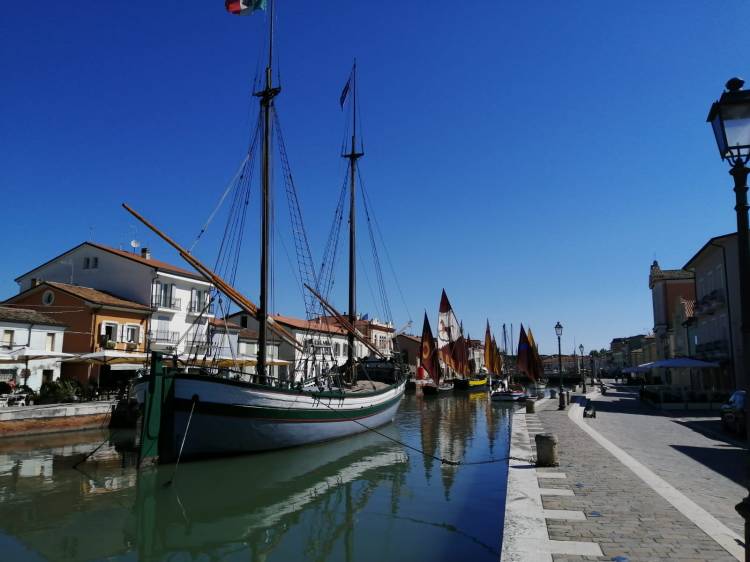
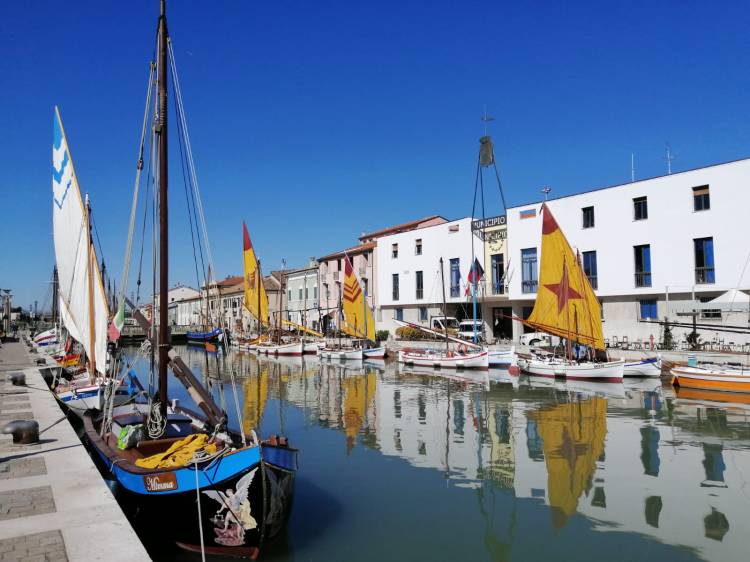
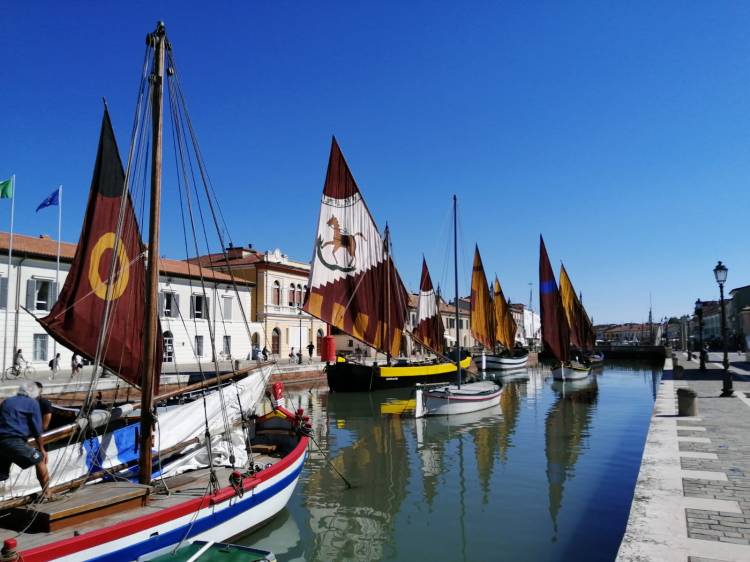
As we approached the town centre the typical beach themed shops gave way to more historical buildings, then your path is blocked by the Porto Canale which takes you inland. The quaysides were lined with fishing boats whose crews were hosing down after a hard morning’s work. The town was founded in 1302 by the people of nearby Cesena with the idea to build a port and later a canal to connect the two towns. But the small canal they’d built kept silting up, so in 1502 Leonardo da Vinci redesigned it to what it is today. It has a feel of Venice about it but on a much smaller, personable level.

A walk along the canal takes you past the most wonderful looking seafood restaurants, bars and cafes up to the historical display of boats at the end that make up part of the Museo della Marineria. With the colourful boats sat proudly in the water flying their authentic sails you really get a feel for what the place was like centuries ago. We also found the covered fish market which had a beautiful selection of fresh fish and seafood only a stones throw from where it was unloaded that morning. Later, thanks to our cycling guide, we visited Piazzetta delle Conserve where there still remains an old pit that was filled with ice and snow and layers of fish to keep the daily catches fresh over winter. There’s also a daily fruit and veg market every morning in the same square. We loved exploring this little gem of a town and if it wasn’t for wanting to squeeze in a visit to one more place then we would have stayed for longer.

Ravenna

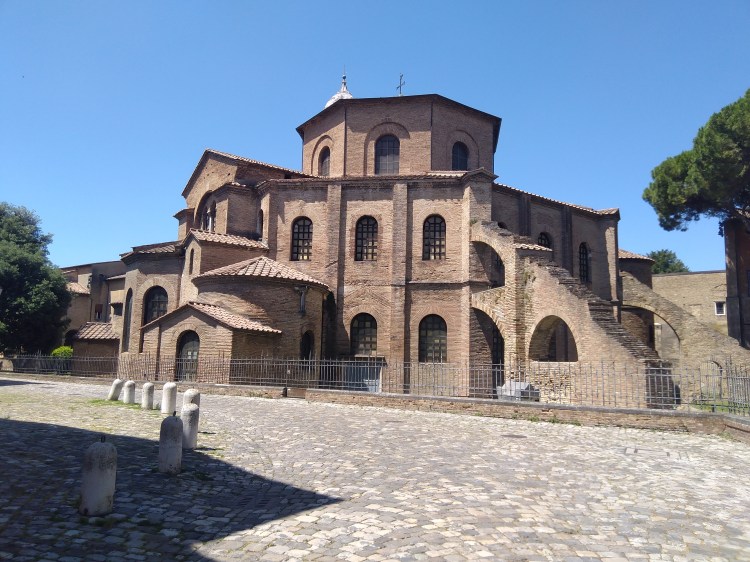
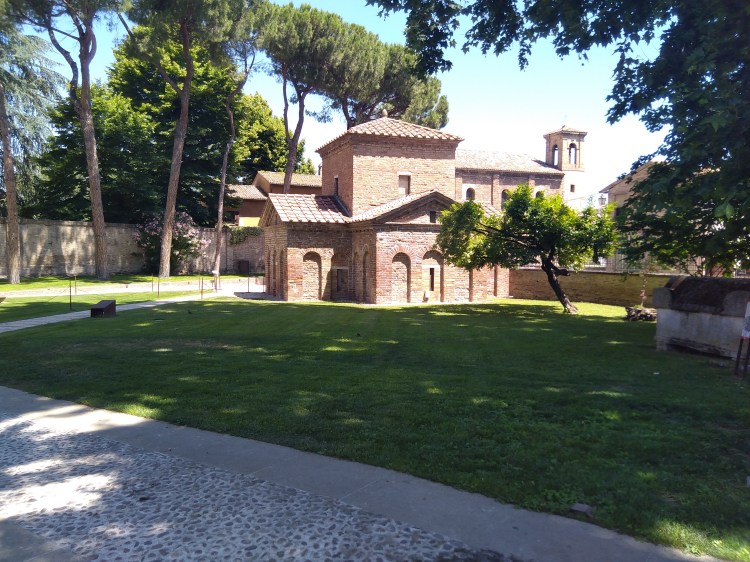
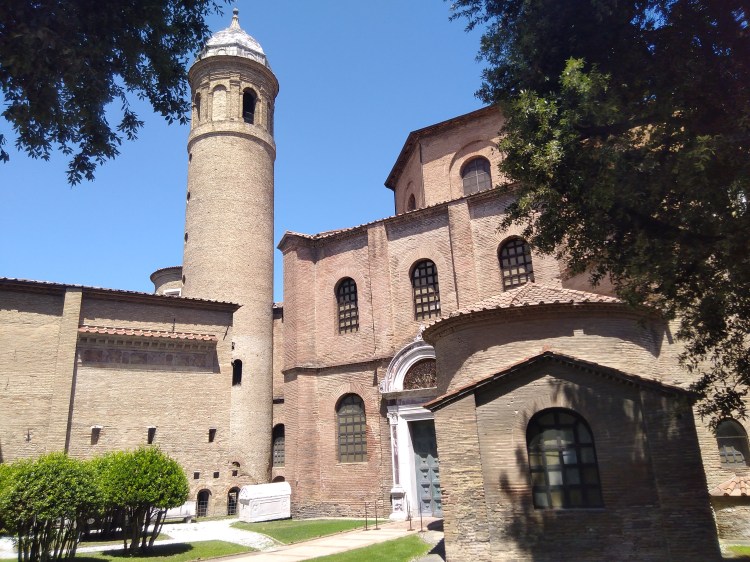
About half an hour up the road is the city of Ravenna. This fascinating city peaked early on it’s history and seemed to miss out on all the grandeur of the renaissance years. It’s older than Venice and was once an important Roman settlement, second only to Rome. One could be forgiven for thinking nothing good came of the Dark Ages but this unassuming city begs to differ. Reaching it’s fame towards the end of the 400’s this place really has some history. One of the main reasons people visit Ravenna is to marvel at the wonderful Byzantine mosaics that adorn the interiors of most of the churches, mausoleoms, crypts and houses. This is also what I was most looking forward to seeing, however the sightseeing gods weren’t on our side, as they were all still closed…opening again in two days time. We did, however, have a very pleasant wander round, admiring the buildings from the outside, struggling to contain our incredulity at how old they were. The church of San Vitale is a definite must see, it dates back to 525 AD and is an impressive building. With it’s octaganol shape, plethora of arches, butresses and curves it’s a wonder in itself. The interior is said to contain some of the best mosaics in the world along with the Mausoleum of Galla Placidia which can be found in the grounds of San Vitale. This empress, with roots in Constantinople, had this mausoleum built as her resting place, but after a most eventful life ended up in Rome instead. Nonetheless she became Ravenna’s first patroness and can be remembered by visitors to this site. I can only imagine how striking the interior is by comparison to the unassuming, plain exterior.

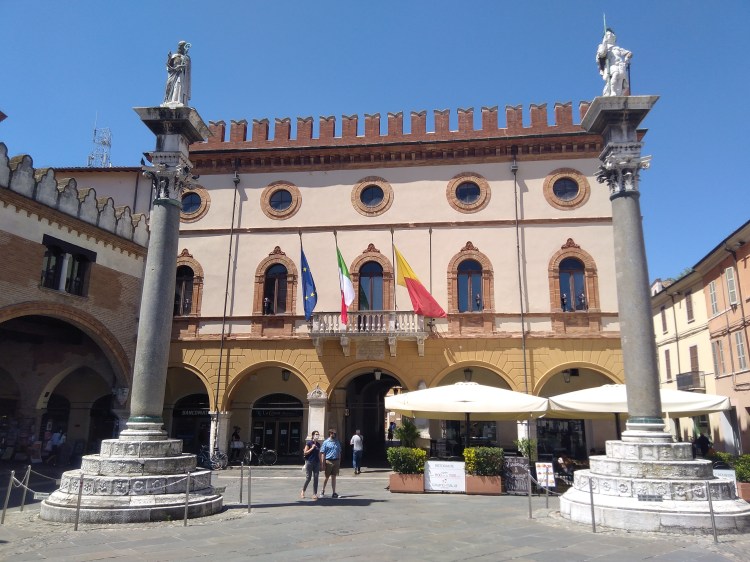
Another sight to see in Ravenna is the Piazza del Popolo, a centre square that was designed by the Venetians when they briefly ruled in the 15th century. It contains two columns topped with figures of San Vitale and Saint’Apollinare, the city’s two patrons. The church of Saint’Apollinare Nuovo is also said to contain some wonderful mosaics but we made do with admiring it from the exterior.

We had a delicious lunch in a seafood restaurant tucked away down a quiet street, before a wander round the refurbished covered market and a look at Dante’s tomb, where the famous Italian poet is buried after spending the last three years of his life.

It’s unfortunate the current state of emergency meant we couldn’t experience the main attraction of this wonderful city but we really enjoyed our day here and shall just have to return another time. Back to Ferrara we headed, to pack our things and get ready to head South.

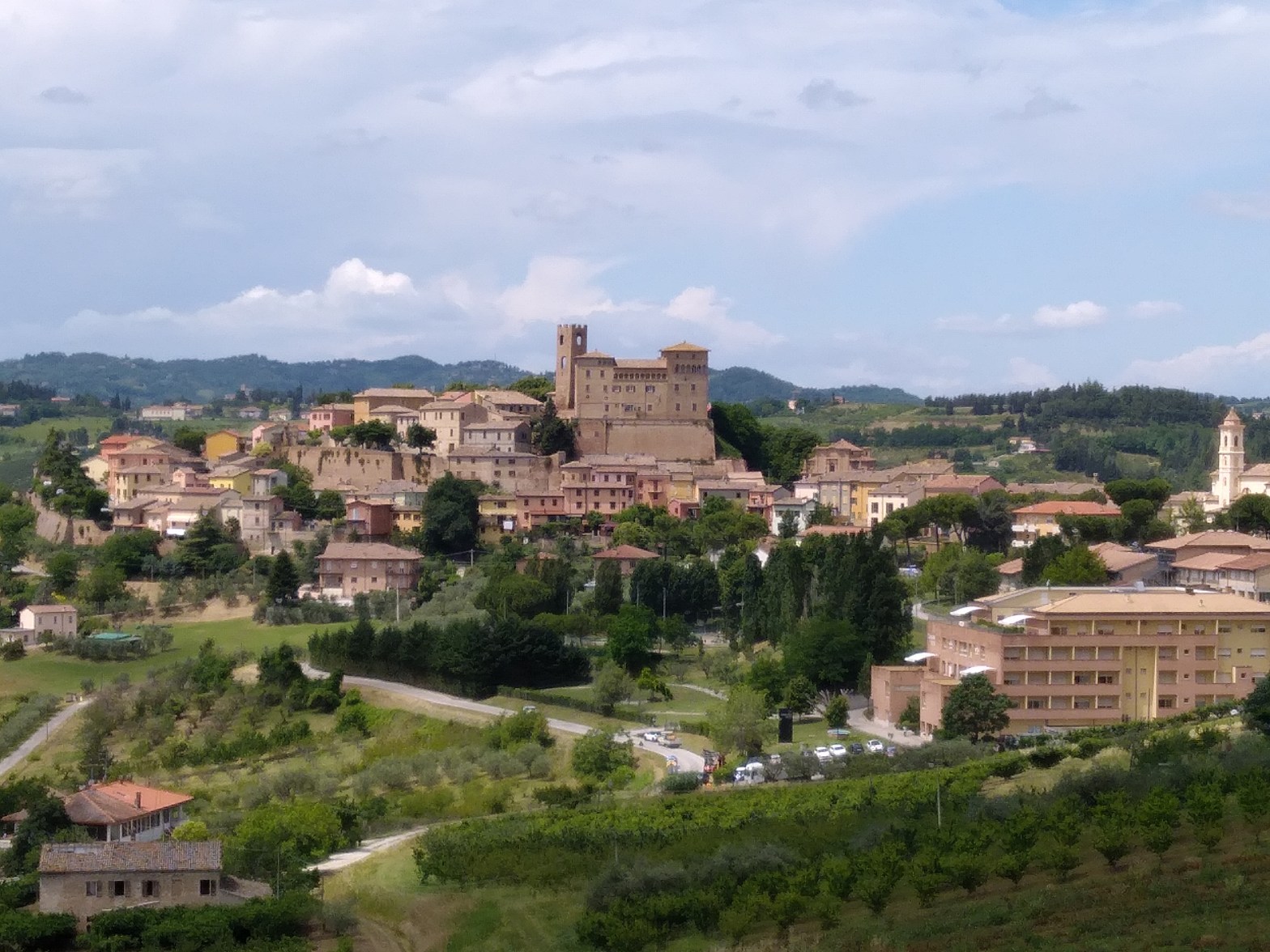
Links

Ferrara

As our time here in Ferrara draws to an end I decided it was about time I put fingers to keys and wrote about this wonderful medieval city. We’ve been lucky enough to call Ferrara home for the last fourteen weeks; whilst it isn’t as long as we originally planned, and it hasn’t gone as we’d imagined we’ve really enjoyed our time here.

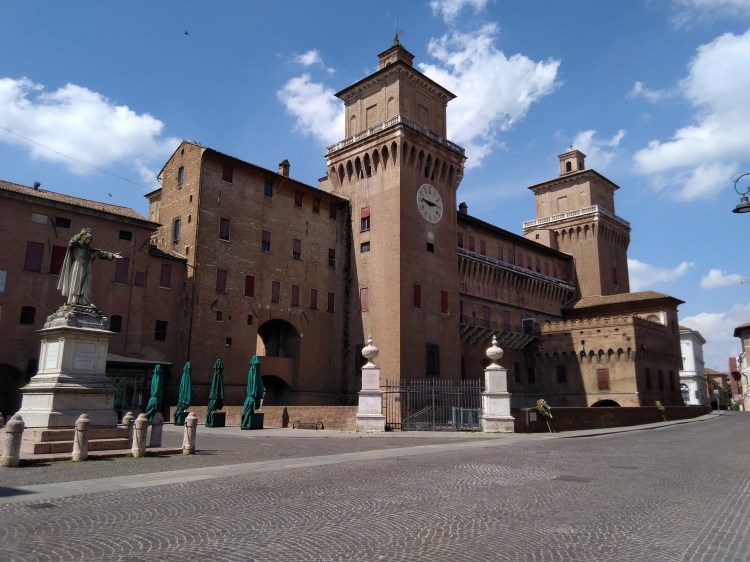
The whole city is a UNESCO World Heritage Site, something you begin to take for granted when you’re popping out for the milk of a morning. That is until you glance up at the awe-inspiring Castello Estense as you whizz past on your bike and you have to pinch yourself. It beats driving to Sainsburys that’s for sure!

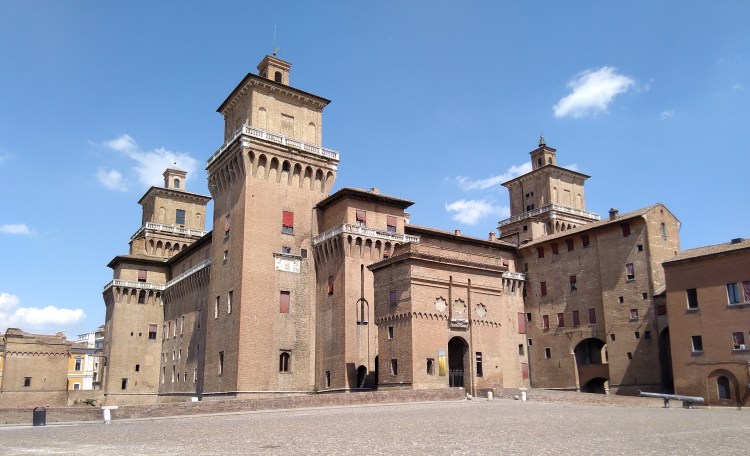
Castello Estense

Ferrara is the quiet, unassuming relation to the other Northern Italian Cities. Whilst places like Florence, Venice and to some degree Bologna attract the hoards of tourists each year, Ferrara is content in it’s location off the tourist trail, still offering just as much as the other cities to those that do find themselves amongst it’s beauty.

The centre of the city is crammed full of medieval, renaissance architecture, making every turn of a corner a delightful exploration punctuated with gasps of wonder. The most striking building is the Castello Estense. A huge, imposing fortification that seems to rise out of it’s surrounding moat to keep a protective eye on the Ferraresi people. It dates back to 1385 when it was commissioned by Nicolo II d’Este to demonstrate his authority. The subsequent ruling dukes made their own changes to the castle resulting in it’s use as both a palazzo and a fortress. The effects of fire and several earthquakes throughout the 1500’s resulted in some costly restoration work and by the end of the 16th century the Este rule came to an end with the lack of a male heir, resulting in Pope Clement VIII taking control of the city and installing his cardinals in the castle as the city’s administrative centre. Work on maintaining the castle diminished until 2002, when the state began the big job of restoring the historic building.

On May 20th, 2012 a strong earthquake hit the city causing widespread damage. Of which some is still very evident today with many places still being restored. One of the Castle’s towers, the Torre dei Leoni partially collapsed.

Palazzo Municipale

Castello d’Este is connected to the old Este Palace (now the Palazzo Municipale, the most picturesque town hall I’ve ever seen!) by Via Coperta, a protected passageway which gave the Dukes a chance to escape the castle in times of unrest. It is thought to have inspired the Vasari Corridor in Florence which allowed the Medici to do the same between the Palazzo Vecchio and the Palazzo Pitti.

Castello Estense

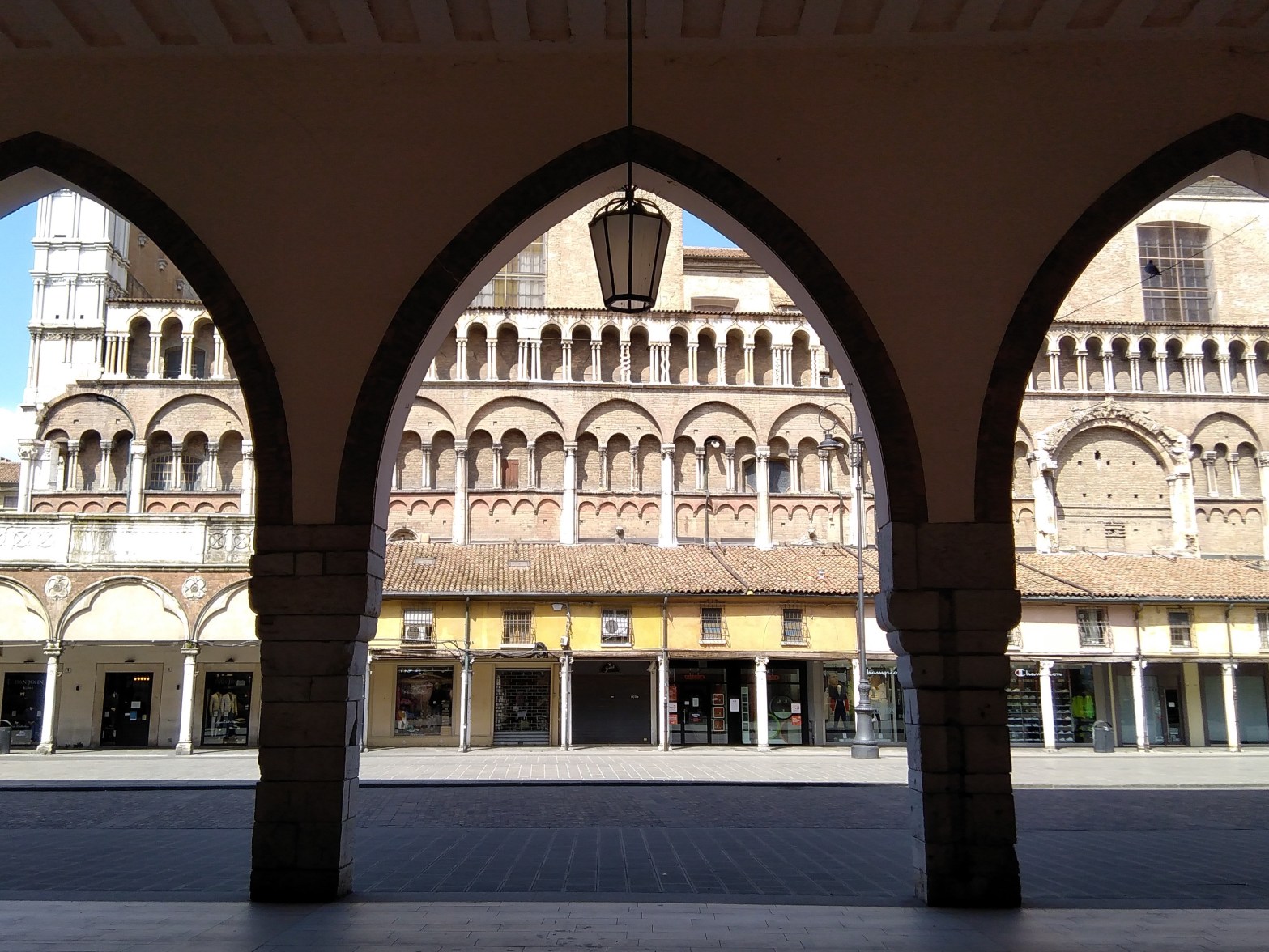
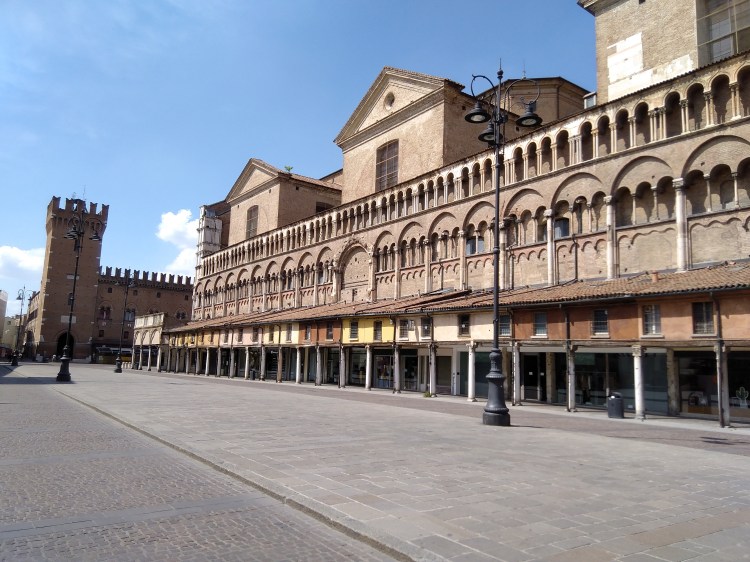
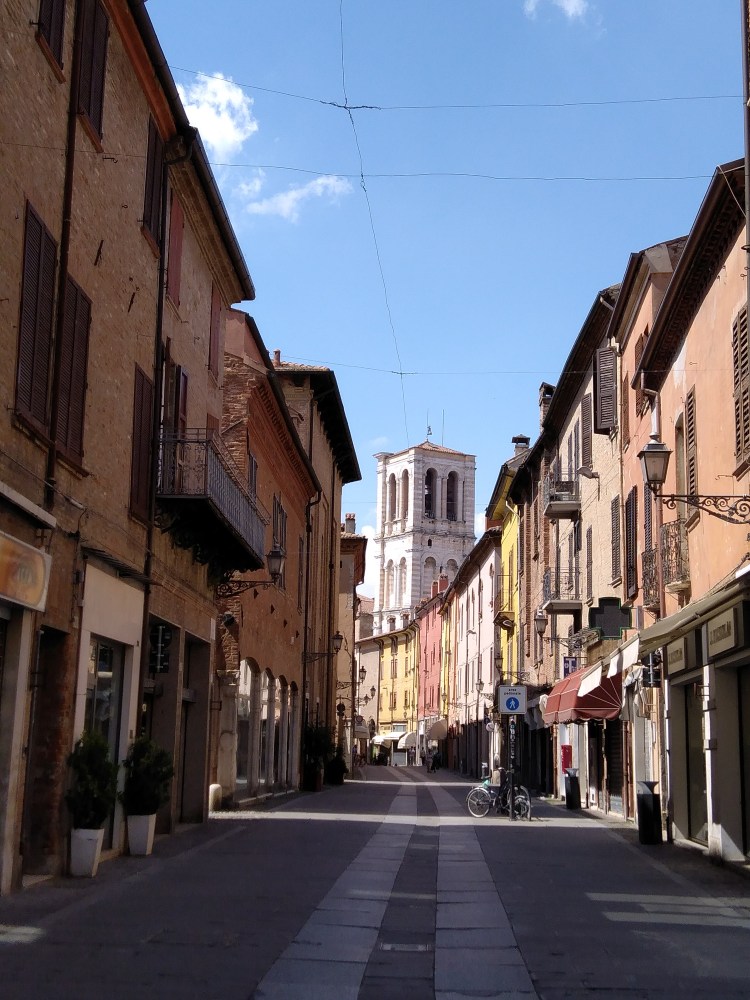
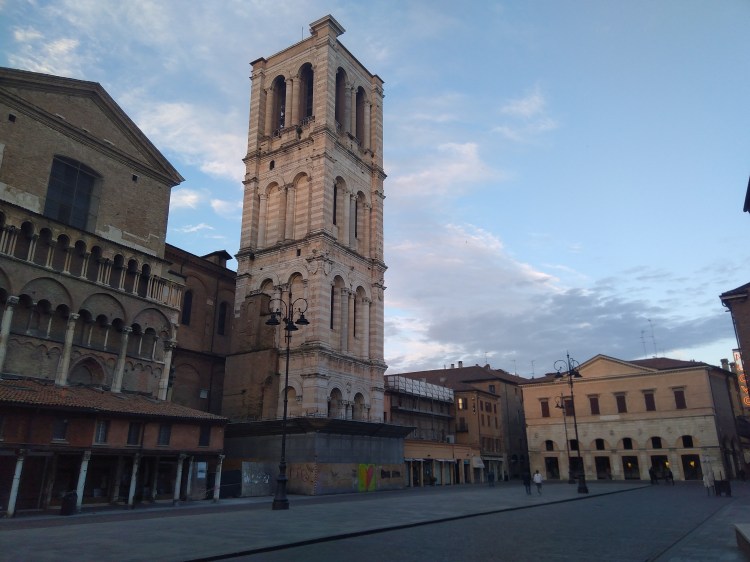
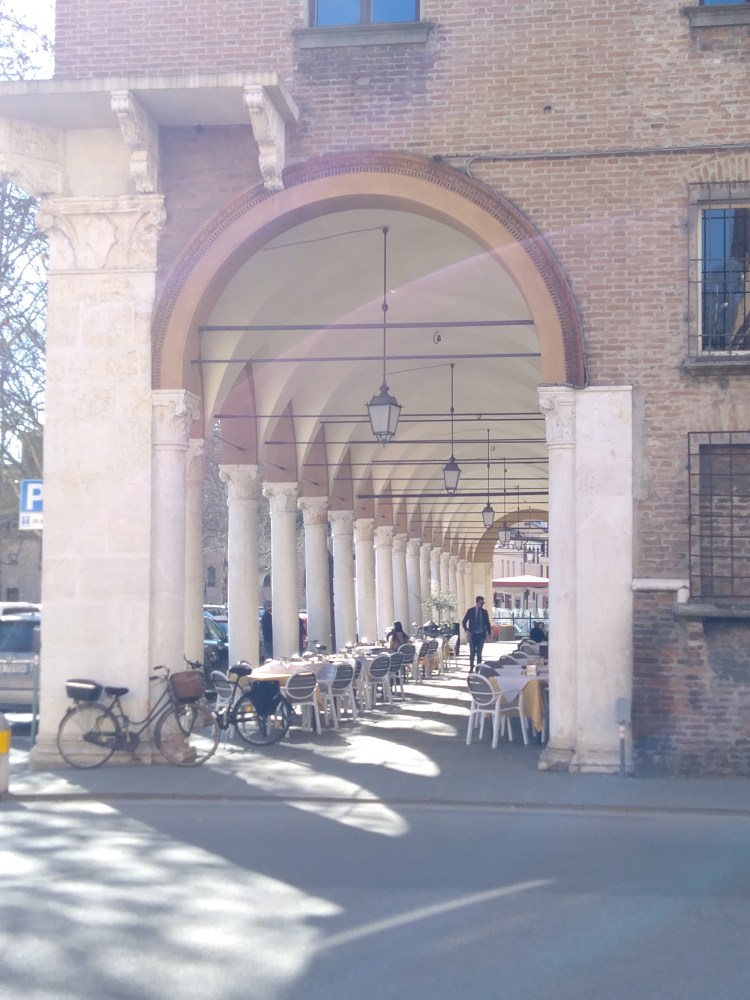
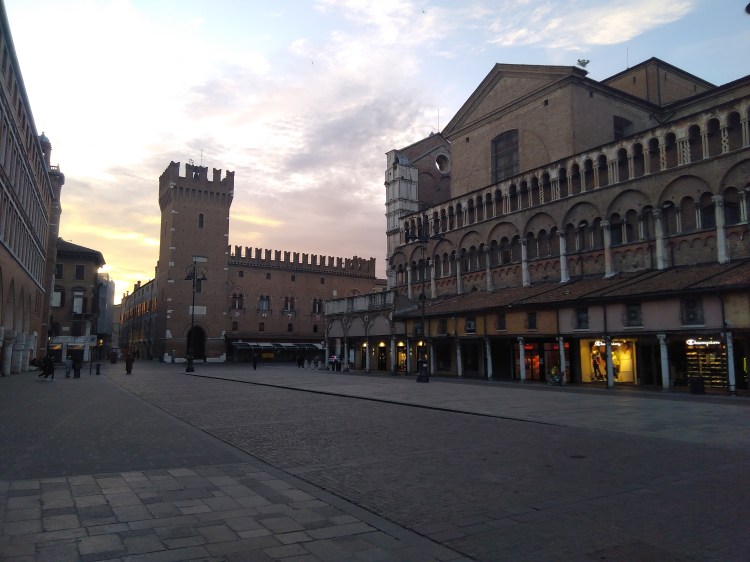
Almost overshadowed by it’s surrounding neighbours is the Cattedrale di San Giorgio. Never before have I seen a cathedral like this one. It looks like someone has come along and just added bits to it over the centuries, resulting in a mismatch of architectural features that remind me of those stone piles that are created by visitors at the top of mountains over time. The cathedral was begun in 1135 and was worked on in the early days by the same designer as Modena’s cathedral. Of particular interest is the Upper Loggia on the south side which can clearly be seen from Piazza Trento e Trieste, the big piazza next to the building. The Romanesque columns are a wonderful mix of spirals, zigzags and knots which according to legend the Devil twisted himself around the night before the cathedral was consecrated and had to skulk away when the people of the city cheered. As you cast your eye down from this fascinating row of columns you’ll see the Loggia dei Merciai, a market portico running the length of the piazza which was added in 1473. Then as you glance right from here you see the beautiful, unfinished pink and white marble campanile, standing like a straight, striped candy cane towering over the piazza. Restoration work on the front of the cathedral has been a long, ongoing process since the 2012 earthquake so most of the marble portico on the West side is hidden from view and the interior is off limits for the time being.

The Cathedral

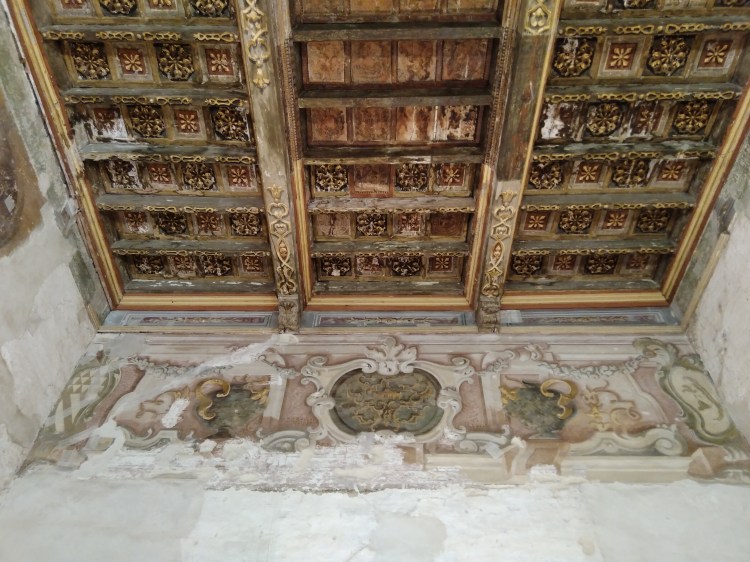
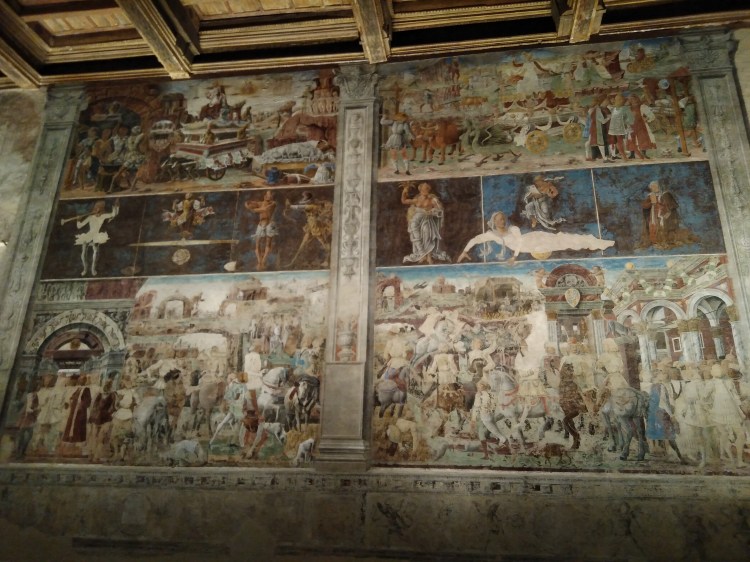
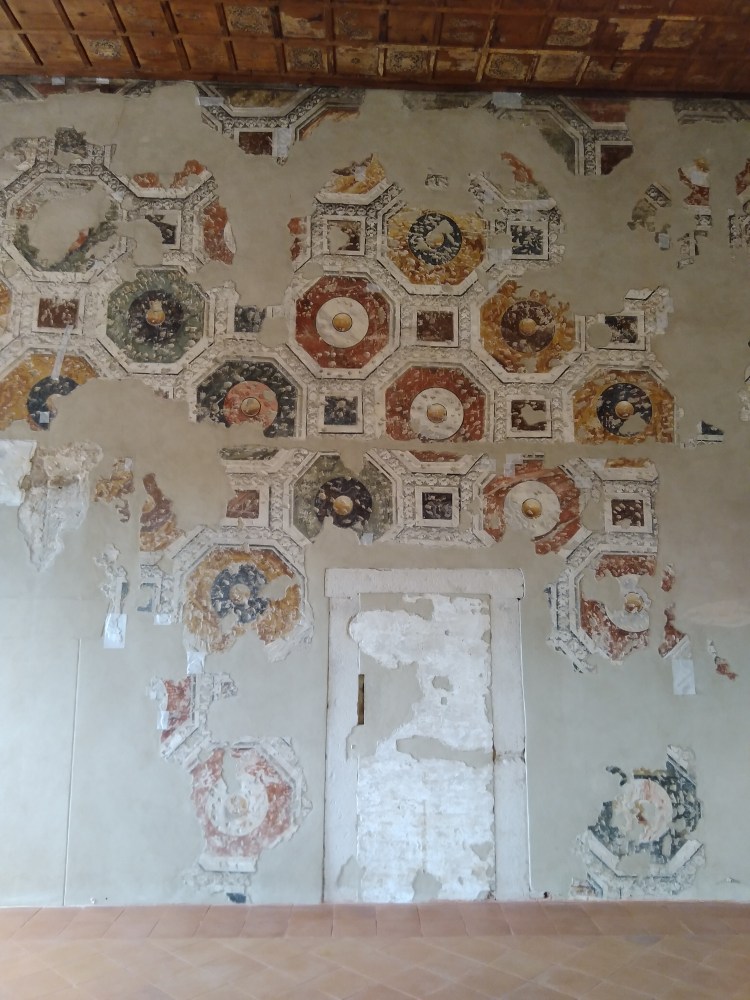
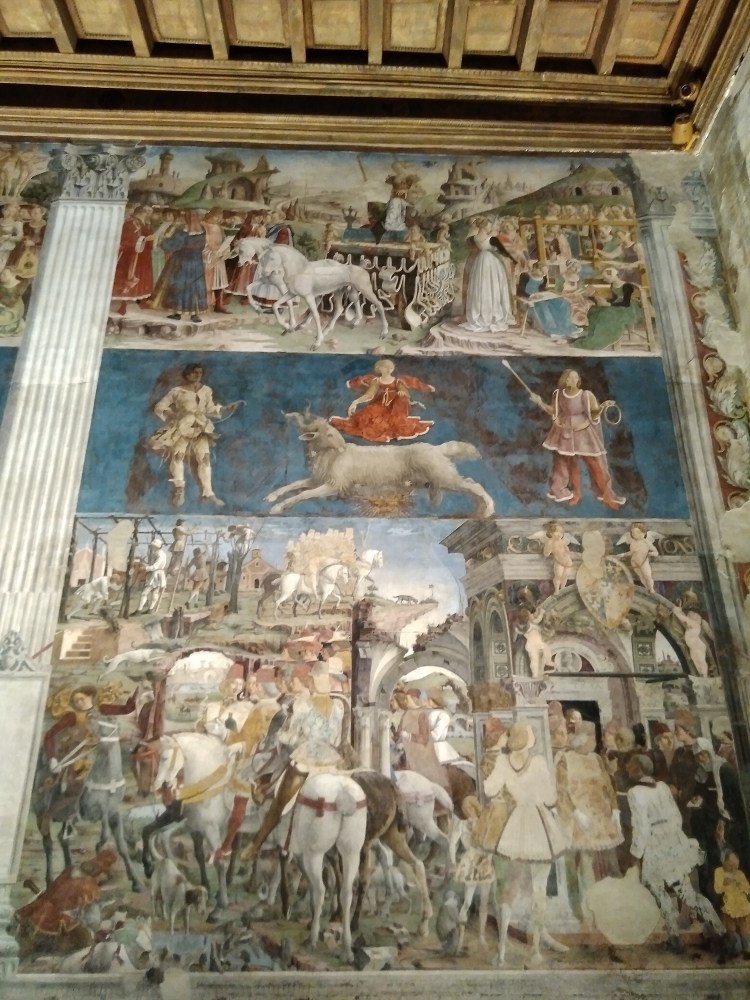
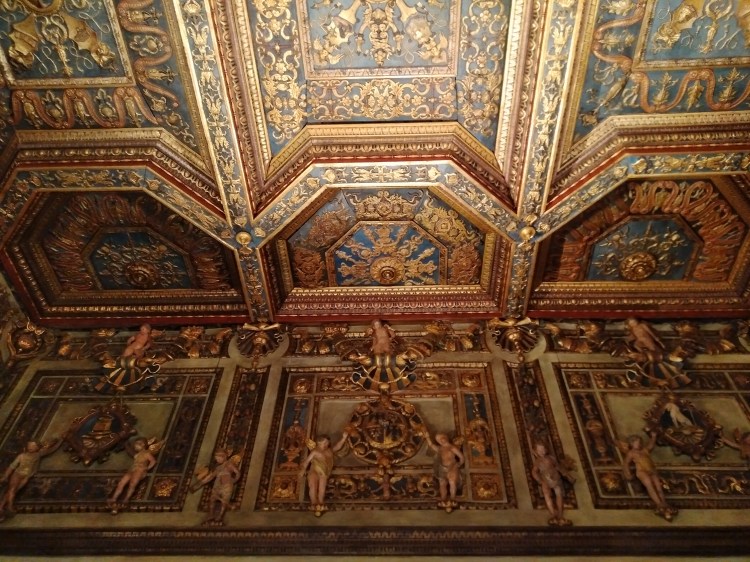
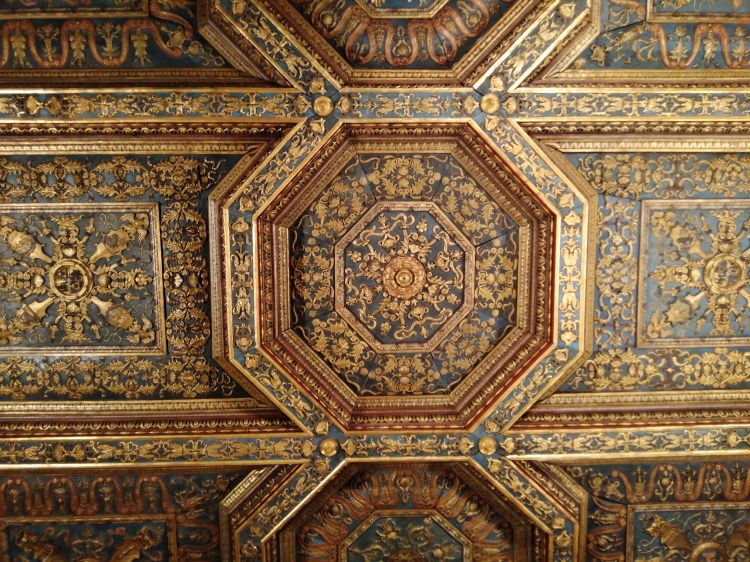
A short walk from the main piazza is Palazzo Schifanoia, which when built was in open countryside and means ‘escape from boredom,’ a place for Alberto V d’Este to escape the tedium of political life. It was built in 1385 but it’s main attraction, the Salone dei Mesi, was created under the orders of Borso d’Este and is regarded as one of the most astonishing masterpieces of Italian Renaissance art. The room is adorned with the most breathtaking frescoes depicting the twelve months of the year, of which seven have survived. These masterpieces were covered in white wash when the palace was used as a tobacco factory and Napoleonic barracks in 1801. It’s a miracle any of it survived at all. The following rooms diminish in grandeur as the visit progresses which provides a striking contrast between the elaborate stuccos of the Sala dei Stucchi and the shabby, bare walls of the remaining rooms.

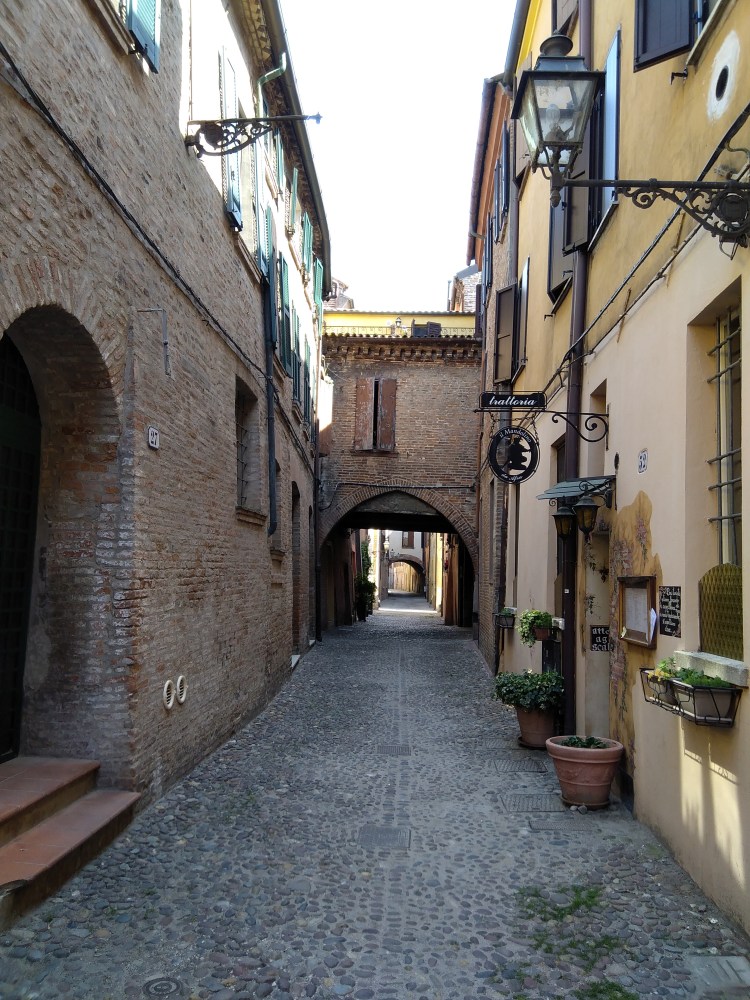
The streets to the South of the palazzo make up the old part of the city and make for a wonderful wander round, particularly on a sunny afternoon when the streets empty and the lanes return to how they must have been centuries ago. The oldest of which is Via delle Volte, named after the vaulted passageways which connect houses on both sides.

Via delle Volte

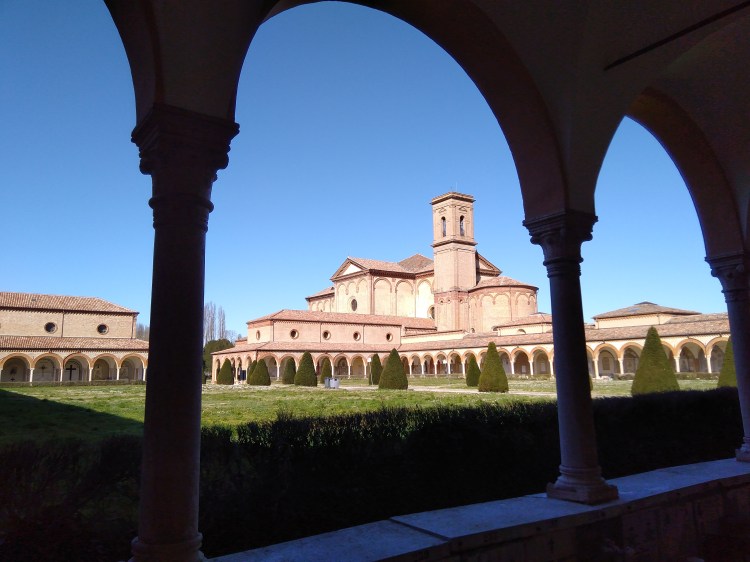
On the North side of the city the streets widen out and the houses get bigger as the city expanded over the years. There’s a beautiful corner known as the Countryside within the walls, where there’s open fields and orchards and it was whilst exploring this area that I stumbled on to the large church of San Christoforo and the Cimitero Monumentale. Duke Borso began a monastery here in 1452 and over the following centuries it became the vast cemetry it is today which is the resting place of many famous Ferraresi.

Church of San Christoforo

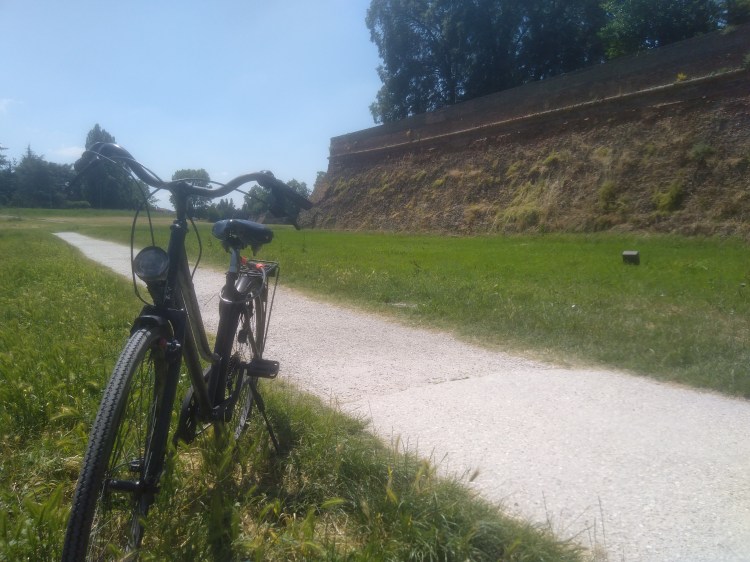
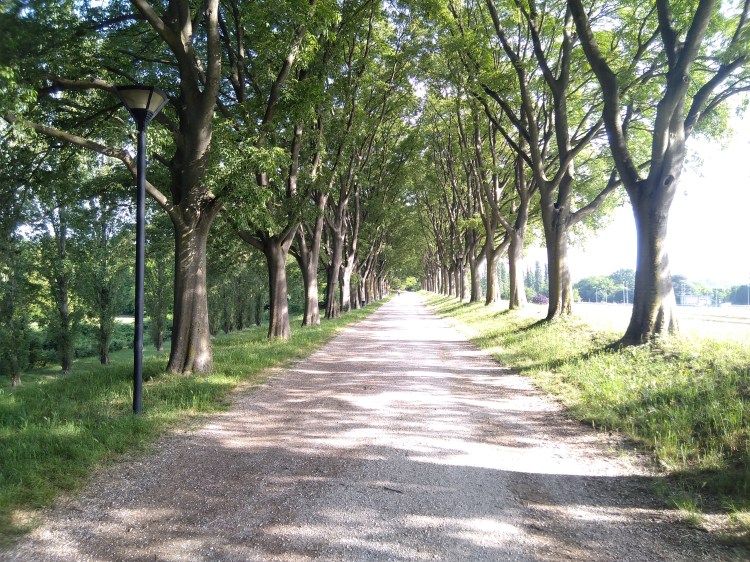
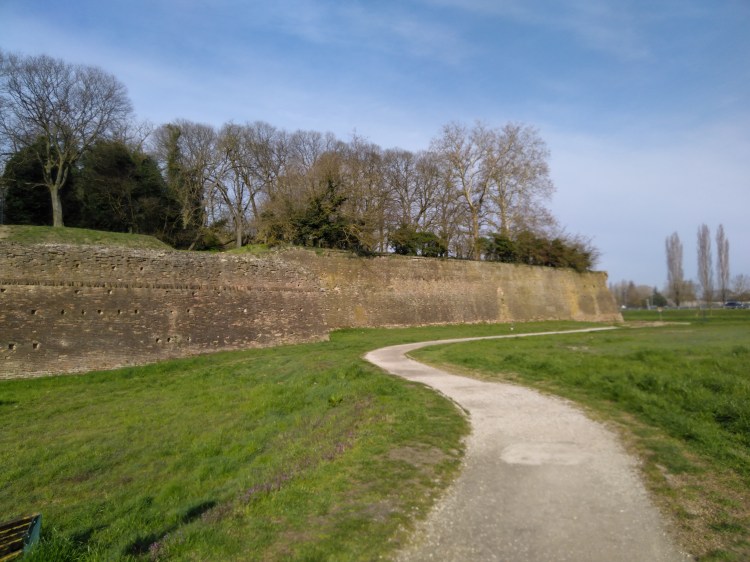
A stone’s throw from here is the city walls, an impressive 9 km circuit of reinforced red brick built to withstand artillery fire. You can while away many pleasant hours walking or cycling the walls and on a Sunday afternoon it’s definitely the place to be with what appears to be most of the city out for a stroll.

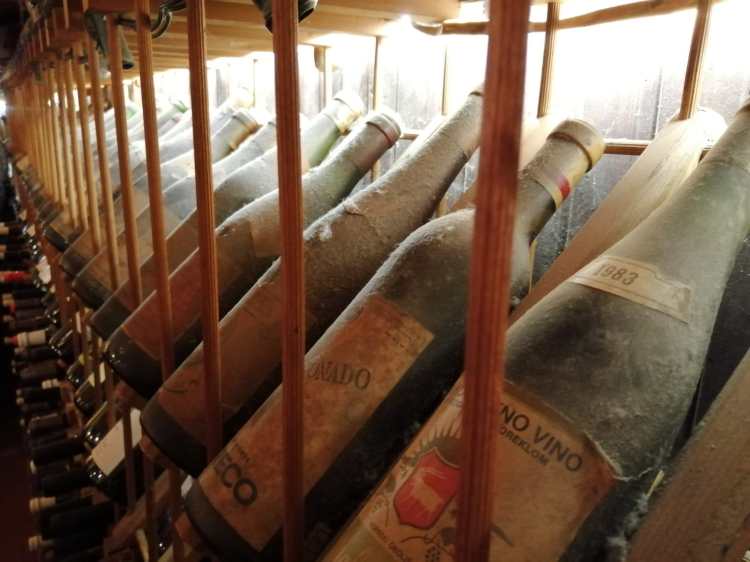
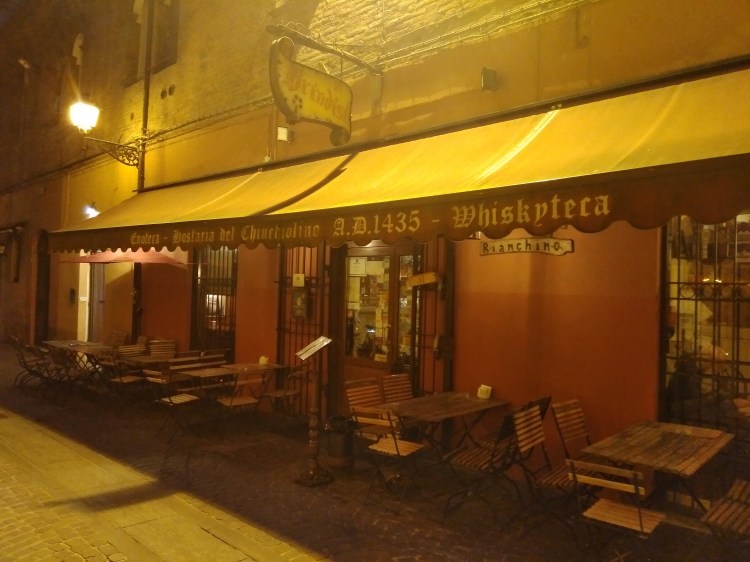
Of course a stroll around town wouldn’t be the same without a rehydration stop. Ferrara has bars a plenty to choose from, with too many to list them all. We love Bar Jolly, at the end of our street Via Palestro overlooking Piazza Ariostea. It’s a welcoming little place run by Damiano who serve fab lunches and delicious aperitivo. Also, Al Brindisi is an absolute must. It’s tucked down an alley called Via Adelardi behind the cathedral and is the oldest tavern in the world dating back to 1435! With a great wine selection, traditional food and a shady location it’s a great way to end a walk around Ferrara.

This is only a snippet of what Ferrara has to offer, there’s so many other historical buildings, fascinating museums and wonderful bars and restaurants that I could go on and on. It’s bittersweet to be leaving this amazing place. We’ve met some wonderful people who have welcomed us so warmly but all good things must come to an end. Naples is calling and the next chapter is just around the corner.

The best wild camping spot near Parma

Over the last couple of weeks we’ve been more active and exploring further afield. As lovely as Ferrara and the Po delta is, we’ve been yearning for hills, which you’d think wouldn’t be an issue being from the Lincolnshire fens!

So we’ve had a few trips south to the hills near Bologna. On one occasion we were on the bikes and it was very much a roller coaster of a ride. My frustration at not being as strong on an incline as I used to be came to boiling point and a slight meltdown ensued! Lesson learnt though; a bit of patience with myself and a careful vetting of all future routes for steep mountains!

With normality slowly seeping back in to every day life here in Emilia Romagna and being ever conscious of our future move south we decided to see as much up here as possible. Which started on Sunday with Parma, Modena and the surrounding area.

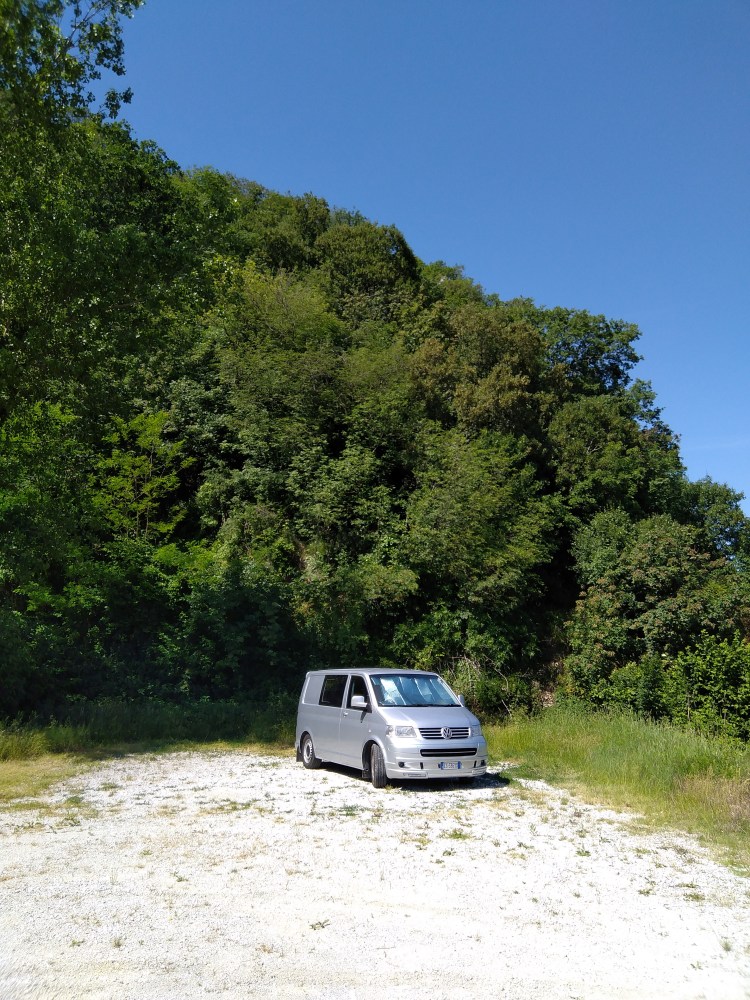
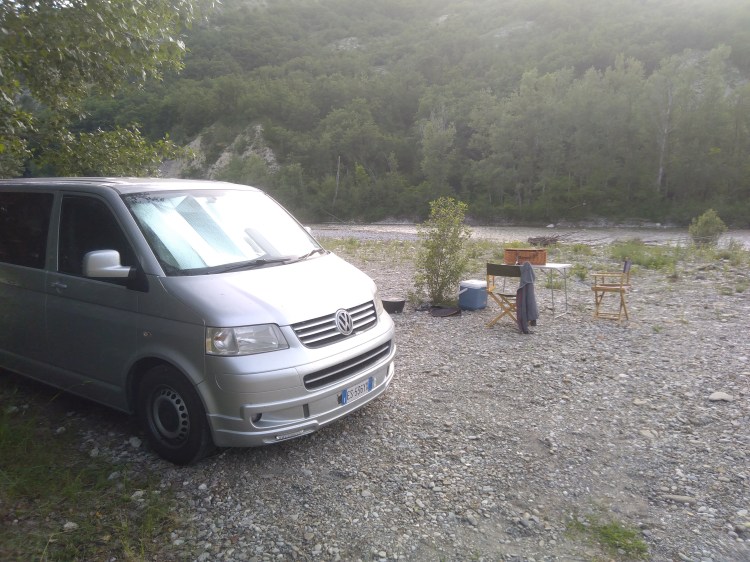
We drove to our chosen wild campsite for the night; twenty miles south-east of Parma. We parked the van, unloaded the bikes and had a very pleasant cycle in to Parma centre. It was downhill all the way!

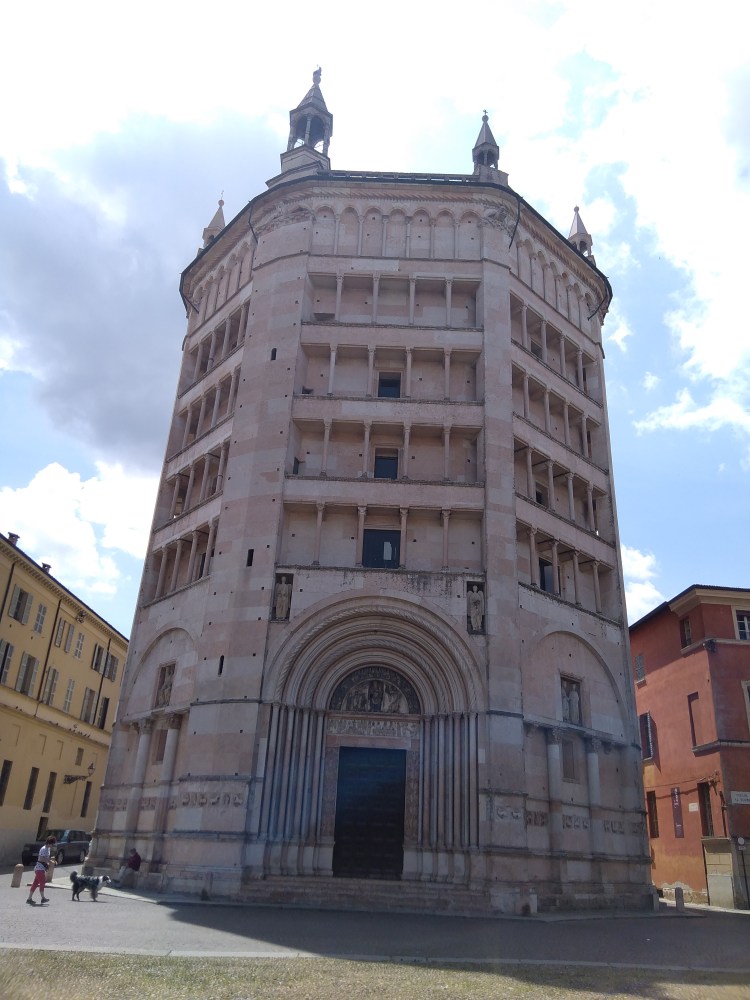
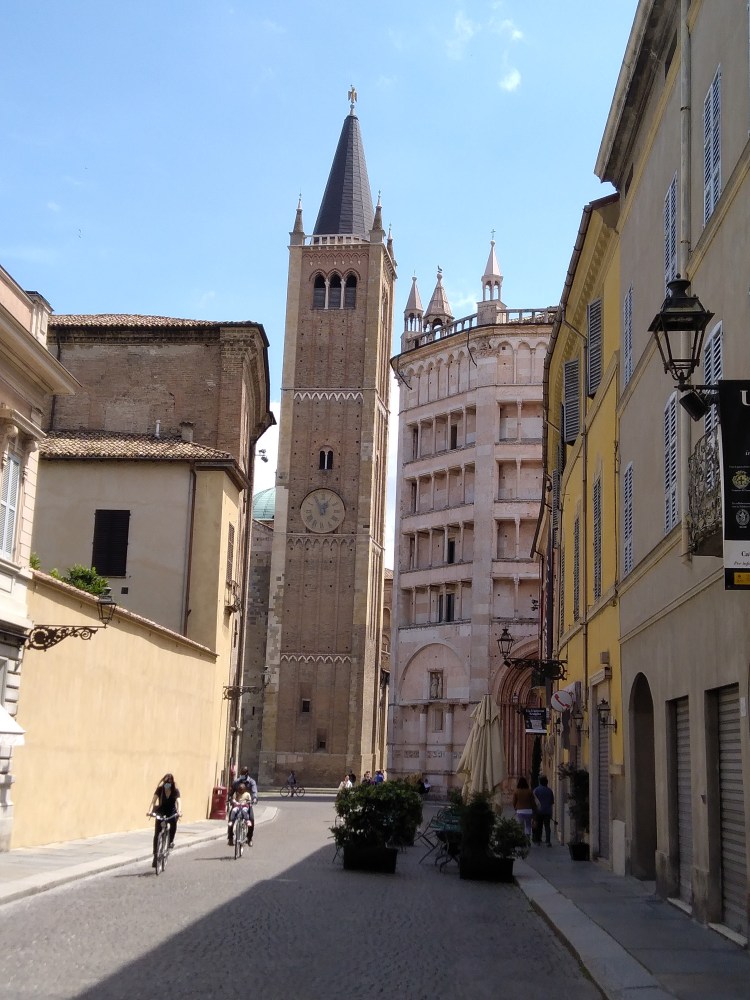
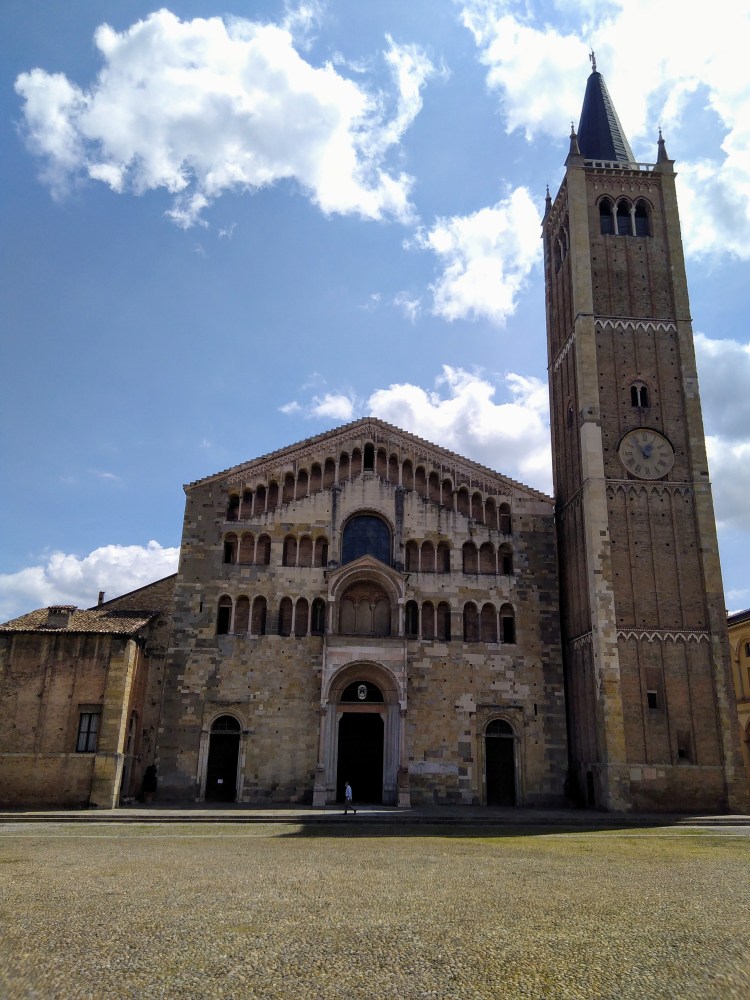
Parma is in the heart of Italy’s Food Valley and is famed for it’s Parma ham and Parmesan cheese. But it has a cultural side to it as well, being a popular destination for fans of opera and art. Despite the volume of traffic on the way in, the centre itself was nearly deserted which made for a very pleasant wander round it’s beautiful Parisian style boulevards, a modern day reminder of it’s brief Napoleon history. We had a spot of lunch and a glass of fizzy red wine (a local speciality) and took in the sights. The most striking of which is the cathedral and neighbouring Baptistry made from pink and white marble, dating back to 1178 and 1196 respectively, which made for a beautiful backdrop to our lunch stop.

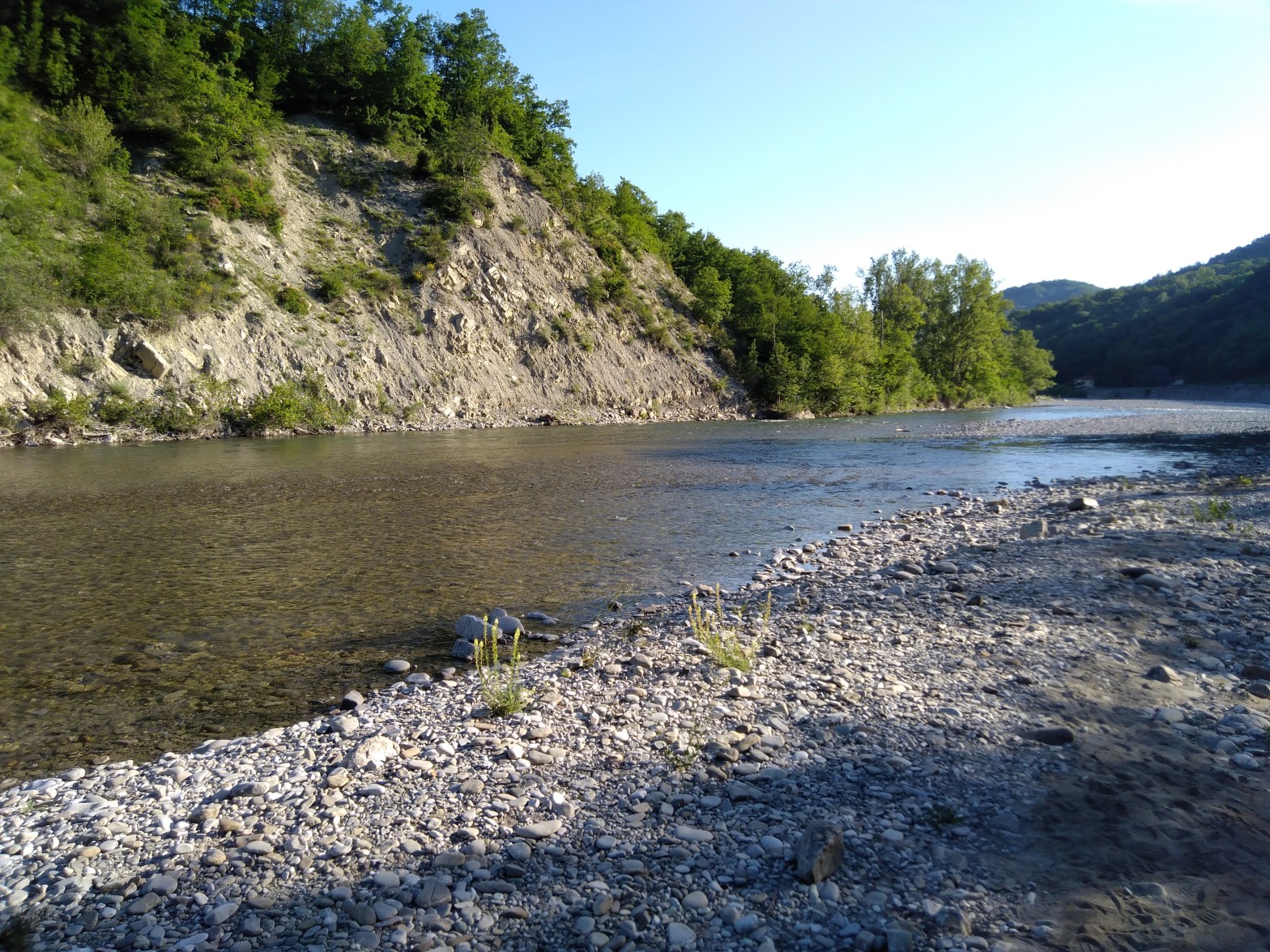
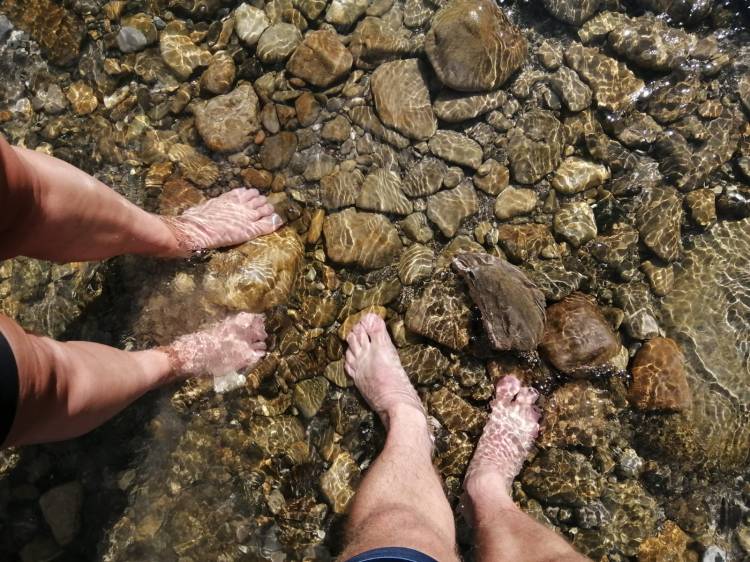
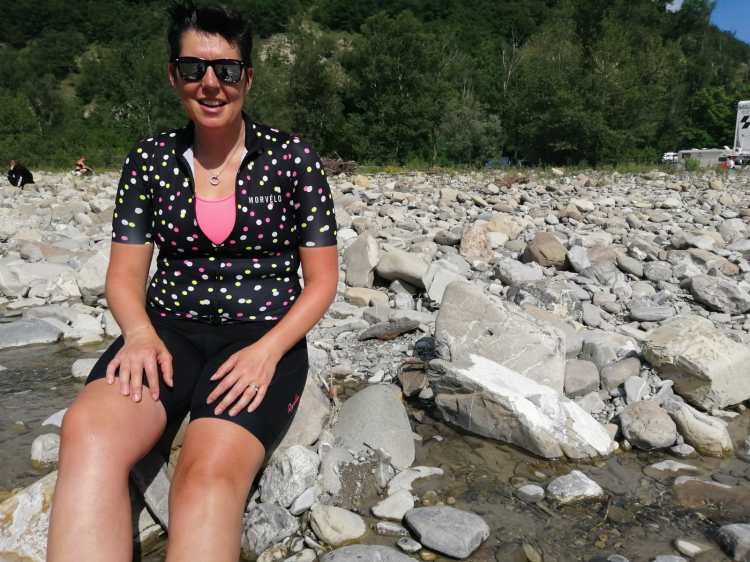
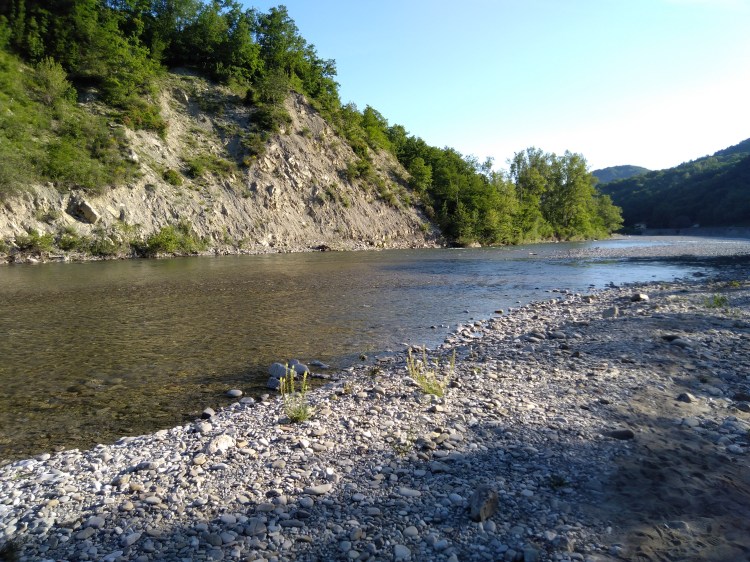
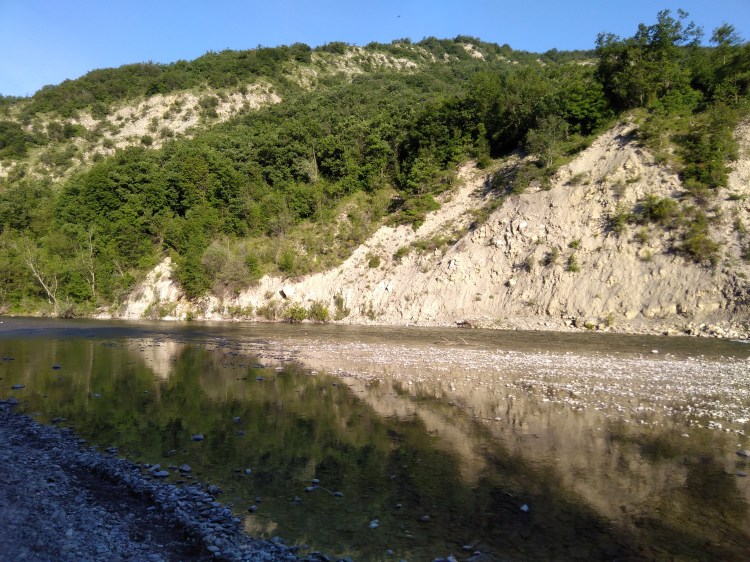
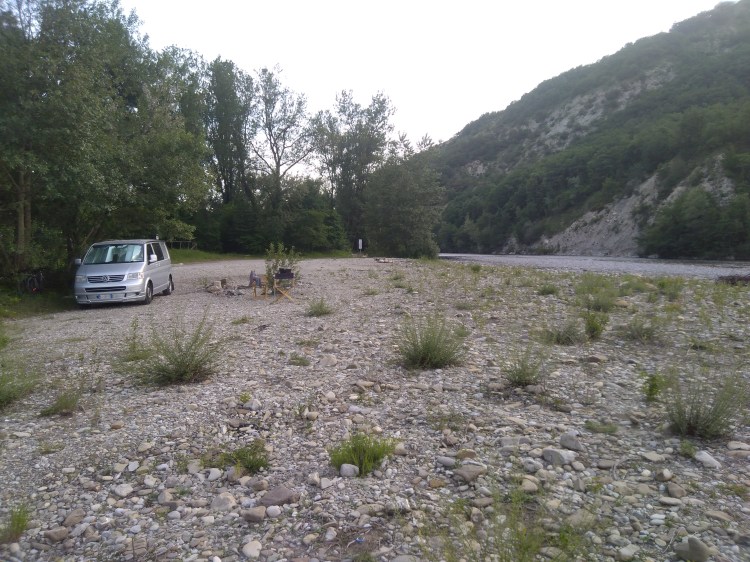
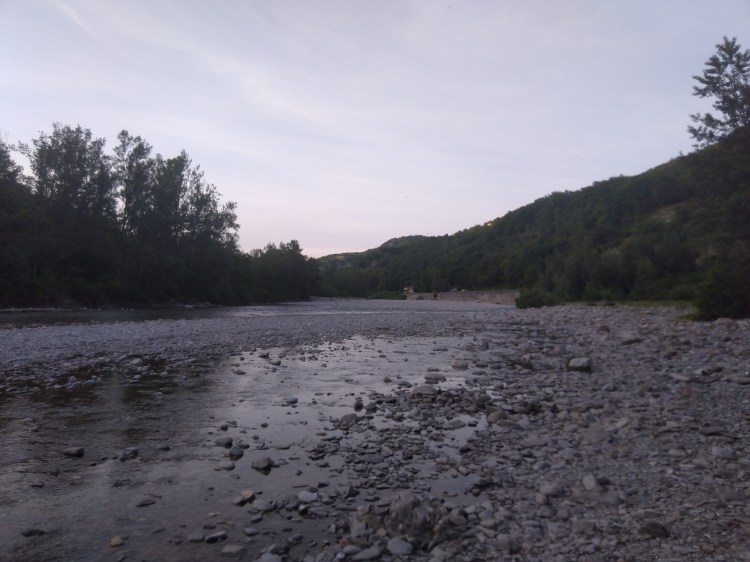
Our cycle back was some what tougher than the ride in. Perhaps wine wasn’t the best idea especially as it was now in to the 30’s! We made it though and upon our return any notion of a secluded, quiet camping spot was soon dispelled. The area was packed full of cars abandoned on the rocky track down from the main road. The river bank was a wide expanse of beautiful, smooth pebbles with the river bubbling away in the middle; a fraction of the size it must be when the mountain snow melts early in the year.

Of course it being Sunday afternoon, the locals had flocked here to sun bathe, paddle and enjoy the good weather. But it didn’t matter, we headed straight for the lovely refreshing river to cool down from our ride then got comfy for the rest of the afternoon and evening.

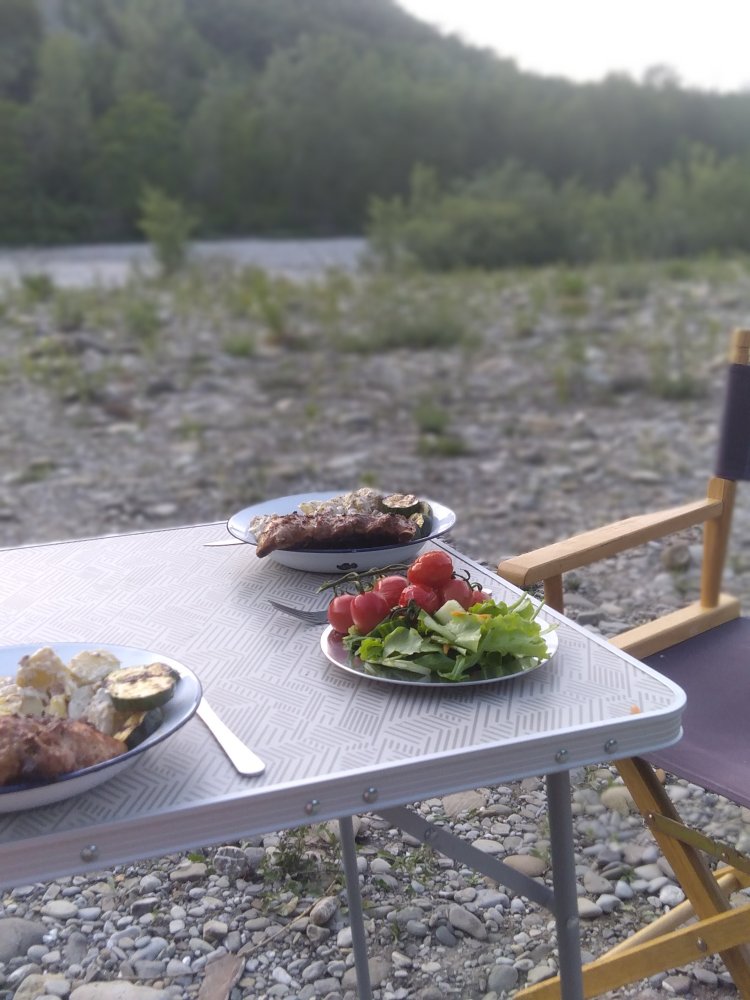
However, as the afternoon melded in to early evening and the sun dipped behind the mountains everyone packed up and went home. The cars were loaded up and driven off, the few other motorhomes pulled in their awnings and went, leaving only tire marks and overflowing rubbish bins. The noise of squealing children and barking dogs was replaced with the beautiful gurgling of the river and the chirping birds, who I imagine were as pleased as we were to have the peace restored. We couldn’t believe it. What bliss.

After a very comfortable and quiet night, I was awoken by the glorious sound of the dawn chorus. Nature’s own alarm clock that has got to be the best thing to wake up to. A wonderful cacophony of birds chirping their soulful tunes, a melodious proclamation at another day beginning, all with the gurgling river as a backing track. Well, when I could hear it over the snoring coming from the lump next to me!

After some early morning yoga on a sandy patch of the bank further up stream followed by a coffee and a wash in the river we left our wonderful camping spot still reeling at how lucky we were to have it to ourselves.

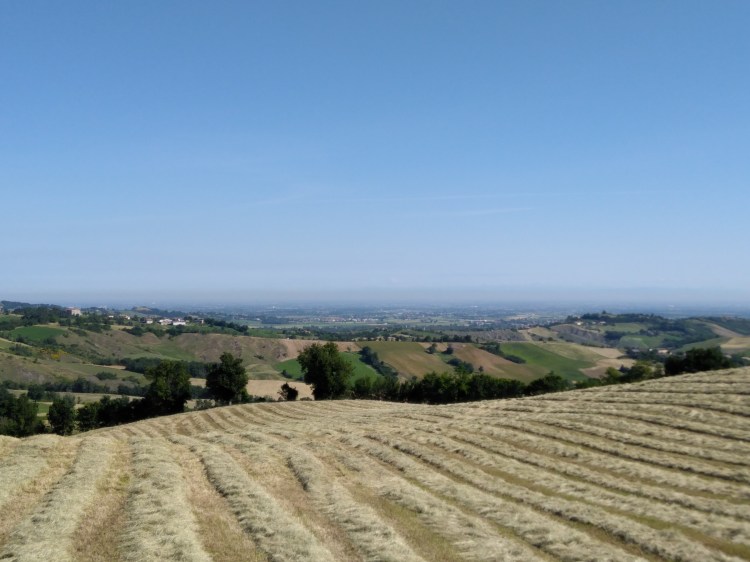
Our first destination of the day was a small village called Torrechiara, which we reached via one of the most scenic roads I’ve ever been on. Due to a closed road on the edge of the hills we were forced to detour up and over from one valley to the next. The road gradually wound up the mountains with fabulous views of the Appenines to the south. When we reached the ridge the views to the North were just spectacular. We could see all the way across the Po delta and just about make out the snow capped peaks of the Alps rising up out of the haze. How lucky that we were sent on this route.
View across the Po Delta

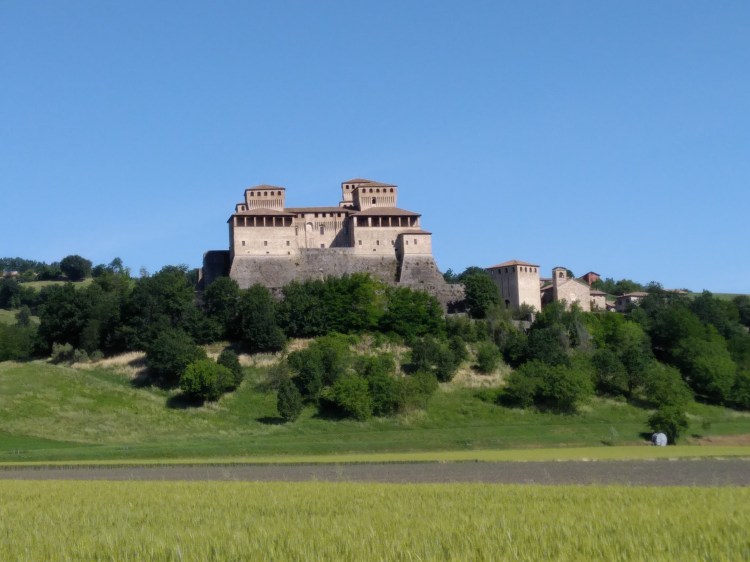
The road dropped down to the town of Langhirano, a centre of Parma ham production which was evident in the number of factories surrounding this much more industrial town. Soon the imposing view of Castello di Torrechiara came in to sight and we parked up on the edge of the village to go and explore. At the centre of this little settlement was a fabulous little Piazza, containing La Tavola del Contado, a bar and restaurant where we had a coffee and a pastry for breakfast. The owner was extremely helpful and told us she had lived there for years and absolutely loved it. We could see why. The short walk to the castle was very steep but so worth it. From it’s commanding position the views across the valley were beautiful and we had the added surprise of there being a small hamlet up there within the castle walls which housed locals, a B&B, a church and a restaurant. It really was like a step back in time. The castle was built between 1448 and 1460 by Pier Maria Rossi, a high commander in the service of the Viscontis and is one of the best examples of reinforced architecture in Italy. Being built on a walled base on top of a hill made for a very secure location. Unfortunately, the only day it’s closed is Monday, which was slightly annoying as the interior frescoes and courtyards sound wonderful. Perhaps I’ll get back there one day.
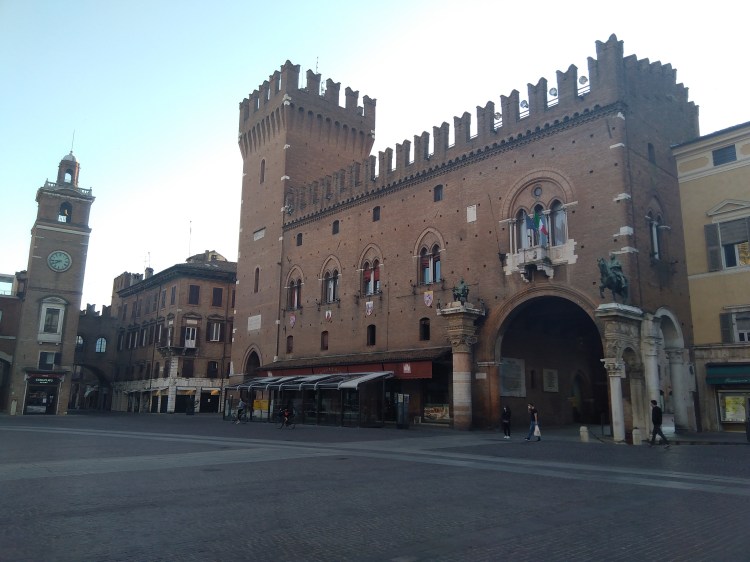
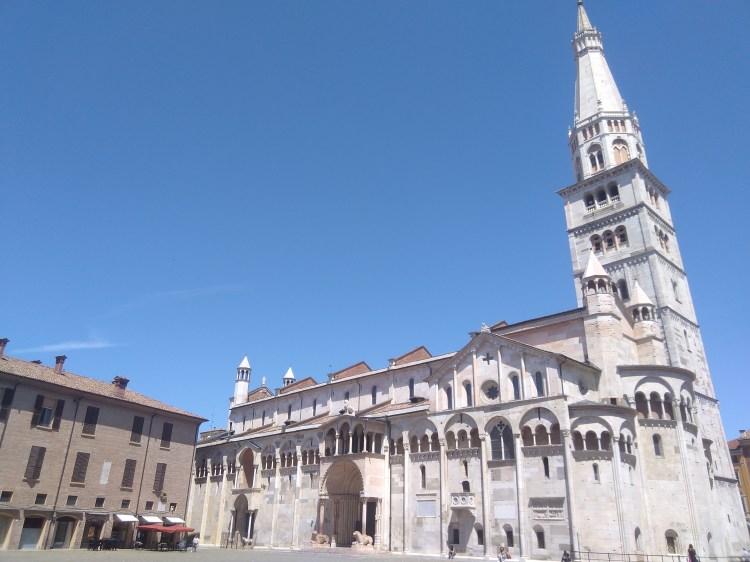
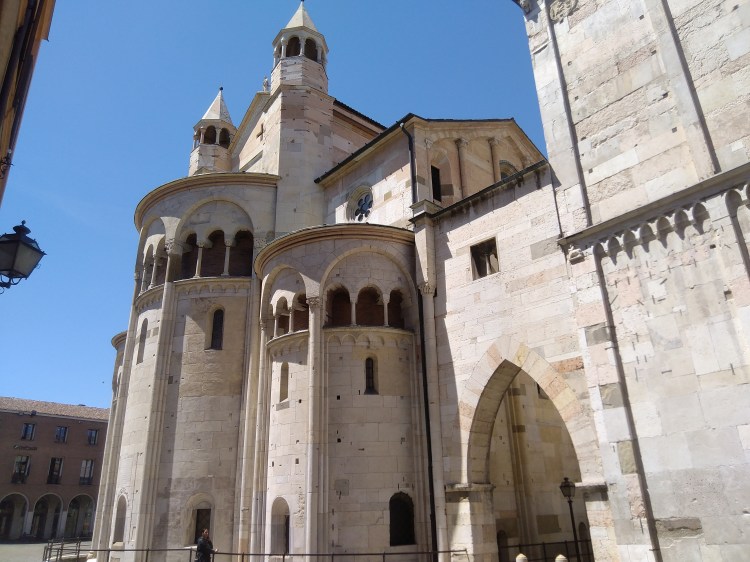
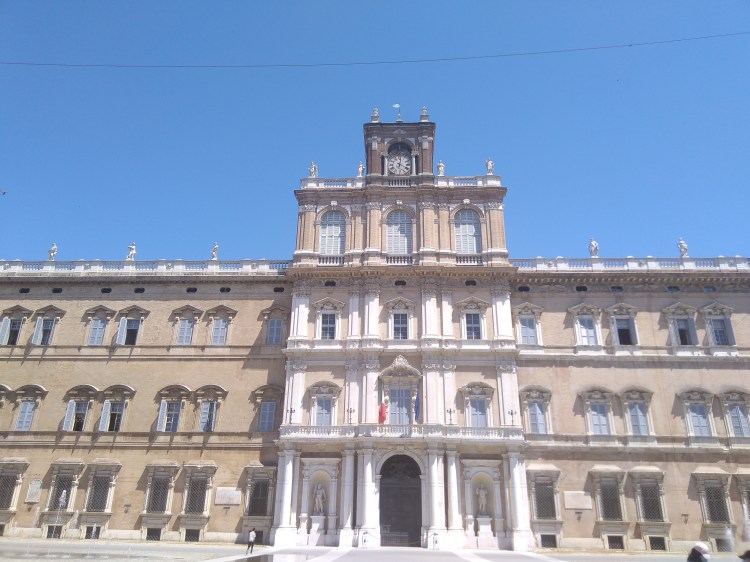
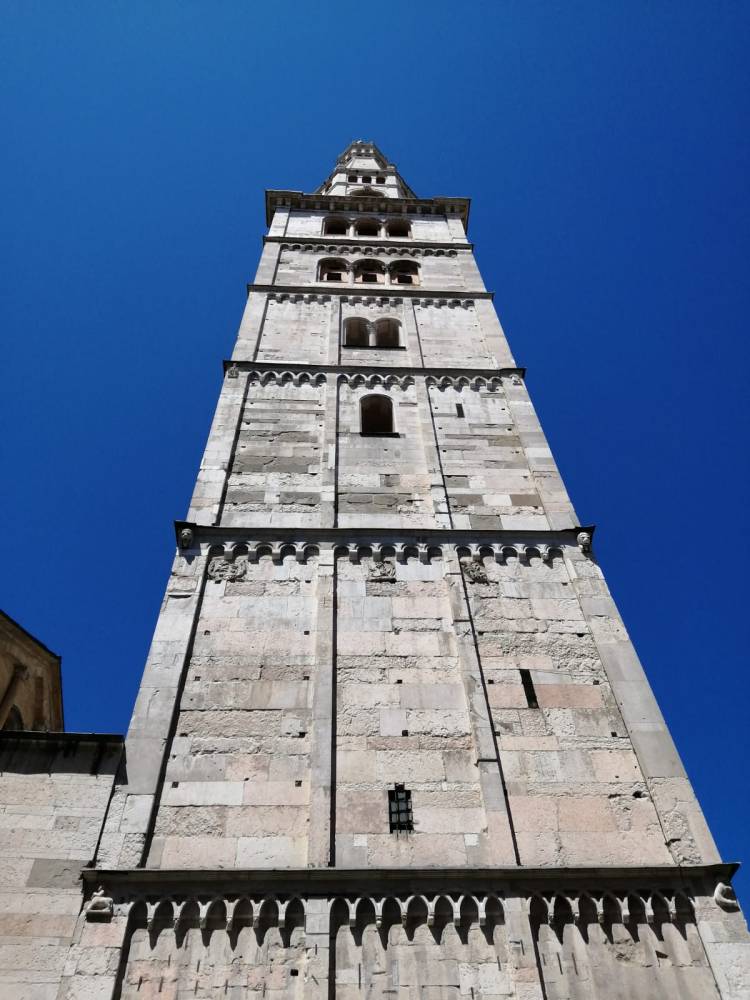
Modena was our next stop, another city on the old roman road known as Via Emilia, which is evident just by looking at the straight line on a map between Bologna, Modena and Parma. Modena is a bit smaller than the other two cities but equally as picturesque and just as desserted as Parma was the day before. Highlight’s include the cathedral, neighbouring tower known as Ghirlandria, the huge Ducal Palace where the military train their cadets and the public gardens. We had a delicious lunch in the piazza right next to the cathedral whilst discussing afternoon plans. Unfortunately most museums and galleries are still closed so we would have to remain outside for now. Which was fine by us as it was such a wonderful day.

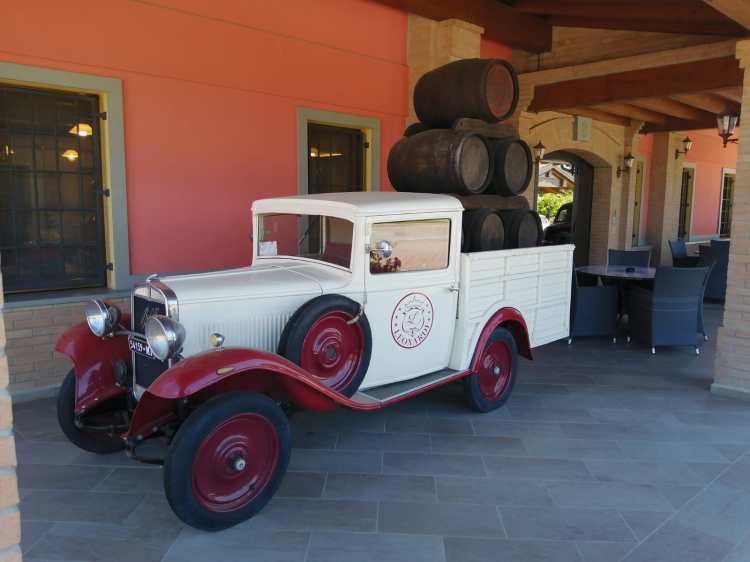
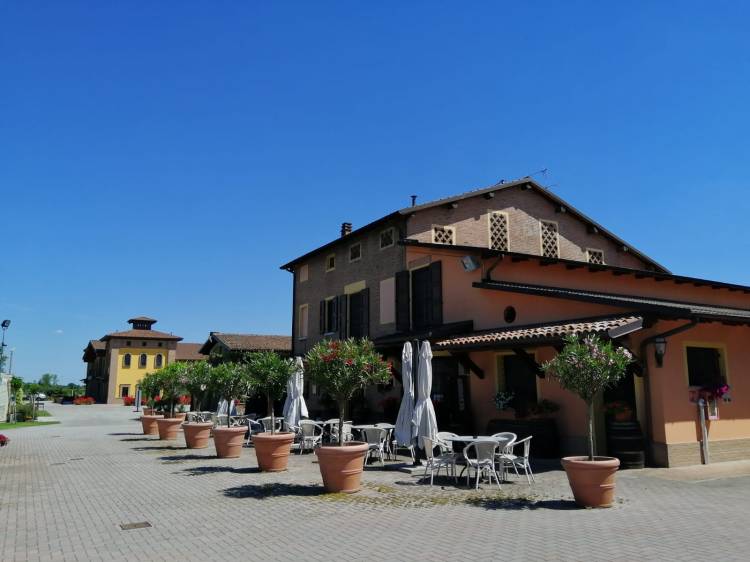
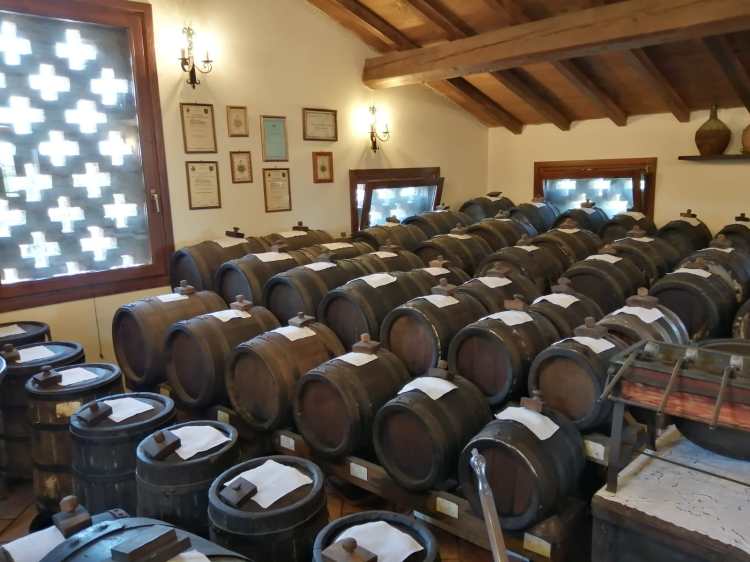
We had been recommended a visit to a Balsamic Vinegar producer to the south of the city so decided to drop in and were so pleased we did. Acetaia Leonardi are a fourth-generation family business who have been making balsamic vinegar since 1871. We were invited to taste their different vinegars whilst learning how it’s made. As there was only the two of us, Vittoria, the extremely helpful and knowledgeable member of staff, took us upstairs to show us where the vinegar is produced and gave us a sample of their hundred year old vinegar, after which we could see where the name balsamic came from as it’s origins was a healing syrup for a sore throat. The smell as we climbed the stairs was just fantastic, even through a face mask the wafts carrying sharp notes tickled our taste buds causing our mouths to water. The vinegar is made from slow cooking grapes of the Lambrusco and Trebbiano variety, which is then aged in barrels of varying sizes, with an opening so the liquid can ferment . Once every year the top layer of liquid is transferred from the largest barrel to the next barrel in it’s series and so on. The liquid from the smallest barrel is then sold. So the older it is the thicker it becomes making it useful for different things ranging from salads to ice creams! In this part of Italy it is common for a bride to come with a dowry of balsamic vinegar as a barrel is often started when a baby is born and the resulting series of barrels passed on when she is married.

After making a well considered purchase from the vast array of vinegars available (not that we’ll be putting it on our salad every night!) we hit the road and headed back to Ferrara. What a fantastic first proper van adventure, one that we won’t forget in a hurry. I’m already excited for the next one!

Freedom at last

After 10 weeks of lockdown here in Italy, the day came when we were allowed out! Phase two means we can now travel within the region of Emilia-Romagna to exercise or visit relatives. Cafes, bars, restaurants, beauty salons and shops reopen on May 18th, the latter of which I’m personally counting down the days until, because I only have the clothes I bought with me back in February…when it was a lot colder!

For us, being allowed to cycle again was the blissful reward for the weeks spent cooped up, only being allowed to leave the flat to go to the supermarket. We wasted no time donning the lycra and dusting off the bikes and before we knew it we were whizzing down the Po cycle path with big smiles on our faces.

Enjoying being out in the sunshine again.

The early part of the week saw a couple of shorter, local rides to ease back in to it. Then we decided to go further afield and go to the beach! Our ride started in Codigoro where we headed out of the town to get on to the SP62. This was a lovely quiet road, with a good surface, which headed North for quite a few miles. The sun was shining and as we pedalled along I enjoyed taking in the passing scenery. It feels a privilege catching a fleeting glimpse in to the lives of the villages as we whizz by. The plots of land here are quite spacious and focus around the road we were travelling past on. The juxtaposition of some of the dwellings was fascinating to see. There would be a fairly modern house, surrounded by a beautifully manicured lawn, dotted with colourful plants all stood to attention in their pots. The whole site a joy for the senses. Then next door would be a ramshackle old barn, with piles of terracotta tiles leaning precariously up one side, a piece of farming machinery or a bike abandoned in the long grass, forgotten many years before. Upon closer inspection though these dwellings are lived in, the row of washing on a rickety line, or open shutters framing clean glass windows the only clue to the fact that they are indeed someone’s humble abode. Both types of property were in themselves attractive and I found myself wondering about the occupants that resided within. Then in a blink of an eye, the scene past and there was a new sight to drink in.

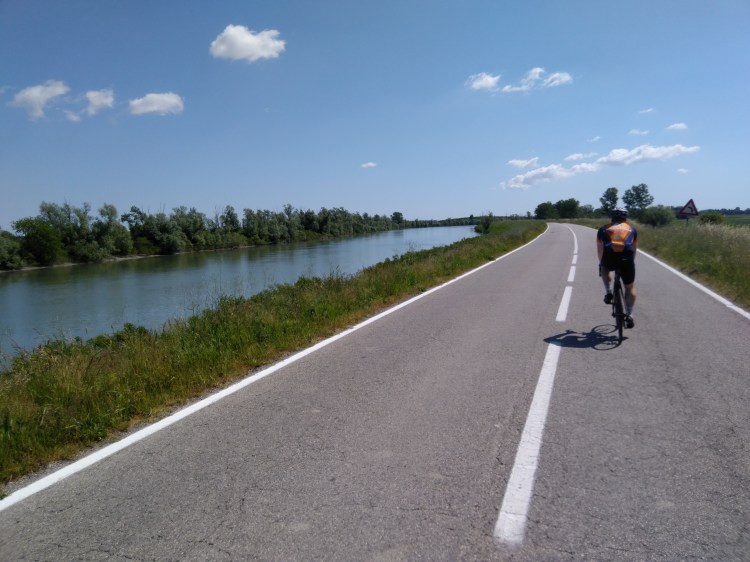
We soon took a right turn at the village of Massenzatica where we picked up the cycle route alongside the Po di Goro, a tributary of the mighty Po. This smaller relative marks the division between Emilia-Romagna and Veneto, the region above. So in effect we were as far North East as we could get. We followed the river and it’s purpose built cycle path for about 12 miles. In all that time we didn’t see another soul, no walkers, cyclists or cars. In fact, when the trees hid the distant telephone lines the landscape looked much as It would have done centuries before. The only modern day clue being the asphalt we were rolling along on. Which was like a lot of the roads in this part of Italy, it would be perfectly smooth tarmac for miles and miles, lulling you in to a false sense of security; an absolute joy to ride on. Then out of nowhere…….bam! You’re on a broken path dotted with loose chippings, potholes and weeds a plenty. Slowly losing the feeling in your hands as you bounce your way over the rough surface. Just when you’re starting to question choosing this particular route, a smooth black shape appears up ahead and the wonderfully smooth status quo is resumed! Heaven!

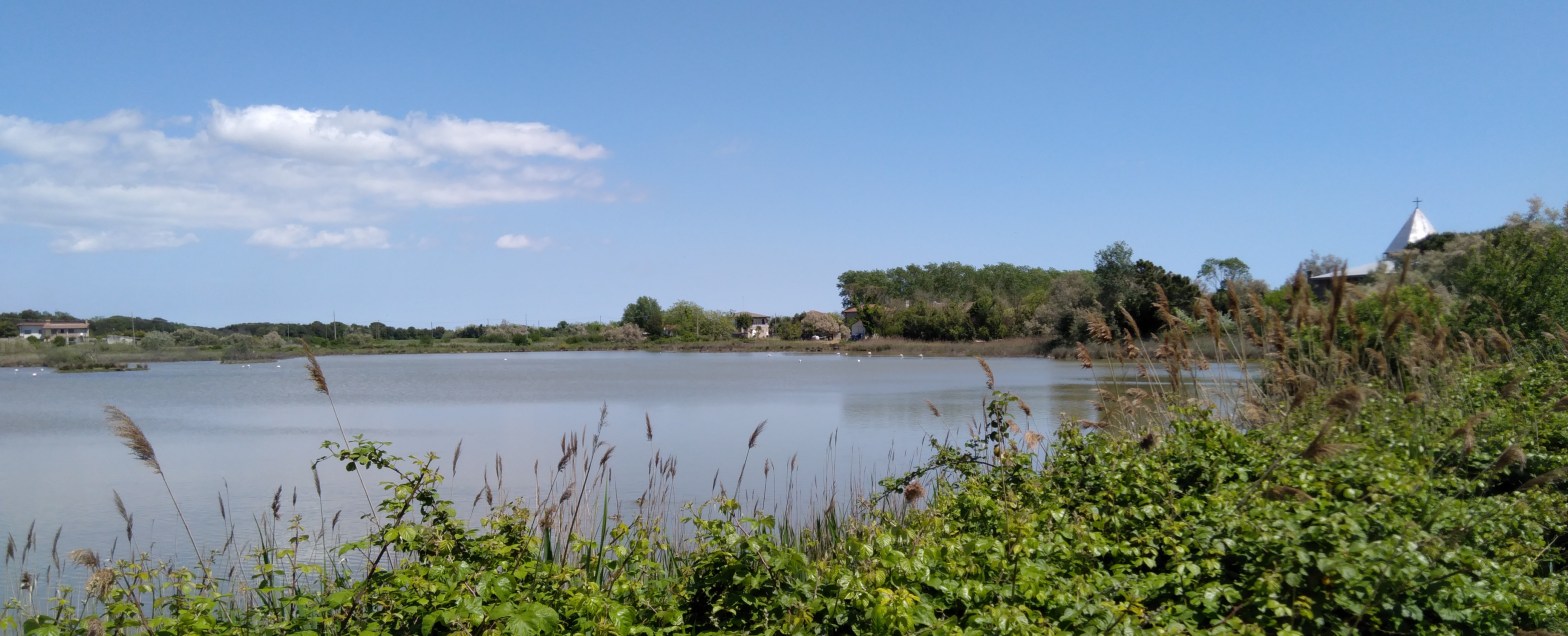
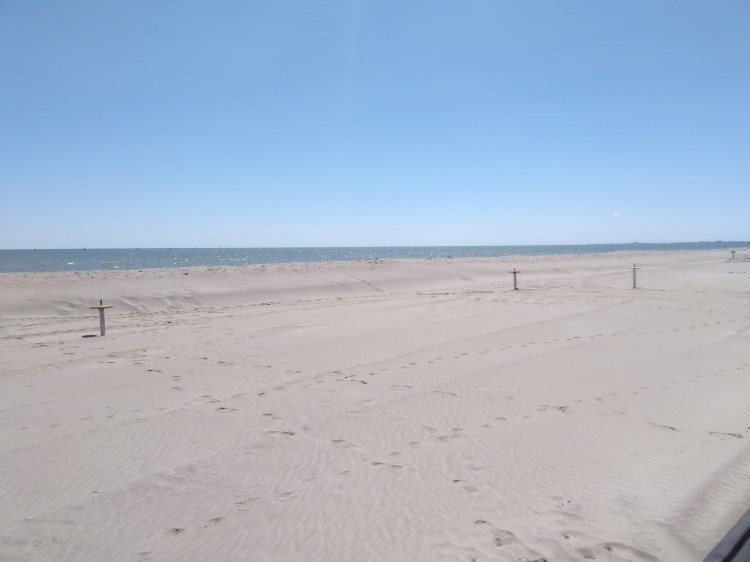
We parted with the Po di Goro and headed in land for a short time to skirt round some woods, popping back out on the coast at Lido di Volano. This part of the coast is made up of in-land lagoons called Lido’s, creating a beautiful sanctuary for lots of wildlife. We were lucky enough to see some flamingos in one of these little lagoons; not a usual bike ride sight! We decided to go and look at the beach so headed as far East as we could until we stumbled on some forlorn looking beach clubs. A sad-looking collection of restaurants, cabanas, children’s rides and gelato stores all boarded up, once a happy haven for many families, now just marching time until they can return. The small town was nestled between the lagoon and the strip of land that makes up the coast; half perfect white sand and half divinely scented pine forest. So as we cycled along we were treated to wafts of salty seaside scents or pine perfumes.

We continued South down the main coast road, a perfectly smooth stretch of tarmac with only a handful of cars about. The wildlife reserves soon gave way to holiday villages and the next couple of towns were obviously only there for holiday makers. We passed literally hundreds of shuttered up holiday apartments, abandoned at the end of last season, waiting to be awoken from their slumber by the delighted cries of children and adults a like. The place felt very eerie. We entered Porto Garibaldi, with very low hopes of finding somewhere to get some lunch. The beachfront promenade wouldn’t look amiss in a British seaside town; just the tacky arcade amusements, fish and chip shops and rain missing! We were lucky enough to find a cafe open for take away, refuelled then hopped back on our bikes alongside the channel of water that heads inland to Comacchio.

The beach at Lido di Volano

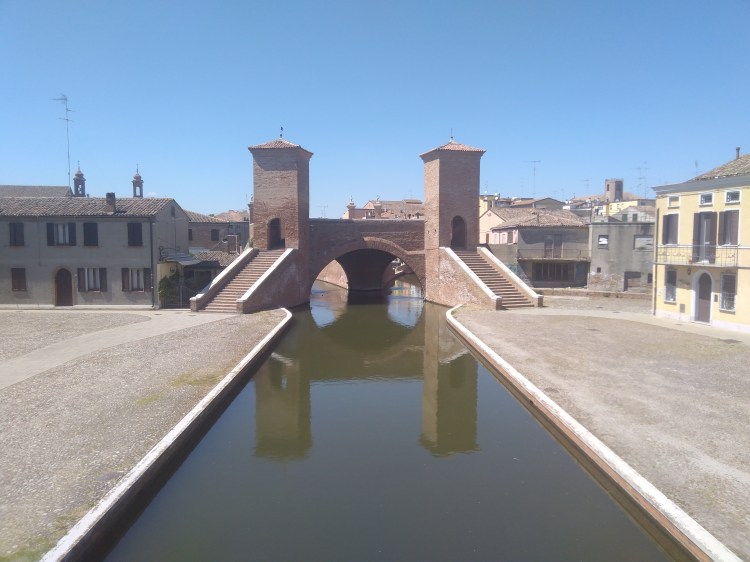
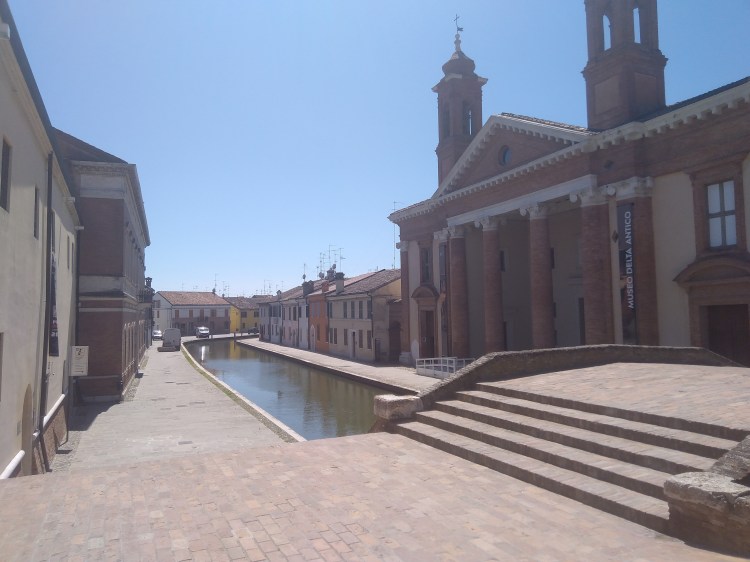
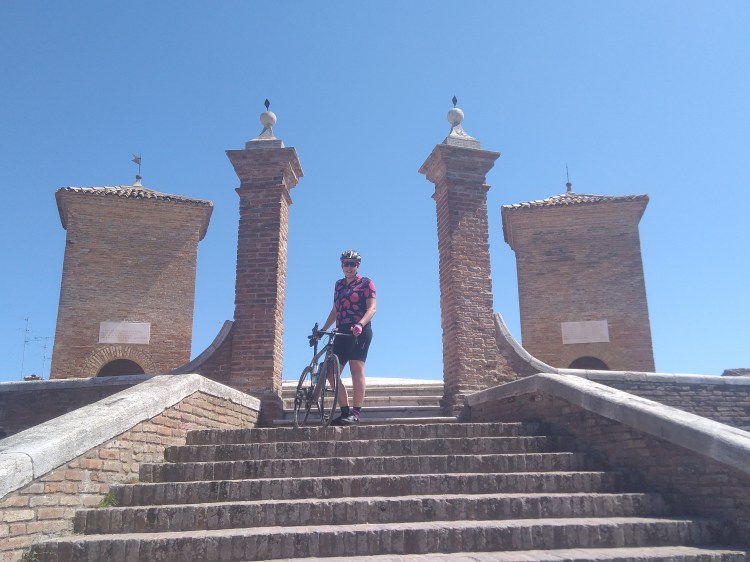
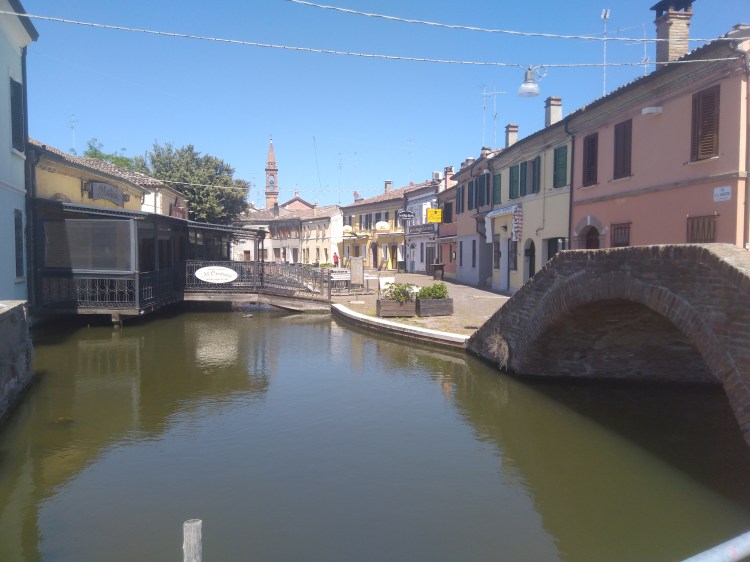
This jewel in the Po Delta is known as ‘Little Venice’ and dates back two thousand years when it would have been a busy little port. The buildings seem to radiate warmth as their red hue is reflected in the network of little canals which thread their way through the town. The main attraction is Trepponti, a three way bridge built in 1638. It was commissioned as a fortified gateway by Cardinal Giovan Battista Pallotta and is also known as Ponte Pallotta. It really is an incredible feat of engineering and definitely an imposing welcome to the town. As I was taking this photo of it, a local commented on how lucky we were to see it like this, usually there’s people swarming all over it. The local delicacy of Comacchio is eel, so I couldn’t decide whether I was quite pleased the local restaurants were closed! The canals and stepped bridges inhibits exploring on a bike some what and tottering about in cycling shoes is not a good look! So we will definitely be back to explore more here in the future. Perhaps I’ll try eel then!

Comacchio’s Trepponti

Our route looped back up from Comacchio through Lago Santo and Marozzo back in to Codigoro, where we enjoyed an ice cream from the supermarket near where we parked to cool down. A really enjoyable bike ride and the furthest I’ve done in a long time. What a wonderful day out!

If you ever find yourself in the Po delta and fancy a ride here’s a link to the route on Garmin Connect: Comacchio Loop Garmin Route

A Year Ago Today

I’ve just been outside in to the garden and did a workout under the bright blue sky, bathed in sunshine; I currently feel the fittest and healthiest I have for a long time. I’ve even achieved something this morning that I haven’t been able to do…ever! Touch my toes!! Why am I telling you this? To let you know Cancer doesn’t have to be the end, it doesn’t have to negatively effect your life in the long run. Whether you are going through it yourself or know someone who is, either starting to tackle that mammoth challenge that lies ahead or the finish line is in sight, just know there is light at the end of the tunnel.

A year ago today I received the news that I had cancer. It seems a dim and distant memory in one way, but in another it’s as clear as a bell. You watch the Macmillan adverts where a doctor is telling someone they have cancer, never expecting it to be you. Some say they don’t remember what the doctor said or the world went all fuzzy. I didn’t really have any of that. The week before, the doctor had said he didn’t like the look of it but we had to wait for the test results and that’s when I knew it was cancer. But I accepted it, no denial stage, I just thought OK, let’s get on with it. The worst bit was waiting for the team to come up with an action plan. They originally said I would have surgery and radiotherapy, but a CT scan showed it being bigger than they thought, so chemotherapy was thrown in to the mix too. That produced a few tears; I thought I was getting away with not having it. But once there was a timeline in place it was a lot easier to deal with. The hardest bit was telling people. Especially, the kids I coach at my running club. I hadn’t thought that would be so emotional. But obviously, everyone was fantastic and rallied round for the entire duration.

With all this time on our hands I can’t help but reflect slightly. I was outside earlier, laying on my mat looking up at the sky. The sun was dappling through the branches and leaves above. Instantly, I was taken back to the radiotherapy ward where everyday in December I lay on the machine, staring at the back-lit image on the ceiling above. It was a picture of the sun dappling through the leaves of a tree. On the first visit I thought how nice it was, as when you walk in the room it’s so unexpected. It’s not until you lie on your back on the machine that you even know these images are up there. As the trips progressed, it became a familiar constant amongst the changing faces of staff and the worsening state of my skin. A reassuring splash of colour in an otherwise world of grey and white. But by the end, I was desperate to not see it again, longing for the day where I didn’t have to drive to Peterborough, fight over a car parking space, sit for an hour in the waiting room and then lay under even more radiation staring at those leaves. An artificial reminder to the real life alternative, up there mocking me day after day. Then it all suddenly came to an end on January the 10th, an unassuming culmination of the process. It was my favourite two guys on duty that day who were so lovely and congratulatory at the end. Then I walked out. That was it. No more treatment required. You feel like you’ve earned some sort of fanfare or party but the sad thing is, to them it’s everyday life. My fight with cancer may be over but theirs isn’t.

Instead, a celebratory glass of wine with with my husband and parents, followed by a well-timed farewell meal with friends from my running club definitely helped to mark the occasion perfectly.

During treatment you just focus on getting through and what you’re going to do once life is back to normal. But you don’t actually give thought to the end. To the last day. Or the following month. When you’re in a slight limbo. No longer a cancer patient, but not yet back to your old self. I’m inpatient. I wanted to be back to how I was before, but the realist in me accepted that would take a while.

A very bizarre moment came over me on the journey home from the hospital after my penultimate radiotherapy session. On January 9th. I was on my own, listening to music playing through my phone, which is quite unusual for me. But for some reason I put a playlist on that I hadn’t listened to in years, no idea why. I was driving along with tears streaming down my eyes listening to one song in particular. I had no option but to listen to the lyrics; no distractions. The tears were part sadness, part relief, part joy. Sadness for the year that had come before, months of my life spent in bed, in hospital, on the sofa, avoiding the sun, not doing the things I loved. Relief that I’m actually OK. I’m out the other side, unscathed in the grand scheme of things, with the opportunity to make up for that lost time. And joy; joy for the wonderful things in my life. All the things that you learn to appreciate even more than you did before. The song I was listening to was ‘Brand New Day’ by Joshua Radin. If you need something to do today, find somewhere quiet, away from your family, take a few minutes for yourself and really listen to the words. I don’t expect it to have the same effect on you as it did on me, everyone is different. But if it gives you a few moments of peace where you can reflect on the ups and downs of life’s journey and be grateful for something then you’ll be better off than a few moments before.

It was around that time I decided to write an online journal and needed a name, after listening to that song it was obvious what it should be.

Design a site like this with WordPress.com
Get started