
Having spent a very long and very hot summer in Rome I’m ashamed to say the shine of the Eternal City started to dull slightly. The soaring temperatures were just relentless and days spent doing two or three tours became quite tiring. Now though, the sweat running down the back of my knees, the constant search for shade and the clinging of clothes are but a distant memory and the city has reclaimed it’s rightful place in my heart. Now the clocks have changed, the sun rises and soon warms up the delightfully chilly air to a balmy, enjoyable temperature until the shadows lengthen and the chill returns…allowing for cosy jumpers and slippers to make a long-awaited reappearance. Despite loving Roman life again it was wonderful to spend two days in the mountains of Abruzzo this week, where the season change is in full swing.
We decided to fully appreciate the changing colours and to stretch our legs by hiking the Val di Rose, a popular trail that is well known for it’s wildlife. It’s so popular that between July and September numbers are limited and hikes have to be undertaken with a guide. Being a protected area of the National Park dogs are not permitted at all on this route, even on a lead. We had high hopes of seeing the famous camosci or chamois, a rare type of goat-antelope that can often we seen on the higher slopes of the valley, these animals are one of the reasons why this area is so well protected; as well as being home to eagles, deer, wolves and the elusive Marsican brown bear. The valley takes it’s name from the vibrant wild dog roses that blanket the lower slopes in the spring. Before the National Park was created in 1922, ironically the valley was preserved in the late 19th century, thanks to the prominent local Sipari family establishing the ‘Royal Hunting Reserve of the Upper Sangro Valley.’ The hunting rights to these peaks, including the Val di Rose, were exclusively granted to the Italian Kings of the House of Savoy. While it meant the area was used for sport, it protected the valley from aggressive deforestation and agricultural over-development.
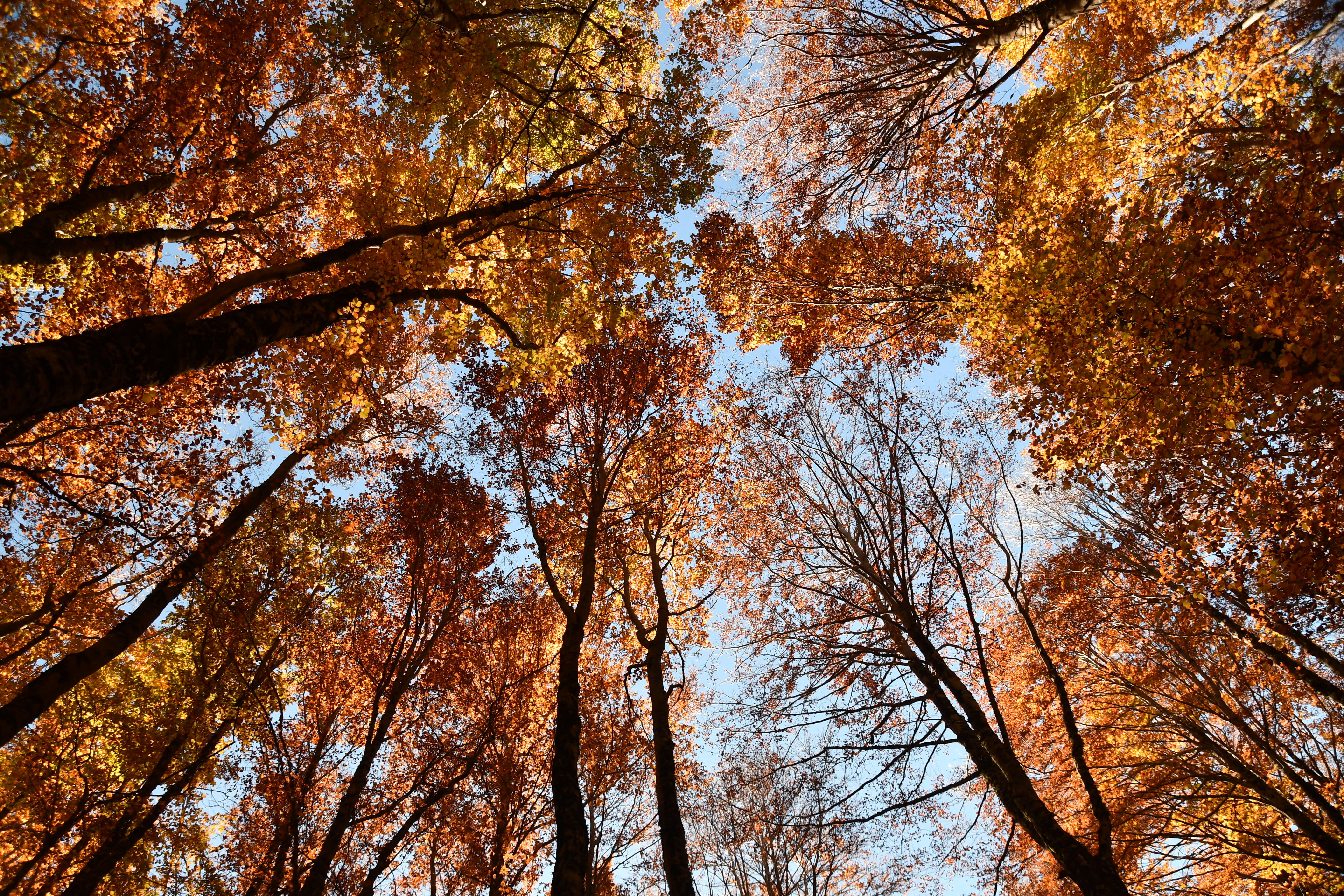
The trail starts from the gorgeous hill-top town of Civitella Alfedena, a typical labyrinth of small alleyways and teetering buildings tumbling down the hillside that it’s seemingly perched upon. We followed the red and white signs labelled with “I1” (the footpath number) out of the village and started climbing immediately. The path took us past colapsed rocky walls and broken fences, the only remaining signs from long-forgotten years of agricultural work. The star of the show for the whole duration of this adventure had to be the backdrop of russets, oranges, yellows and greens. The autumn colours were absolutely incredible. The pallet changed constantly depending on the height. On the lower slopes yellows and greens were more prevalent, whereas the higher up we went the browns and deep russets took over and instead of greens or yellows there were the bare skeletons of those trees that had already shed all of their leaves. We were soon rewarded for our efforts with an incredible vista of Civitella Alfedena and of Lake Barrea. The far end of which sits Barrea, another typical Italian town spilling down the hillside to the edge of the water. This glistening expanse is relatively new as it was created in 1951 when the Sangro river was damned to produce hydroelectricty. The lake was the result of the subsequent flooding. On a fresh, sunny, blue-sky day in autumn it surely couldn’t look any better.


We spent the next couple of hours heading up through woodland where the shafts of sunlight dappling the forest floor and slicing through the surrounding trees were like a private lightshow. I had to resist stopping to take photos as we’d never get to the top. Underfoot the thick blanket of crunchy leaves was occasionally punctuated by white rocks, that were partly covered in little jackets of moss. The deep russet, the bright white and the vibrant green were a joyous juxtaposition. It was at this point we realised Leo had dressed perfectly in coordination with this autumnal backdrop!


The path eventually broke free of the trees and we zigzagged through the rocky landscape with towering, jagged peaks surrounding us. The highest point was in sight; Passo Cavuto (1,980m). The climb was peppered with pauses to scan the rocky surroundings for camosci; despite plenty of evidence on the trail they were eluding us. However, we were treated to an aerial display of eagles high above, their piercing squeals echoing around the rock amphitheatre as they wheeled around and around on the thermals.


As we crossed Passo Cavuto we met the first other people we’d seen in hours and discovered they had seen about 20 camosci a bit further back down the trail. Our slight disappointment was soon erased by the vast panorama that spread out before us. The view was never-ending. Rolling mountain, after rolling mountain. The other people were heading back down the way we’d come but our plan was to continue to a mountain hut, stop for lunch and then head down the valley via a different footpath, creating a loop. We were soon on our own again with no other sign of human life in sight. In fact, we didn’t see anyone else for the rest of the walk. On the way to the hut we were picking our way round rocky outcrops whilst looking out for camosci when we heard a cawing crow. Leo shouted “Gaurda! Look!” and as I turned to follow where he was pointing I thought he’d gone mad…it was just a crow. However, as my eyes shifted slightly to the left, my heartrate picked up and it took a couple of seconds to register what I was looking at. On the opposite slope a large bear was lolloping up the hillside, pausing to look at us and then continuing on its way. We could not believe our eyes. We were lucky enough to witness this elusive creature for about 5 minutes until he disappeared over the ridgeline at the same point we’d passed a short while before. Just magical! Leo has been coming to the National Park for years and has never seen a bear before. We were so lucky. For the rest of the day we kept repeating to each other “Non ci credo! I don’t believe it” like some very bad Victor Meldrew impression!


After a well-needed pitstop at the hut we started the long descent back. The path wound down and down and down through an endless forest where the going was made slightly more difficult by the crunchy carpet of leaves hiding the rocks underneath. I was starting to get a little concerned that we would run out of daylight. The shadows were lengthening and the light on the rocks intensified. Around us the colours changed from bright blue to pink and orange hues. My concern must have been obvious as Leo reassured me it would be ok. Luckily the footpath markers are red and white which stood out in the gloom and the descent down was a game of spot the next one. The sun had set but there was still just enough light to make out the ground ahead of us. My eyes were playing tricks on me in the surrounding trees as I imagined all sorts of creatures nearby. Not that I needed to imagine…all of a sudden we heard a large amount of rustling to the right of the path and as we glanced down there was a group of around 20 wild boar or cinghiale ranging in size from small babies to absolutely massive shapes in the darkness. Luckily they ran off and not towards us! It finally got to the point where we put the torches on and after around 15 minutes, signs of civilisation appeared and we finally stumbled back in to Civitella Alfedena, I must admit I was quite pleased to see the place again! What an adventure! After having spent 7 hours on the trails, covered 10 miles and climbed 3,500 feet our glass of wine and Pappardelle al Cinghiale tasted very, very good!


I miss our Italian autumn walks. Seb and I attended the Remembrance Day commemoration at the Sangro River war cemetery a couple of times.
LikeLike
Yet another fabulous blogg Becca, love it! Xx
LikeLike
Beautiful photos, fabulously documented as always x
LikeLike